Nasa usquiliensis
NameNasa usquiliensis
Scientific NameNasa usquiliensis
Common NamesOrtiga brava, Pica pica
Plant FamilyLoasaceae
Natural HabitatNative to the Andes mountains of Peru, typically found in montane regions, often in rocky or disturbed areas at higher elevations.
Parts Usedleaf,whole_plant
Medicinal Actionsanalgesic, anti-inflammatory
Traditional UsesTraditionally, the fresh leaves and stems are applied topically as a counter-irritant to treat rheumatic pain, arthritis, and muscle aches. The stinging sensation is believed to alleviate deeper pain and inflammation by drawing out discomfort.
Active ConstituentsHistamine, Acetylcholine, Serotonin, Diterpenes
Preparation Methodspoultice
Contraindications & WarningsCauses severe skin irritation due to stinging hairs; avoid contact with eyes and mucous membranes. Not for internal consumption. Individuals with sensitive skin or allergies should exercise extreme caution.
Cultivation NotesPrefers well-drained soil and a montane climate with full sun to partial shade. Requires specific conditions mimicking its native Andean habitat, often found in rocky or disturbed areas.
Rarityuncommon
Description
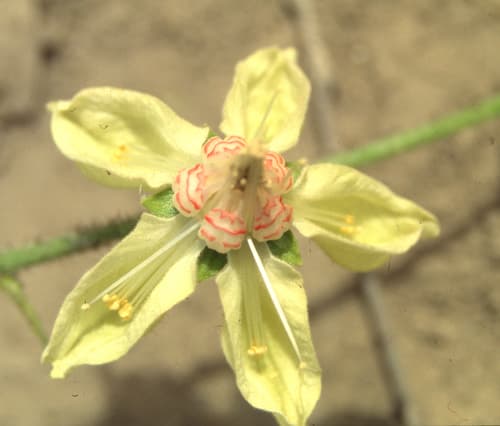
A herbaceous plant characterized by its distinctive five-petaled, pale yellow flowers. The central floral structure features numerous ruffled staminodes, often striped with red, surrounding the reproductive organs. Like other members of its genus, it possesses stinging hairs on its stems and leaves.