Nasa tulipadiaboli
NameNasa tulipadiaboli
Scientific NameNasa tulipadiaboli
Common NamesDevil's Tulip, Andean Stinging Flower
Plant FamilyLoasaceae
Natural HabitatRocky slopes, dry hillsides, and disturbed areas in mountainous regions, likely endemic to the Andes of South America.
Parts Usedflower,whole_plant
Medicinal Actionsanalgesic, anti-inflammatory, antimicrobial
Traditional UsesTraditionally, some species within the genus Nasa have been used topically as a counter-irritant for rheumatic pain or muscle aches due to their stinging properties. Extracts may be prepared for their purported anti-inflammatory and antimicrobial effects, though specific uses for 'Nasa tulipadiaboli' are not widely documented.
Active Constituentsalkaloids, flavonoids, irritant compounds
Preparation Methodspoultice, tincture, decoction
Contraindications & WarningsDirect skin contact with the fresh plant can cause severe irritation, stinging, and allergic reactions due to its bristly hairs. Internal use is not recommended without expert guidance due to potential toxicity and lack of safety data. Avoid use in pregnant or nursing women and young children.
Cultivation NotesPrefers well-drained, rocky or sandy soil and full sun exposure. It is generally drought-tolerant once established and requires protection from frost in colder climates. Propagation is typically by seed. Handle with extreme care due to the presence of stinging hairs.
Rarityrare
Description
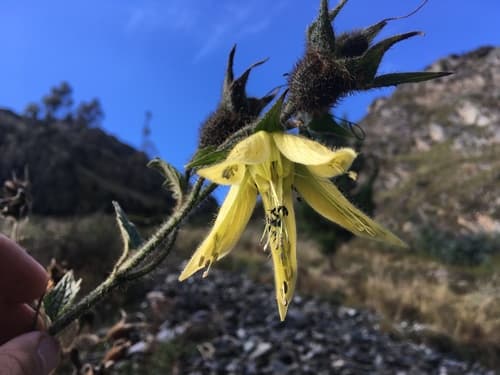
A herbaceous plant characterized by its striking yellow, bell-shaped flowers with prominent stamens. The stems and calyces are densely covered in bristly, often stinging hairs. It typically grows in rocky, arid environments.