Mullein Nightshade
NameMullein Nightshade
Scientific NameSolanum donianum
Common NamesMullein Nightshade, Woolly Nightshade, Great Mullein Nightshade
Plant FamilySolanaceae
Natural HabitatNative to tropical and subtropical regions, often found in disturbed areas, forest margins, open woodlands, and along roadsides. It prefers full sun to partial shade.
Parts Usedleaf,root
Medicinal Actionsanti-inflammatory, analgesic, antimicrobial
Traditional UsesIn some traditional medicine systems, the leaves and roots have been used topically or in decoctions for treating skin conditions, fevers, and pain. The plant is also reported to have anti-inflammatory and antimicrobial properties.
Active Constituentssteroidal glycoalkaloids, solasodine, solamargine, solanine, flavonoids, saponins
Preparation Methodsinfusion, decoction, poultice, powder, salve
Contraindications & WarningsAll parts of the plant, especially the unripe berries, are considered toxic due to the presence of steroidal glycoalkaloids. Ingestion can cause severe gastrointestinal upset, neurological symptoms, and can be dangerous. Should not be used internally without expert supervision. Avoid during pregnancy and lactation.
Cultivation NotesGrows well in tropical to subtropical climates. Prefers well-drained soil and full sun to partial shade. Can be propagated by seed. Tolerant of various soil types but thrives in fertile conditions.
Raritycommon
Description
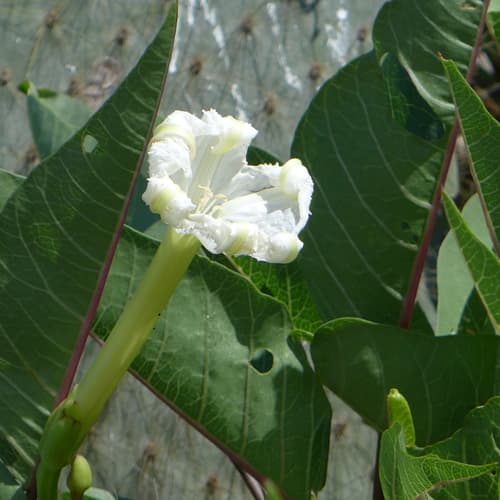
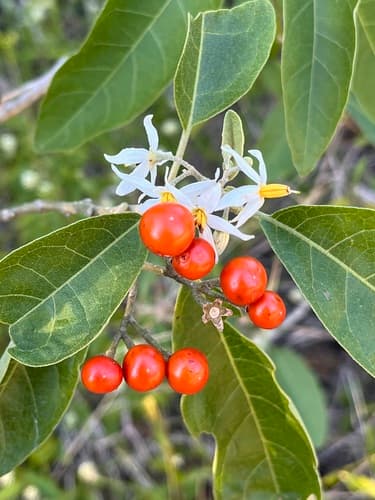
A shrub or small tree, typically growing 1-4 meters tall, characterized by ovate to elliptic leaves that can be softly hairy. It produces clusters of white, star-shaped flowers with prominent yellow anthers, followed by small, round, bright orange to red berries.