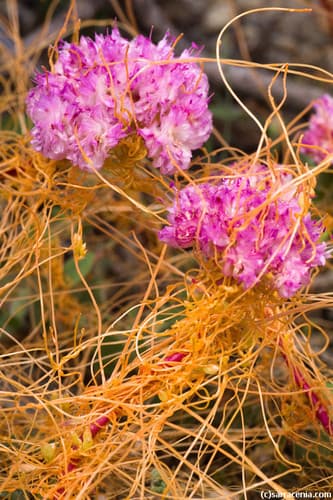
Mountain Dodder
NameMountain Dodder
Scientific NameCuscuta epithymum
Common NamesMountain Dodder, Clover Dodder, Thyme Dodder
Plant FamilyConvolvulaceae
Natural HabitatThis parasitic plant grows by attaching to various host plants, including clover, thyme, heather, and other herbaceous plants and shrubs. It is commonly found in meadows, pastures, heathlands, and disturbed areas in temperate regions.
Parts Usedwhole_plant,seed
Medicinal Actionsdiuretic, antioxidant, anti-inflammatory
Traditional UsesTraditionally, Mountain Dodder has been used in herbal medicine to support liver and kidney function, treat urinary problems, and as a general tonic. It has also been applied externally for skin conditions and internally for digestive issues.
Active Constituentsflavonoids, lignans, polysaccharides
Preparation Methodsinfusion, decoction, powder
Contraindications & WarningsAvoid use during pregnancy and lactation. Exercise caution with individuals experiencing severe constipation or those taking diuretic or laxative medications, as it may interact.
Cultivation NotesMountain Dodder is a parasitic plant that cannot be cultivated independently. It requires a host plant to grow, attaching via haustoria to extract nutrients. It is often considered an agricultural weed rather than a cultivated medicinal plant.
Raritycommon
Description
Mountain Dodder is a parasitic annual plant characterized by its slender, leafless, orange or reddish thread-like stems that twine around host plants. It produces dense clusters of small, pinkish-white to purplish flowers along its stems, often appearing as fluffy masses.