Melananthus fasciculatus
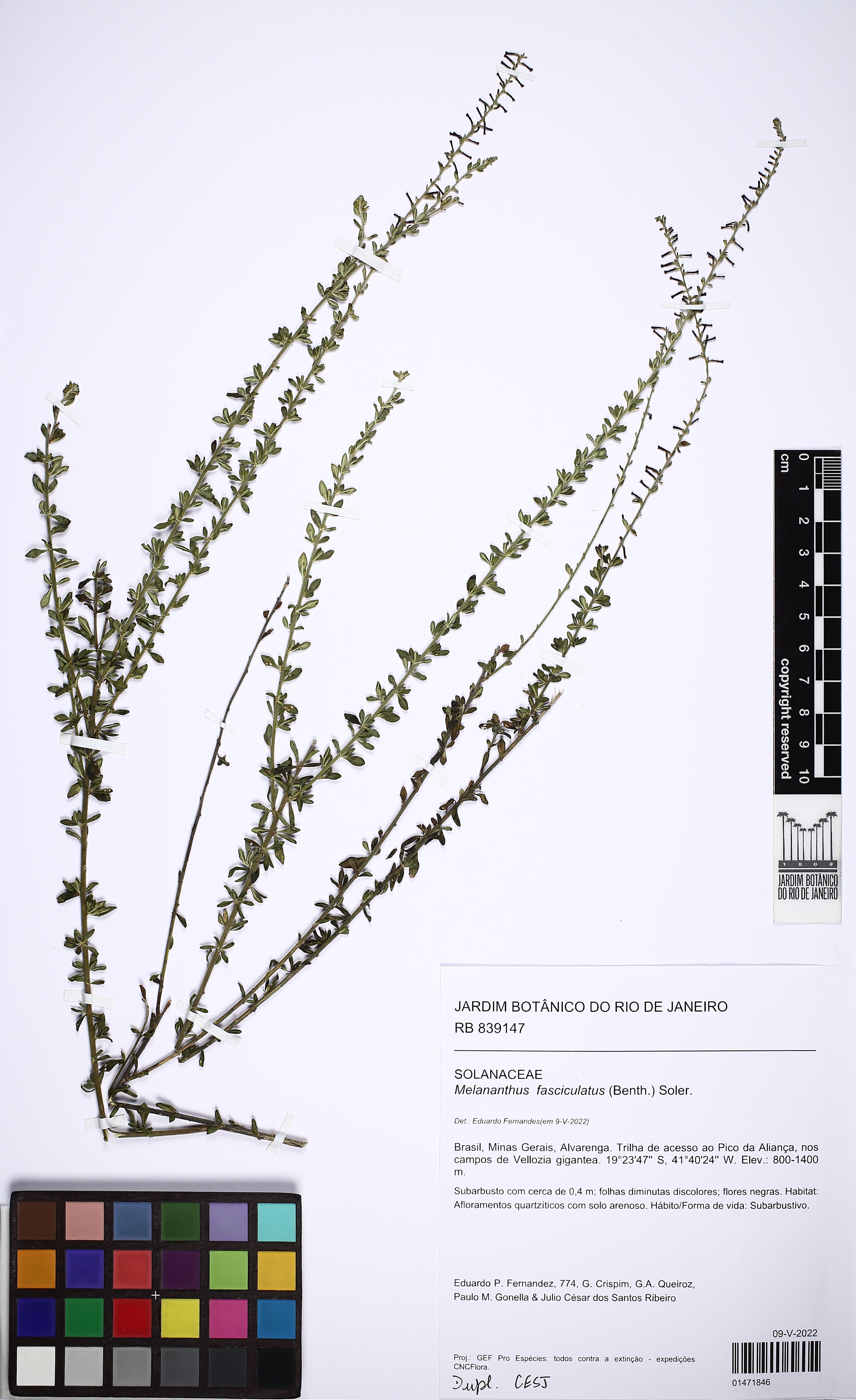
Image: Eduardo P. Fernandez; G. Crispim, G.A. Queiroz, Paulo M. Gonella & Julio César dos Santos Ribeiro (cc-by)
NameMelananthus fasciculatus
Scientific NameMelananthus fasciculatus (Benth.) Soler.
Plant FamilySolanaceae
Natural HabitatThis species is found in quartzitic outcrops with sandy soil, at elevations ranging from 800 to 1400 meters. It is documented from Minas Gerais, Brazil, specifically in the fields of Vellozia gigantea near Pico da Aliança.
Parts Used
Traditional UsesNone specifically documented for this species in available botanical records. As a member of the Solanaceae family, many species are known to contain potent compounds, some with medicinal properties and others highly toxic, requiring careful study.
Contraindications & WarningsNone specifically documented. However, due to its classification within the Solanaceae family, which includes many species known for potent alkaloids and potential toxicity (e.g., nightshades, belladonna), extreme caution is advised. This plant should not be ingested or used medicinally without thorough scientific investigation and expert guidance.
Cultivation NotesPrefers well-drained, sandy soils typical of quartzitic outcrops. Requires a habitat mimicking its native high-altitude, tropical environment in Brazil. Specific light, temperature, and moisture requirements would need further research for successful cultivation.
Rarityuncommon
Description
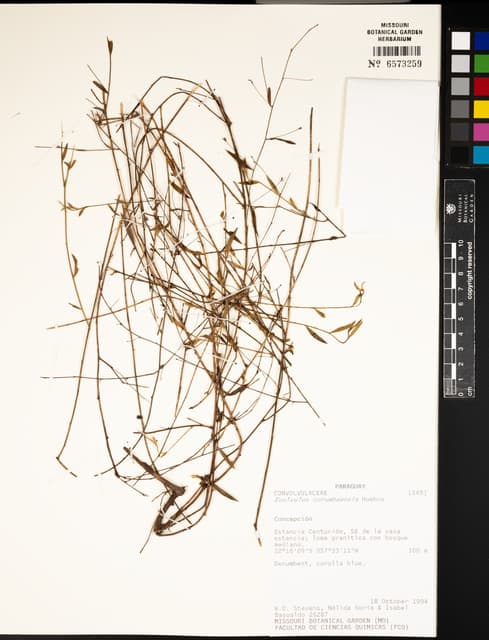
Melananthus fasciculatus is a subshrub, typically growing to about 0.4 meters in height. It is characterized by its minute, discolored leaves and distinctive black flowers. The specimen shows multiple slender stems with small, alternate leaves.