Marshmallow
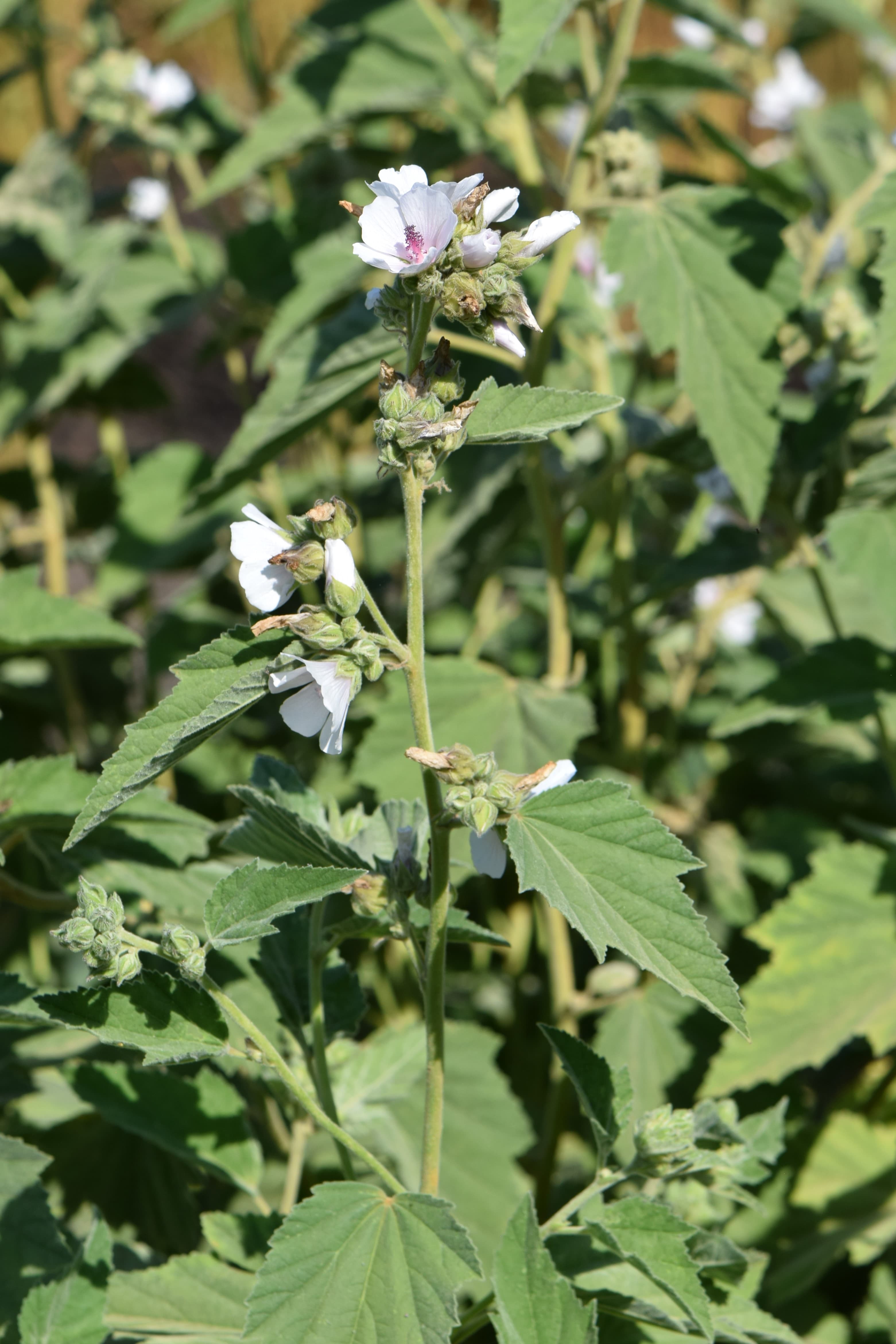
Image: Krzysztof Ziarnek, Kenraiz (CC BY-SA 4.0)
NameMarshmallow
Scientific NameAlthaea officinalis
Common NamesMarshmallow, Common Marshmallow, White Mallow, Moorish Mallow
Plant FamilyMalvaceae
Natural HabitatNative to Europe, North Africa, and Western Asia, Marshmallow thrives in damp, marshy areas, salt marshes, riverbanks, and ditches, preferring moist, fertile soil.
Parts Usedroot,leaf,flower
Medicinal Actionsdemulcent, anti-inflammatory, expectorant, antimicrobial
Traditional UsesTraditionally, Marshmallow is used to soothe irritated mucous membranes throughout the body, including the respiratory, digestive, and urinary tracts. It is commonly employed for coughs, sore throats, bronchitis, gastritis, peptic ulcers, and urinary tract inflammation due to its demulcent properties.
Active ConstituentsMucilage (polysaccharides), flavonoids, coumarins, phenolic acids, asparagine
Preparation Methodsinfusion, decoction, powder, poultice, salve
Contraindications & WarningsMarshmallow's high mucilage content may delay the absorption of other orally administered drugs. It is advisable to take medications at least one hour before or several hours after consuming marshmallow preparations. Generally considered safe for most individuals.
Cultivation NotesMarshmallow prefers full sun to partial shade and consistently moist, well-drained soil. It can be propagated from seed or root division and is a hardy plant, often growing vigorously in suitable conditions.
Raritycommon
Description
A robust perennial herb, Marshmallow grows up to 2 meters tall, featuring velvety, lobed leaves and delicate pale pink to white flowers with five petals. The plant, particularly its root, is rich in mucilage, giving it a characteristic slippery texture.