Macoun's Bindweed
NameMacoun's Bindweed
Scientific NameCalystegia macounii
Common NamesMacoun's Bindweed, Macoun's False Bindweed
Plant FamilyConvolvulaceae
Natural HabitatThis species is native to North America, commonly found in prairies, open woodlands, roadsides, and other disturbed areas. It prefers well-drained soils and can tolerate a range of light conditions from full sun to partial shade.
Parts Used
Traditional UsesWhile some species within the Convolvulaceae family, particularly *Convolvulus* and *Calystegia*, have historically been used as strong purgatives in traditional folk medicine, specific well-documented medicinal uses for *Calystegia macounii* are scarce. The purgative action is attributed to resin glycosides, but these plants are generally considered harsh and are not widely used in modern herbalism due to potential toxicity and the availability of safer alternatives.
Active ConstituentsResin glycosides
Contraindications & WarningsDue to the presence of potent resin glycosides, bindweeds are generally considered to have strong purgative effects and can be toxic if ingested in large quantities. They are contraindicated in pregnancy, breastfeeding, and individuals with gastrointestinal issues. Use is not recommended without expert guidance.
Cultivation NotesMacoun's Bindweed is often considered a weed due to its vigorous growth and ability to spread. It is easily grown from seed or root fragments and thrives in various soil types, preferring full sun to partial shade. It can be difficult to eradicate once established.
Raritycommon
Description
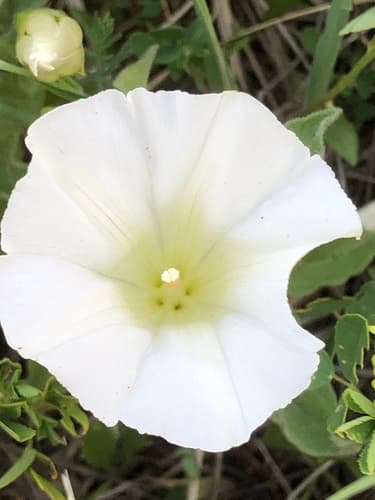
Macoun's Bindweed is a perennial herbaceous vine characterized by its white, trumpet-shaped flowers, typically solitary in the leaf axils. The leaves are generally sagittate or hastate, and the plant often trails or climbs over other vegetation.