Lycianthes pringlei
NameLycianthes pringlei
Scientific NameLycianthes pringlei
Plant FamilySolanaceae
Natural HabitatNative to Mexico and Central America, Lycianthes pringlei thrives in disturbed areas, roadsides, forest edges, and secondary vegetation, often found at moderate elevations.
Parts Usedleaf,flower
Medicinal Actionsanti-inflammatory, analgesic
Traditional UsesSpecific traditional medicinal uses for Lycianthes pringlei are not widely documented in accessible ethnobotanical literature. However, some related species within the Lycianthes genus and the wider Solanaceae family are traditionally used for their anti-inflammatory and analgesic properties, often applied topically for pain or skin conditions.
Active ConstituentsSteroidal alkaloids, Flavonoids
Preparation Methodsinfusion, poultice
Contraindications & WarningsAs with many plants in the Solanaceae family, Lycianthes pringlei may contain potentially toxic alkaloids. Internal use is not recommended without extensive research and expert guidance. Pregnant or breastfeeding women and individuals with pre-existing conditions should avoid use.
Cultivation NotesPrefers warm climates and well-drained soil. Can tolerate full sun to partial shade. Often found in disturbed habitats, suggesting it is relatively robust and adaptable to various soil conditions.
Raritycommon
Description
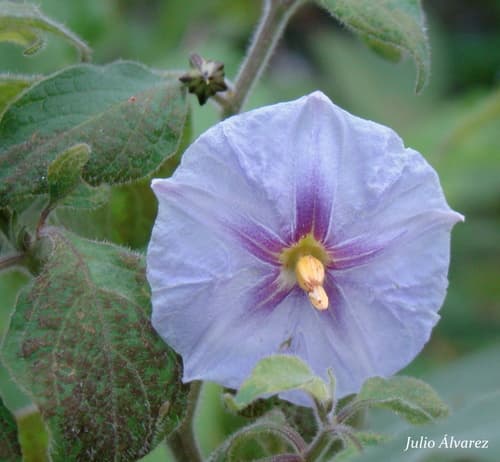
Lycianthes pringlei is a herbaceous plant characterized by its hairy stems and leaves. It produces solitary, pale lavender to light purple flowers with a distinctive darker purple star-shaped pattern radiating from the center, and prominent yellow anthers. The corolla is typically rotate or stellate.