Loasa acerifolia
NameLoasa acerifolia
Scientific NameLoasa acerifolia
Common NamesOrtiga Brava, Ortiga de la Higuera
Plant FamilyLoasaceae
Natural HabitatNative to temperate regions of South America, particularly Chile and Argentina, where it commonly grows in disturbed areas, forest edges, and along roadsides.
Parts Usedwhole_plant,leaf
Medicinal Actionsanalgesic, anti-inflammatory
Traditional UsesTraditionally, the plant, especially its stinging leaves, has been used externally as a counter-irritant. It is applied to the skin to alleviate rheumatic pain, arthritis, and other localized inflammatory conditions through its stinging action.
Active ConstituentsIrritating compounds (e.g., alkaloids, peptides) in stinging hairs
Preparation Methodspoultice
Contraindications & WarningsDirect skin contact causes intense stinging, redness, and irritation; avoid contact with eyes and mucous membranes. Not suitable for internal consumption due to its irritating and potentially toxic properties.
Cultivation NotesNot commonly cultivated for medicinal purposes, Loasa acerifolia thrives in its native South American habitat. It prefers well-drained soils and can tolerate a range of light conditions from partial shade to full sun.
Rarityuncommon
Description
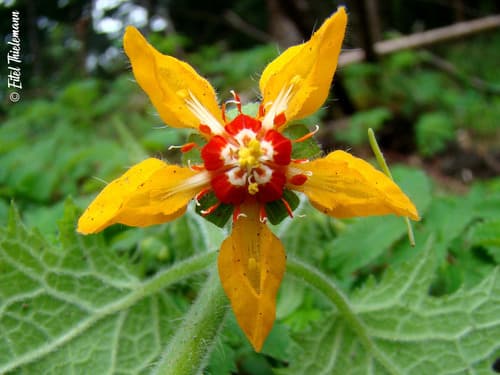
Loasa acerifolia is a herbaceous plant known for its distinctive five-petaled yellow flowers with a complex red and white central structure. Its deeply lobed, serrated leaves and stems are covered in glandular stinging hairs that cause irritation upon contact.