Jamaican nightshade
NameJamaican nightshade
Scientific NameSolanum torvum
Common NamesJamaican nightshade, Turkey Berry, Devil's Fig, Prickly Solanum, Susumber
Plant FamilySolanaceae
Natural HabitatNative to tropical America, this plant is now pantropical, thriving in disturbed areas, forest edges, pastures, and roadsides in warm, humid climates.
Parts Usedleaf,fruit,root,whole_plant
Medicinal Actionsanti-inflammatory, antimicrobial, antioxidant, analgesic, diuretic
Traditional UsesTraditionally, the fruits are consumed as a vegetable and are believed to aid digestion. Various parts (leaves, roots, fruits) are used in folk medicine for treating colds, coughs, skin infections, wounds, hypertension, diabetes, and as a general tonic. It is also used for anemia and to stimulate appetite in some cultures.
Active Constituentssteroidal glycoalkaloids (solamargine, solasonine, torvoside), flavonoids, saponins, tannins, phenolic compounds
Preparation Methodsinfusion, decoction, powder, poultice
Contraindications & WarningsUnripe fruits and other parts can be toxic if consumed in large quantities due to glycoalkaloids. Pregnant and breastfeeding women should avoid it. Individuals with allergies to the Solanaceae family should exercise caution, and it may interact with blood pressure medications.
Cultivation NotesThis plant thrives in full sun to partial shade and prefers well-drained, fertile soil. It is a fast-growing, resilient species, often considered a weed in many tropical regions, and propagates easily from seeds.
Raritycommon
Description
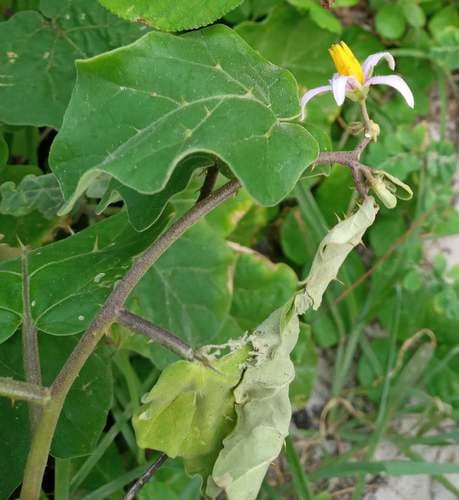
Solanum torvum is a prickly, branched shrub growing up to 2-3 meters tall, characterized by its ovate, lobed leaves. It produces clusters of small, round berries that ripen from green to orange-red.