Ipomoea subrevoluta
NameIpomoea subrevoluta
Scientific NameIpomoea subrevoluta
Common NamesMorning Glory
Plant FamilyConvolvulaceae
Natural HabitatThis species is native to tropical and subtropical regions, commonly found in disturbed areas, along roadsides, forest edges, and open fields. It thrives in moist, well-drained soils and can tolerate various light conditions from full sun to partial shade.
Parts Usedleaf,root,seed
Medicinal Actionsantioxidant, anti-inflammatory
Traditional UsesWhile specific traditional medicinal uses for *Ipomoea subrevoluta* are not widely documented, other species within the *Ipomoea* genus have been traditionally used as purgatives, for various skin ailments, and for their general anti-inflammatory and antioxidant properties. However, direct ethnobotanical evidence for *I. subrevoluta* is scarce.
Active ConstituentsResin glycosides, Flavonoids, Phenolic compounds
Preparation Methodsinfusion, decoction, powder
Contraindications & WarningsSpecific contraindications for *Ipomoea subrevoluta* are not well-documented. However, many *Ipomoea* species contain resin glycosides which can have strong purgative effects, potentially leading to gastrointestinal distress, dehydration, and electrolyte imbalance if consumed in large quantities. Some *Ipomoea* seeds are known to contain psychoactive alkaloids. It is generally not recommended for pregnant or lactating individuals, or those with gastrointestinal disorders, without expert guidance.
Cultivation NotesAs a vigorous vine, *Ipomoea subrevoluta* prefers full sun to partial shade and moist, well-drained soil. It benefits from a trellis or other support structure for climbing. It is generally easy to grow in suitable warm climates and can self-seed readily.
Raritycommon
Description
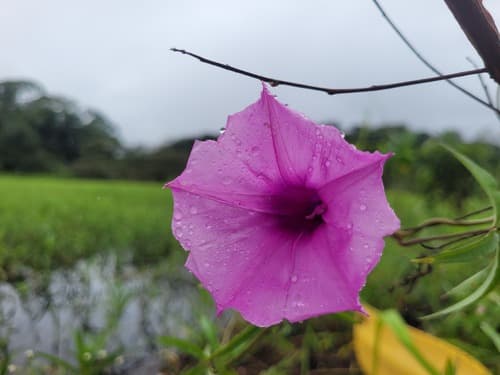
Ipomoea subrevoluta is a climbing or trailing herbaceous vine characterized by its showy, funnel-shaped flowers, typically vibrant purple or pinkish-purple, as seen in the image. Its leaves are generally cordate or sagittate, and it produces small, capsular fruits. The plant often appears covered in fine hairs.