Hydrangea alternifolia
NameHydrangea alternifolia
Scientific NameHydrangea alternifolia
Common NamesAlternate-leaf Hydrangea, Japanese Hydrangea
Plant FamilyHydrangeaceae
Natural HabitatFound in woodlands, forest margins, and along streams in mountainous regions of Japan, Korea, and China.
Parts Usedleaf,root
Medicinal Actionsdiuretic, anti-inflammatory, antioxidant
Traditional UsesTraditionally used in East Asian medicine as a diuretic and for treating urinary tract issues, kidney stones, and bladder infections. The leaves of related species are also known for their sweetening properties and are used to make a ceremonial tea.
Active Constituentshydrangin, saponins, flavonoids, phyllodulcin
Preparation Methodsinfusion, decoction
Contraindications & WarningsLarge doses may cause gastrointestinal upset, dizziness, or chest tightness. Caution is advised for individuals with kidney disease, and during pregnancy or lactation. May interact with diuretic medications or blood thinners.
Cultivation NotesPrefers moist, well-drained soil and partial shade, though it can tolerate full sun if soil moisture is consistent. It is hardy in temperate climates and benefits from protection from harsh afternoon sun.
Raritycommon
Description
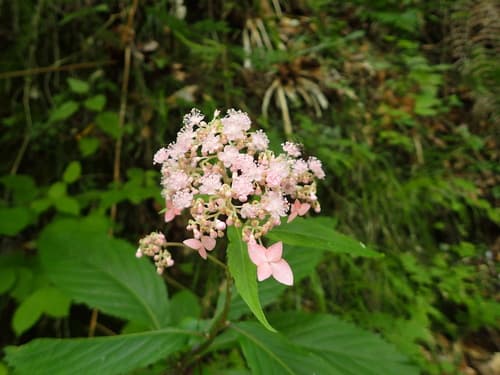
A deciduous shrub native to East Asia, characterized by its alternately arranged, ovate, serrated leaves. It produces flat-topped clusters of small, fertile flowers surrounded by larger, showy sterile flowers, typically pale pink or white.