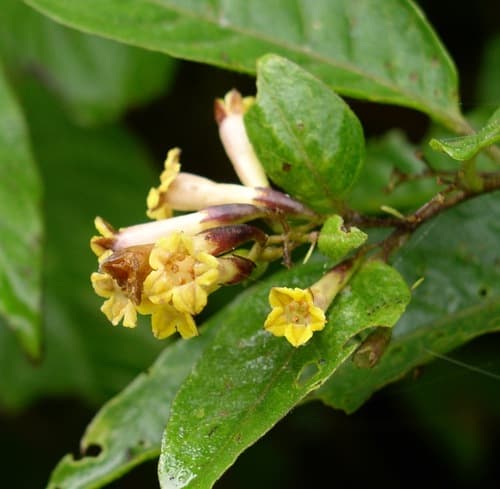
Guatemalan cestrum
NameGuatemalan cestrum
Scientific NameCestrum guatemalense
Common NamesGuatemalan cestrum
Plant FamilySolanaceae
Natural HabitatNative to Central America, particularly Guatemala, where it thrives in moist forests, forest edges, clearings, and disturbed areas, often found at mid-elevations.
Parts Usedleaf,flower
Medicinal Actionsanalgesic, anti-inflammatory
Traditional UsesWhile specific uses for *Cestrum guatemalense* are not widely documented, other *Cestrum* species are traditionally used in Central and South America for treating fevers, pain, inflammation, and certain skin conditions. Due to the genus's known toxicity, these applications are typically external or involve highly cautious, controlled internal use.
Active Constituentssteroidal saponins, glycoalkaloids, flavonoids
Preparation Methodsinfusion, poultice
Contraindications & WarningsAll parts of *Cestrum guatemalense*, like other *Cestrum* species, are considered toxic, especially the berries. Ingestion can cause gastrointestinal upset, neurological symptoms, and respiratory issues. It is contraindicated in pregnancy, lactation, children, and individuals with liver or kidney conditions. Internal use is strongly discouraged without expert supervision due to high toxicity.
Cultivation NotesThis tropical to subtropical plant prefers moist, well-drained soil and can grow in partial shade to full sun. It is sensitive to frost and can be propagated from seeds or cuttings.
Raritycommon
Description
A shrub or small tree characterized by simple, alternate, entire green leaves. It produces clusters of small, tubular, yellowish-orange flowers, typically five-lobed at the mouth, which are followed by small berries.