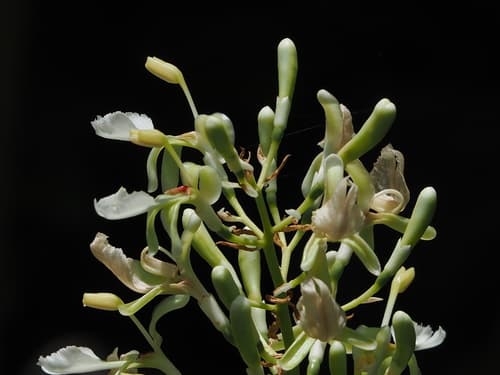
Galangal
NameGalangal
Scientific NameAlpinia galanga
Common NamesGalangal, Greater Galangal, Siamese Ginger, Thai Ginger, Laos Ginger
Plant FamilyZingiberaceae
Natural HabitatNative to Southeast Asia, Galangal thrives in tropical and subtropical climates. It is typically found in moist, well-drained soils, often in partial shade in forest understories or cultivated gardens.
Parts Usedroot,flower
Medicinal Actionsanti-inflammatory, antimicrobial, antioxidant, carminative, expectorant
Traditional UsesTraditionally, galangal rhizome is used to alleviate digestive complaints such as indigestion, nausea, and flatulence, and to stimulate appetite. It is also employed in traditional medicine for respiratory issues like coughs and bronchitis, and for its anti-inflammatory properties in conditions like arthritis and rheumatism. Some cultures use it as a general tonic and stimulant.
Active Constituentsgalangol, galangin, kaempferol, quercetin, cineol, pinene, gingerols
Preparation Methodsinfusion, decoction, tincture, powder, essential oil
Contraindications & WarningsGenerally considered safe in culinary amounts. High doses may cause stomach upset or heartburn. Pregnant and breastfeeding women should use with caution. May interact with blood-thinning medications or medications metabolized by the liver.
Cultivation NotesGalangal prefers warm, humid climates with well-drained, rich, loamy soil. It can be propagated from rhizome cuttings and requires consistent moisture, but not waterlogging. It thrives in partial shade to full sun.
Raritycommon
Description
Galangal is a tropical perennial herb belonging to the ginger family, characterized by its robust rhizome and tall leafy stems. It produces striking terminal inflorescences with pale green to white, often fragrant, flowers. The plant is highly valued for its aromatic and pungent rhizome.