Pacific False Bindweed
NamePacific False Bindweed
Scientific NameCalystegia purpurata
Common NamesPacific False Bindweed, Purple Bindweed, Coast Bindweed
Plant FamilyConvolvulaceae
Natural HabitatNative to coastal California, this plant thrives in chaparral, coastal scrub, and open woodlands. It prefers well-drained soils, often found in sandy or rocky areas, and is tolerant of drought conditions once established.
Parts Usedwhole_plant,root
Medicinal Actionsdiuretic, anti-inflammatory, antimicrobial
Traditional UsesWhile specific traditional medicinal uses for Pacific False Bindweed (*Calystegia purpurata*) are not widely documented, related bindweed species have historically been used as strong purgatives for constipation, primarily from the root. Some traditional applications for related species also include external poultices for skin irritations or wounds, suggesting potential anti-inflammatory or antimicrobial properties.
Active ConstituentsResin glycosides
Preparation Methodsdecoction, poultice, powder
Contraindications & WarningsDue to the strong purgative effects observed in related bindweed species, internal use is generally not recommended. It can cause severe cramping, diarrhea, and is contraindicated for pregnant women, young children, and individuals with gastrointestinal disorders.
Cultivation NotesThis native Californian plant prefers full sun to partial shade and well-drained soil. It is drought-tolerant once established and can be a vigorous grower, spreading readily by rhizomes or seeds. It is often cultivated for its ornamental value in native plant gardens.
Raritycommon
Description
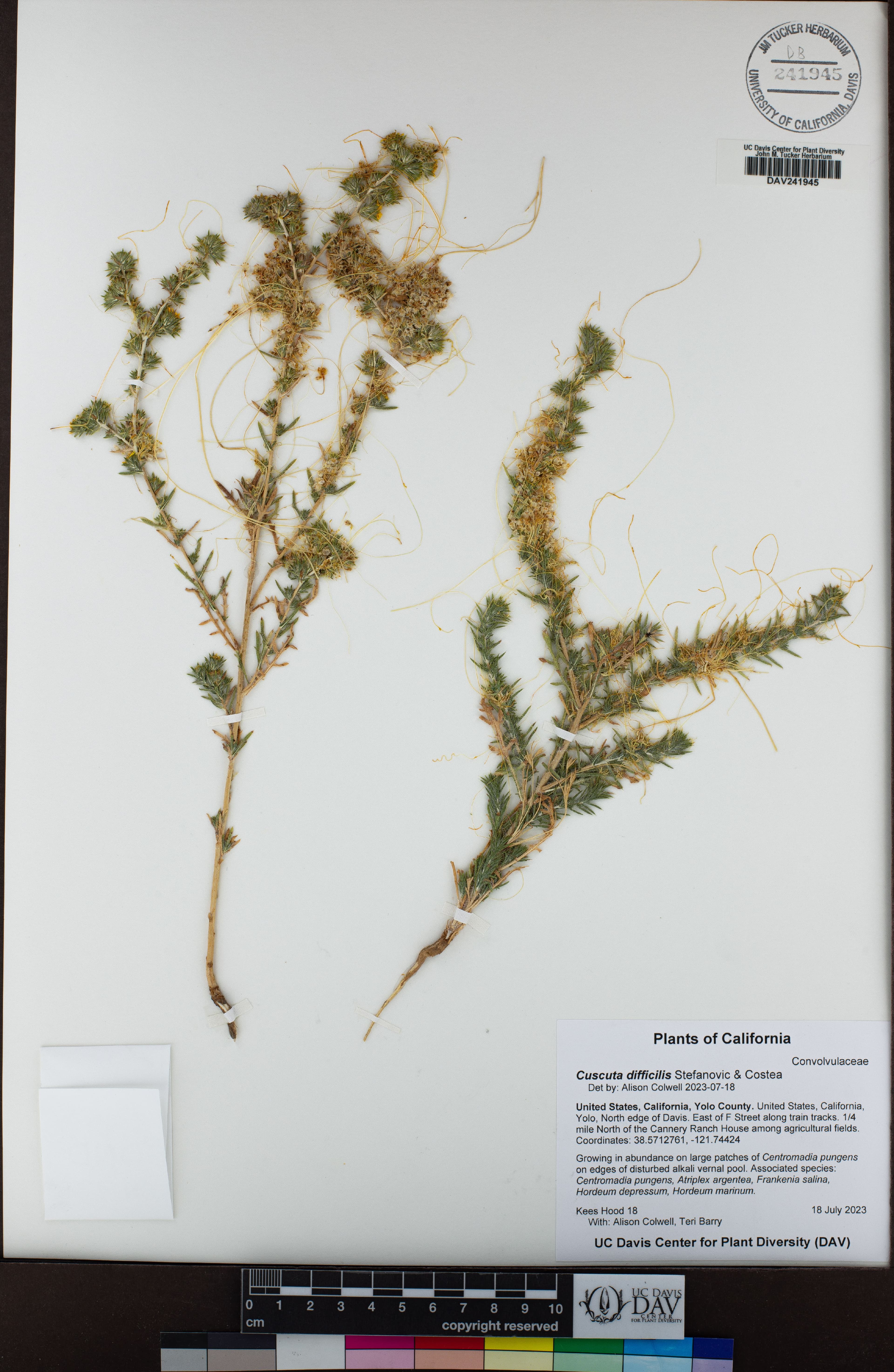
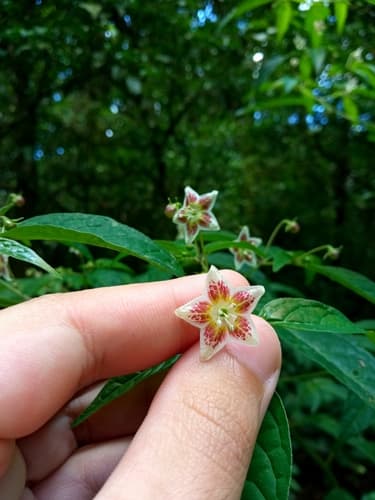
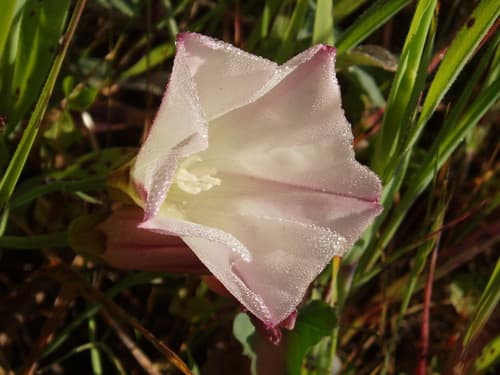
Calystegia purpurata is a perennial herbaceous vine characterized by its climbing or trailing habit and arrow-shaped leaves. It produces showy, trumpet-shaped flowers, typically white to pale pink or purplish, often with darker veins, which are frequently covered in dew in the morning.