Foxglove
NameFoxglove
Scientific NameDigitalis purpurea
Common NamesFoxglove, Purple Foxglove, Lady's Glove, Dead Man's Bells
Plant FamilyPlantaginaceae
Natural HabitatCommonly found in woodlands, forest clearings, heaths, hedgerows, and disturbed ground, preferring acidic to neutral soils. Native to western and southwestern Europe, it is widely naturalized elsewhere.
Parts Usedleaf
Medicinal Actionsdiuretic
Traditional UsesHistorically, Foxglove was used to treat 'dropsy' (edema) and heart conditions, particularly congestive heart failure, due to its ability to strengthen heart contractions and act as a diuretic. It is critical to note that Foxglove is highly poisonous and its use is extremely dangerous outside of controlled pharmaceutical preparations.
Active ConstituentsDigitalin, Digitoxin, Digoxin, Lanatosides
Preparation Methodspowder
Contraindications & WarningsFoxglove is extremely toxic and potentially fatal if ingested in uncontrolled doses. It can cause severe cardiac arrhythmias, nausea, vomiting, diarrhea, and visual disturbances. It interacts with numerous medications, especially other cardiac drugs, diuretics, and calcium channel blockers. It is not for self-medication under any circumstances and should only be used under strict medical supervision in pharmaceutical preparations.
Cultivation NotesGrows best in partial shade to full sun in well-drained, acidic to neutral soil. It is a biennial, forming a rosette of leaves in the first year and flowering in the second. It readily self-seeds. Handle with gloves as skin contact can cause irritation.
Raritycommon
Description
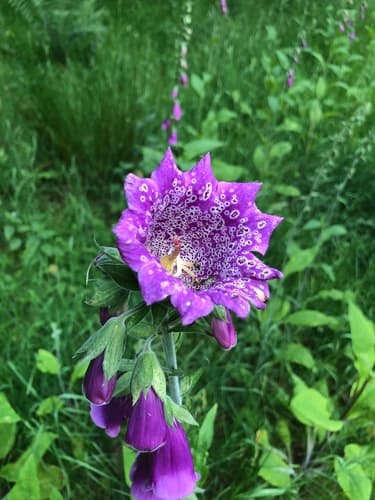
A tall biennial or short-lived perennial herb known for its striking spires of bell-shaped, often purple flowers with distinctive spots inside. Its leaves are downy and form a basal rosette in the first year, flowering in the second.