Forest Bitterberry
NameForest Bitterberry
Scientific NameSolanum dulcamara
Common NamesBittersweet Nightshade, Woody Nightshade, Climbing Nightshade, Fellonwood
Plant FamilySolanaceae
Natural HabitatCommonly found in damp, disturbed areas, woodlands, hedgerows, and along riverbanks. It thrives in partial shade to full sun.
Parts Usedleaf,fruit
Medicinal Actionsanti-inflammatory, diuretic, nervine
Traditional UsesHistorically, the plant, particularly the young shoots and stems, was used externally for skin conditions like eczema, warts, and fungal infections. Internally, in highly diluted forms, it was used as a diuretic, for rheumatism, and as a mild sedative, but its internal use is largely abandoned due to its toxicity.
Active ConstituentsSolanine, solasodine, dulcamarine, saponins, tannins
Preparation Methodsdecoction, tincture, poultice
Contraindications & WarningsALL parts of the plant, especially the unripe berries, are poisonous and can cause nausea, vomiting, diarrhea, slowed heart rate, and convulsions. Internal use is strongly discouraged and should only be done under expert medical supervision due to its narrow therapeutic window and high toxicity. Avoid during pregnancy and lactation.
Cultivation NotesGrows readily from seed or cuttings in moist, well-drained soil. Prefers partial shade but tolerates full sun. Can become invasive in suitable conditions.
Raritycommon
Description
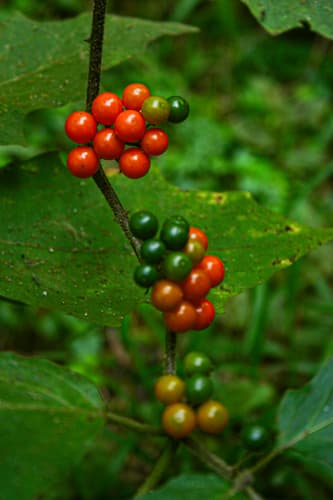
A perennial vine or sprawling shrub, it produces clusters of small, round berries that ripen from green to yellow-orange and finally to bright red. Its leaves are typically ovate to heart-shaped, often with small lobes at the base.