Ethiopian eggplant
NameEthiopian eggplant
Scientific NameSolanum aethiopicum
Common NamesEthiopian eggplant, Gilo, Nakati, African eggplant, Scarlet eggplant
Plant FamilySolanaceae
Natural HabitatNative to tropical Africa, this plant thrives in warm, humid climates and is widely cultivated across Africa and parts of Asia for its culinary and medicinal value. It prefers full sun and well-drained, fertile soils.
Parts Usedfruit,leaf
Medicinal Actionsantioxidant, anti-inflammatory, antimicrobial, diuretic, analgesic
Traditional UsesTraditionally, the fruits and leaves are consumed as vegetables, providing essential nutrients. Medicinally, it is used to treat conditions like fever, stomach ailments, and hypertension, and is valued for its diuretic and appetite-stimulating properties. Leaves are sometimes applied topically as a poultice for skin inflammations.
Active ConstituentsGlycoalkaloids, Flavonoids, Phenolic acids, Saponins, Vitamins (A, C)
Preparation Methodsinfusion, decoction, powder, poultice
Contraindications & WarningsWhile generally safe as a food, excessive consumption of unripe fruits or concentrated medicinal preparations may be problematic due to glycoalkaloids. Individuals with nightshade allergies should be cautious, and pregnant or breastfeeding women should consult a healthcare provider before medicinal use.
Cultivation NotesThis plant requires full sun and consistently moist, fertile, well-drained soil. It is a warm-season crop, highly sensitive to frost, and typically grown from seed.
Raritycommon
Description
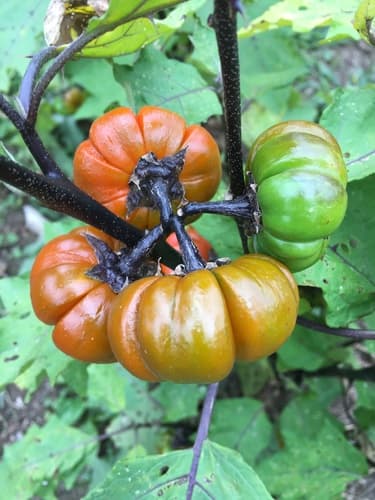
Solanum aethiopicum is an annual or short-lived perennial herbaceous plant, often cultivated for its edible, ribbed fruits. These fruits mature from green to orange or red, displaying a distinctive pumpkin-like shape as seen in the image.