Eriolarynx
NameEriolarynx
Scientific NameEriolarynx lorentzii
Common NamesLorentz's Eriolarynx
Plant FamilySolanaceae
Natural HabitatNative to subtropical and tropical regions of South America, particularly found in dry forests and scrublands of Argentina, Bolivia, and Paraguay.
Parts Usedwhole_plant
Medicinal Actionsanalgesic, anti-inflammatory, sedative
Traditional UsesWhile *Eriolarynx lorentzii* is a member of the Solanaceae family, known for many medicinally potent (and often toxic) plants, specific traditional medicinal uses for this particular species are not widely documented in ethnobotanical literature. General uses within the family often involve potent alkaloids for pain relief or sedation, but require extreme caution due to toxicity.
Active ConstituentsAlkaloids (e.g., tropane alkaloids, steroidal alkaloids), flavonoids, saponins
Preparation Methodstincture, powder
Contraindications & WarningsDue to its membership in the Solanaceae family, *Eriolarynx lorentzii* is presumed to contain potent alkaloids that can be highly toxic. Ingestion or topical application is strongly contraindicated without expert guidance. Potential side effects include severe neurological effects, cardiac issues, and death. Avoid during pregnancy, lactation, and in individuals with heart conditions, glaucoma, or prostate enlargement. Interacts with numerous medications, especially anticholinergics and CNS depressants.
Cultivation NotesPrefers well-drained soil and full sun to partial shade. Thrives in warm, subtropical to tropical climates. Propagation is typically by seed or cuttings. Requires moderate watering once established.
Rarityuncommon
Description
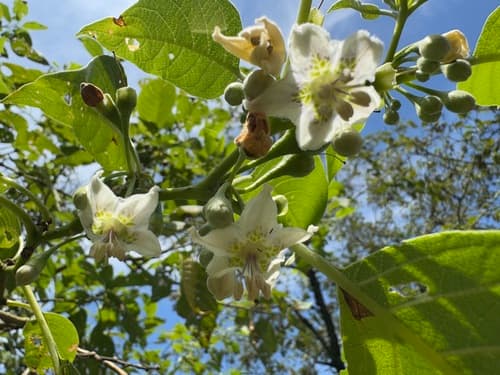
This is a shrub or small tree belonging to the nightshade family, characterized by its simple, green leaves. It produces distinctive white to yellowish-white, star-shaped flowers, often marked with greenish spots or lines in the throat, and numerous small, round flower buds.