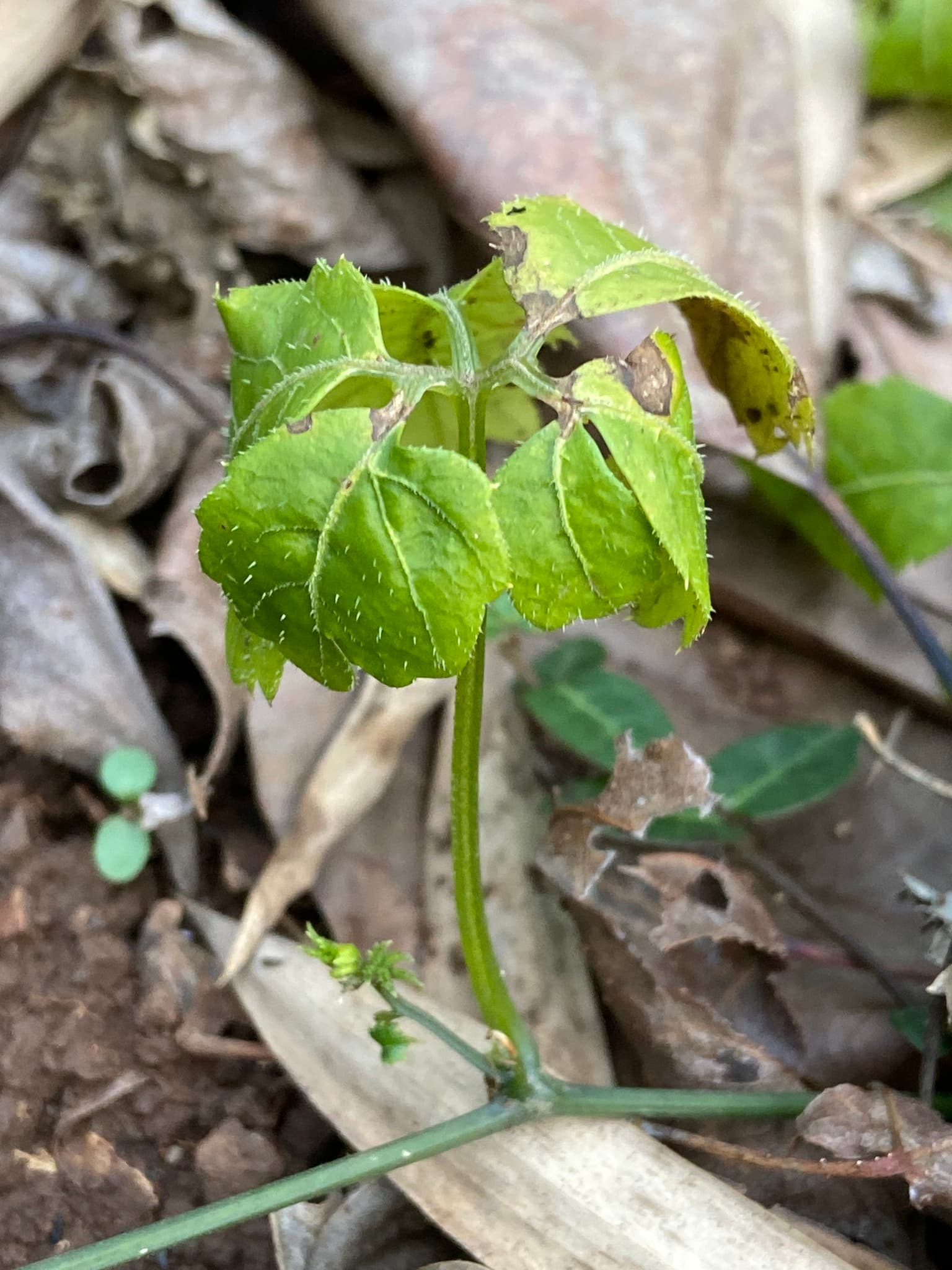
Eleuthero (Siberian Ginseng)
Image: Hugo Sun (cc-by-nc)
NameEleuthero (Siberian Ginseng)
Scientific NameEleutherococcus senticosus
Common NamesEleuthero, Siberian Ginseng, Devil's Shrub, Touch-me-not
Plant FamilyAraliaceae
Natural HabitatNative to southeastern Siberia, the Russian Far East, northern China, Korea, and Japan. It thrives in mixed mountain forests, often found in the undergrowth or along forest edges.
Parts Usedroot
Medicinal Actionsadaptogen, antioxidant, anti-inflammatory, antimicrobial
Traditional UsesTraditionally used to enhance physical and mental endurance, reduce fatigue, and support the immune system. It is often employed during periods of stress, convalescence, and to improve overall vitality and concentration.
Active ConstituentsEleutherosides (A, B, C, D, E, F, G), polysaccharides, triterpenoid saponins
Preparation Methodsdecoction, tincture, powder, infusion
Contraindications & WarningsMay interact with blood thinners, digoxin, and medications for diabetes or high blood pressure. Not recommended for individuals with high blood pressure, heart conditions, or during acute infections with fever. Pregnant and breastfeeding women should avoid use.
Cultivation NotesPrefers partial shade to full sun and well-drained, moist soil. It is a hardy plant, tolerant of cold climates. Propagation is typically by seed or root cuttings.
Raritycommon
Description
Eleuthero is a thorny deciduous shrub typically growing 6-15 feet tall, characterized by palmate leaves with five to seven serrated leaflets. It produces small, spherical clusters of purple flowers followed by black, berry-like fruits. The root is the primary medicinal part.