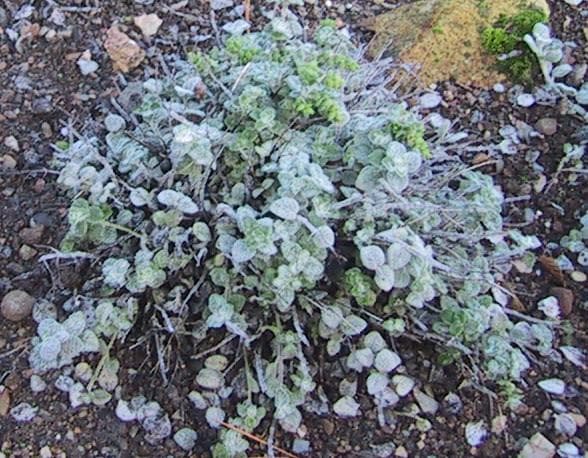
Dittany of Crete
NameDittany of Crete
Scientific NameOriganum dictamnus
Common NamesDittany of Crete, Cretan Dittany, Hop Marjoram, Erontas
Plant FamilyLamiaceae
Natural HabitatNative to the rocky slopes, cliffs, and gorges of the mountains of Crete, thriving in limestone crevices and well-drained, sunny, exposed conditions.
Parts Usedleaf,flower,whole_plant
Medicinal Actionsanalgesic, anti-inflammatory, antimicrobial, antioxidant, carminative, expectorant, nervine
Traditional UsesTraditionally used as a medicinal tea for colds, sore throats, and digestive issues like stomach ache and indigestion. It was also applied externally for wound healing and to alleviate rheumatic pains, and revered as a general tonic.
Active ConstituentsCarvacrol, Thymol, p-Cymene, γ-Terpinene, Rosmarinic acid, Flavonoids
Preparation Methodsinfusion, decoction, tincture, poultice, essential oil, powder, salve
Contraindications & WarningsGenerally safe in moderate amounts. High doses of essential oil should be avoided, especially internally, due to potential toxicity. Pregnant and breastfeeding women should use with caution.
Cultivation NotesRequires full sun and excellent drainage, preferring rocky, alkaline soil. It is drought-tolerant once established and can be grown from seed or cuttings. While tolerant of mild frost, it is sensitive to very cold temperatures.
Rarityuncommon
Description
A perennial subshrub endemic to Crete, characterized by its small, rounded, velvety, silvery-green leaves and delicate pinkish-purple flowers. It forms a low-growing, trailing mound, often covered in fine white hairs.