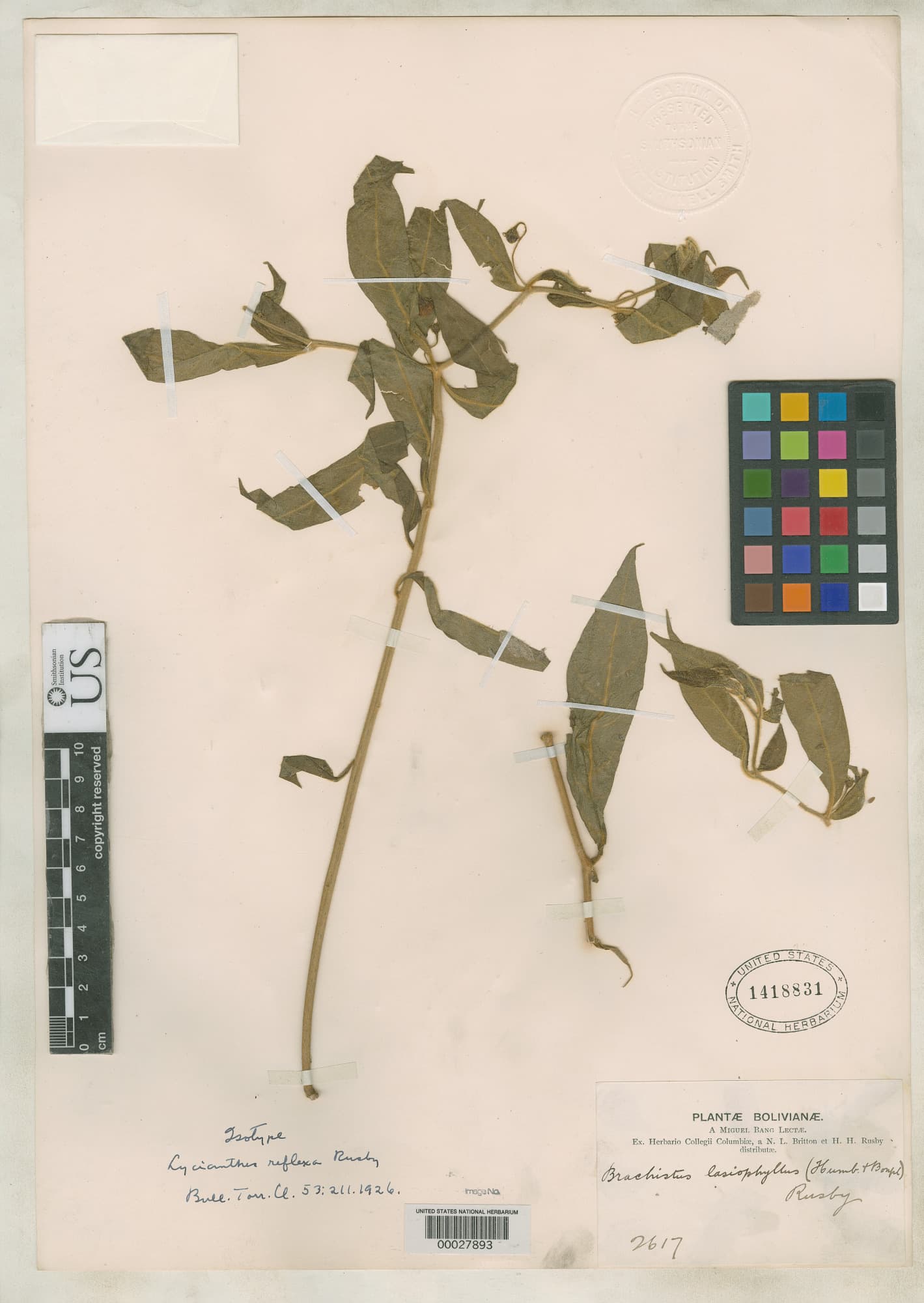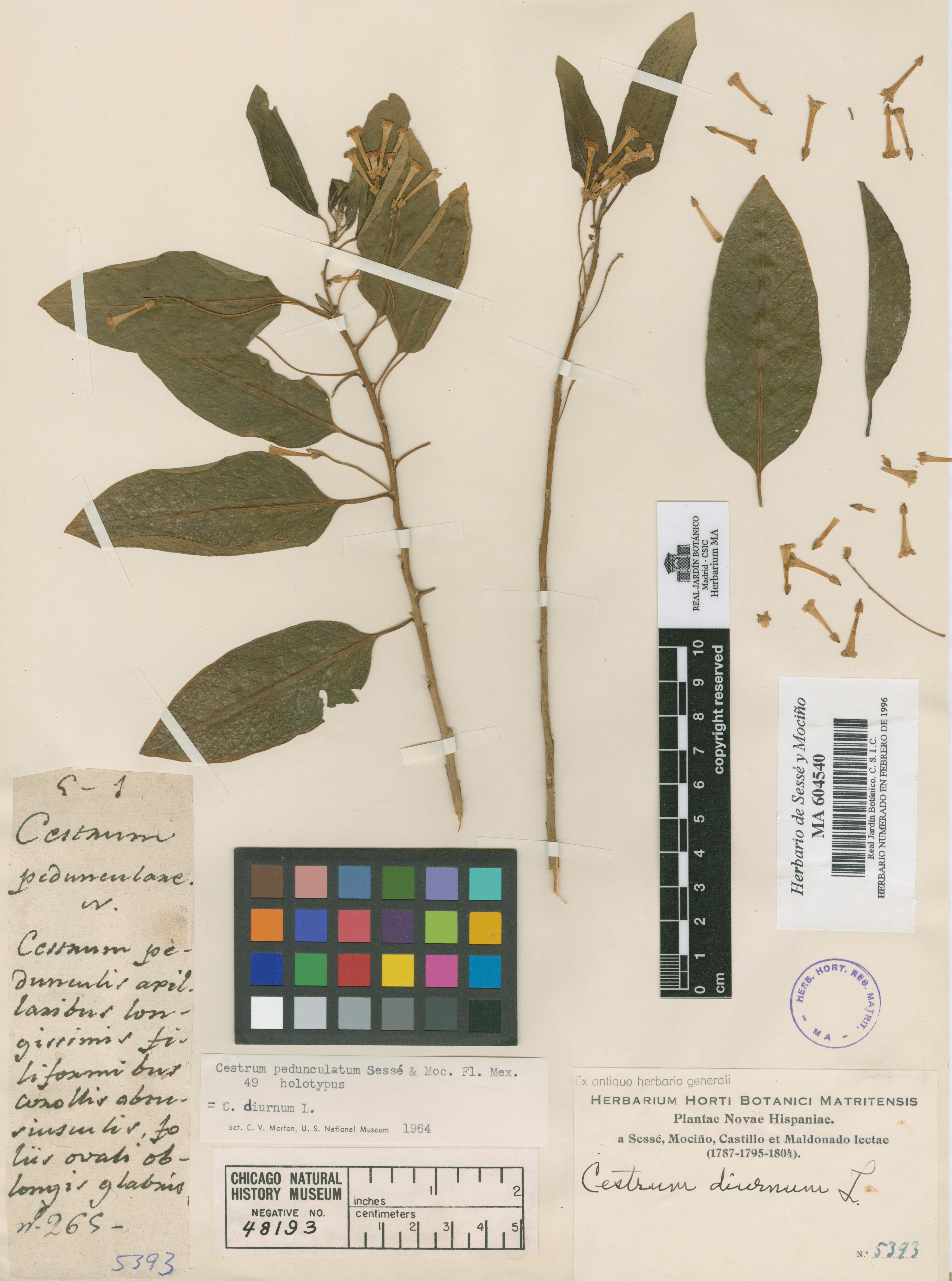
Day-blooming Jessamine
Image: Sessé & Mociño (cc-by-nc)
NameDay-blooming Jessamine
Scientific NameCestrum diurnum L.
Common NamesDay-blooming Jessamine, Day Jessamine, Day Jasmine, Inkberry, China Berry
Plant FamilySolanaceae
Natural HabitatNative to the West Indies, this plant is now widely naturalized in tropical and subtropical regions worldwide. It thrives in disturbed areas, forest edges, roadsides, and open woodlands, preferring full sun to partial shade and well-drained soils.
Parts Usedleaf,flower,fruit
Medicinal Actionsantimicrobial, anti-inflammatory
Traditional UsesHistorically, some traditional medicine systems have used Cestrum diurnum leaves externally for skin conditions or swellings. It has also been used as a purgative or emetic, though these effects are primarily due to its inherent toxicity. Its use is generally discouraged due to high toxicity.
Active ConstituentsSolasodine, Solasonine, Solamargine, Saponins, Flavonoids
Preparation Methodspoultice, decoction
Contraindications & WarningsAll parts of Cestrum diurnum are highly toxic, especially the berries, due to steroidal glycoalkaloids. Ingestion can cause severe gastrointestinal distress, neurological symptoms, and cardiac issues. It is highly toxic to humans and livestock. Internal use is strongly contraindicated. Avoid use by pregnant/nursing women, children, and individuals with liver/kidney conditions.
Cultivation NotesThis plant is often cultivated as an ornamental shrub for its fragrant flowers and attractive berries in tropical and subtropical climates. It prefers full sun to partial shade and well-drained soil, tolerating various soil types and some drought. Propagation is typically by seeds or cuttings.
Raritycommon
Description
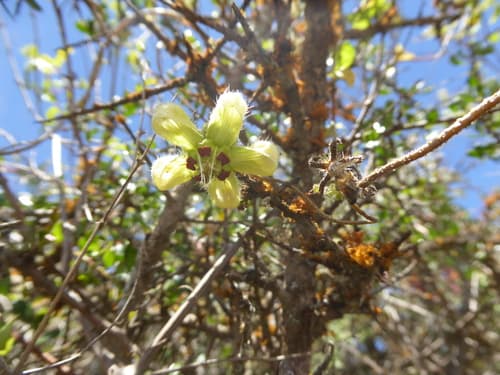
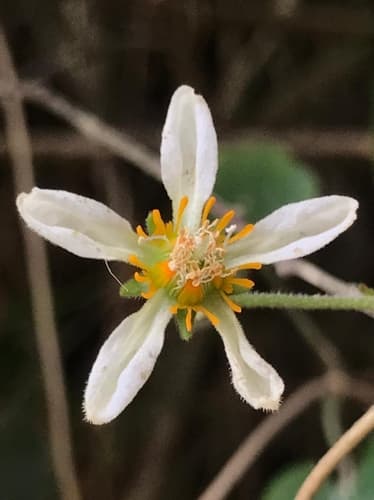
Cestrum diurnum is an evergreen shrub or small tree, typically growing 2-5 meters tall, with slender branches. It features alternate, simple, ovate to oblong-elliptic leaves and clusters of small, fragrant, white tubular flowers that open during the day, followed by small, dark purple to black berries.