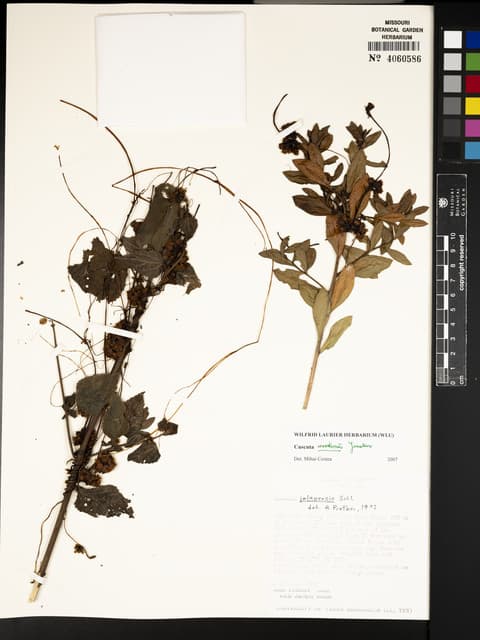
Cuscuta woodsonii
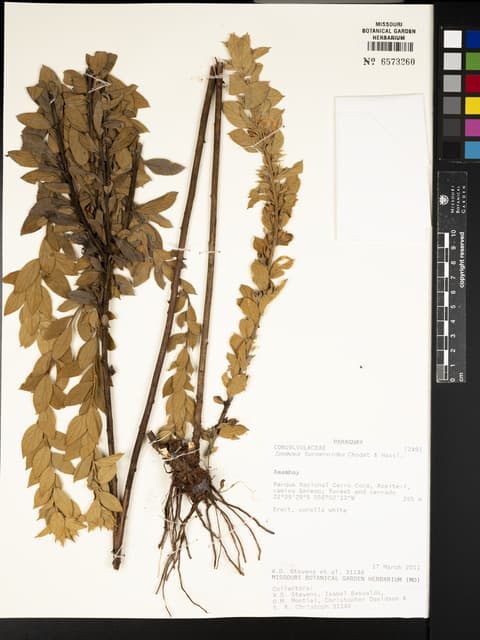
Image: MBG (cc-by-nc)
NameCuscuta woodsonii
Scientific NameCuscuta woodsonii Yunck.
Common NamesWoodson's Dodder, Dodder, Love Vine
Plant FamilyConvolvulaceae
Natural HabitatTypically found in disturbed areas, fields, and along roadsides in tropical and subtropical regions of the Americas, parasitizing a variety of herbaceous and woody host plants.
Parts Usedwhole_plant,seed
Medicinal Actionsantioxidant, anti-inflammatory, diuretic
Traditional UsesWhile specific traditional uses for *Cuscuta woodsonii* are less documented, other *Cuscuta* species (like *C. chinensis* and *C. japonica*) are widely used in Traditional Chinese Medicine (TCM). They are traditionally employed to tonify the kidney and liver, improve vision, treat conditions such as impotence, premature ejaculation, frequent urination, and leukorrhea, and to strengthen bones.
Active ConstituentsFlavonoids, Lignans, Polysaccharides, Alkaloids, Coumarins
Preparation Methodsinfusion, decoction, powder, tincture
Contraindications & WarningsGenerally, *Cuscuta* species are contraindicated in pregnancy and lactation. Caution is advised for individuals with yin deficiency with heat signs. Potential interactions with blood thinners or hormonal therapies should be considered.
Cultivation NotesAs an obligate parasitic plant, *Cuscuta woodsonii* cannot be cultivated independently. It requires a suitable host plant for germination and survival, attaching to it via haustoria to draw water and nutrients.
Rarityuncommon
Description
Cuscuta woodsonii is an obligate parasitic plant characterized by its slender, thread-like, yellow to orange stems that twine tightly around host plants. It lacks true roots and leaves, instead absorbing nutrients through specialized structures called haustoria that penetrate the host's vascular tissue.