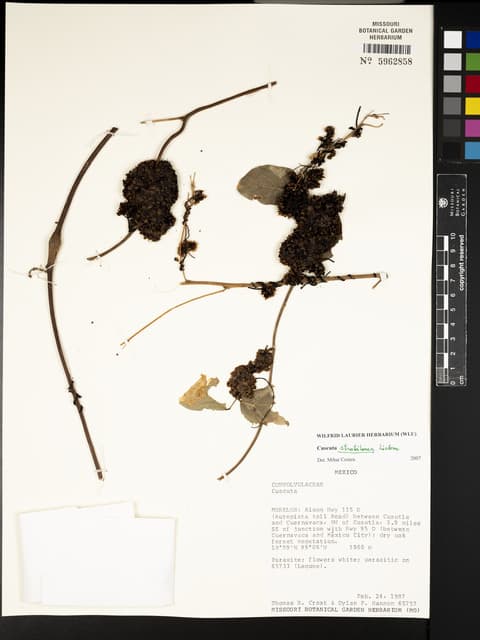
Cuscuta strobilacea
Image: MBG (cc-by-nc)
NameCuscuta strobilacea
Scientific NameCuscuta strobilacea
Common NamesDodder, Love Vine, Strangleweed
Plant FamilyConvolvulaceae
Natural HabitatThis species is found in dry oak forest vegetation, as observed in Mexico, where it parasitizes various host plants, including legumes. It thrives in specific ecological niches where suitable hosts are present.
Parts Usedwhole_plant,seed
Medicinal Actionsadaptogen, anti-inflammatory, antioxidant, diuretic
Traditional UsesTraditionally, species of Cuscuta, including related dodders, have been used as a general tonic, particularly for kidney and liver support. They are often employed to address issues such as impotence, premature ejaculation, frequent urination, blurred vision, and tinnitus, believed to strengthen the kidneys and liver and improve overall vitality.
Active Constituentsflavonoids, lignans, polysaccharides, saponins
Preparation Methodsinfusion, decoction, powder, tincture
Contraindications & WarningsDue to its parasitic nature, Cuscuta species can be potent. Pregnant or breastfeeding women should avoid use. Individuals with chronic conditions or those on medication should consult a healthcare professional before use, as interactions are possible. Excessive use may lead to digestive upset.
Cultivation NotesAs a parasitic plant, Cuscuta strobilacea cannot be cultivated independently. It requires a suitable host plant to grow, attaching itself via haustoria to extract nutrients. Cultivation is generally not undertaken for medicinal purposes, as it is often considered a weed in agricultural settings.
Rarityuncommon
Description
Cuscuta strobilacea is a parasitic annual vine characterized by its slender, leafless, yellowish-brown stems that twine tightly around host plants. It lacks chlorophyll and obtains all its nutrients from the host via haustoria. Small, white flowers are typically borne in dense clusters along the stems, later developing into small fruits.