Cuscuta pulchella
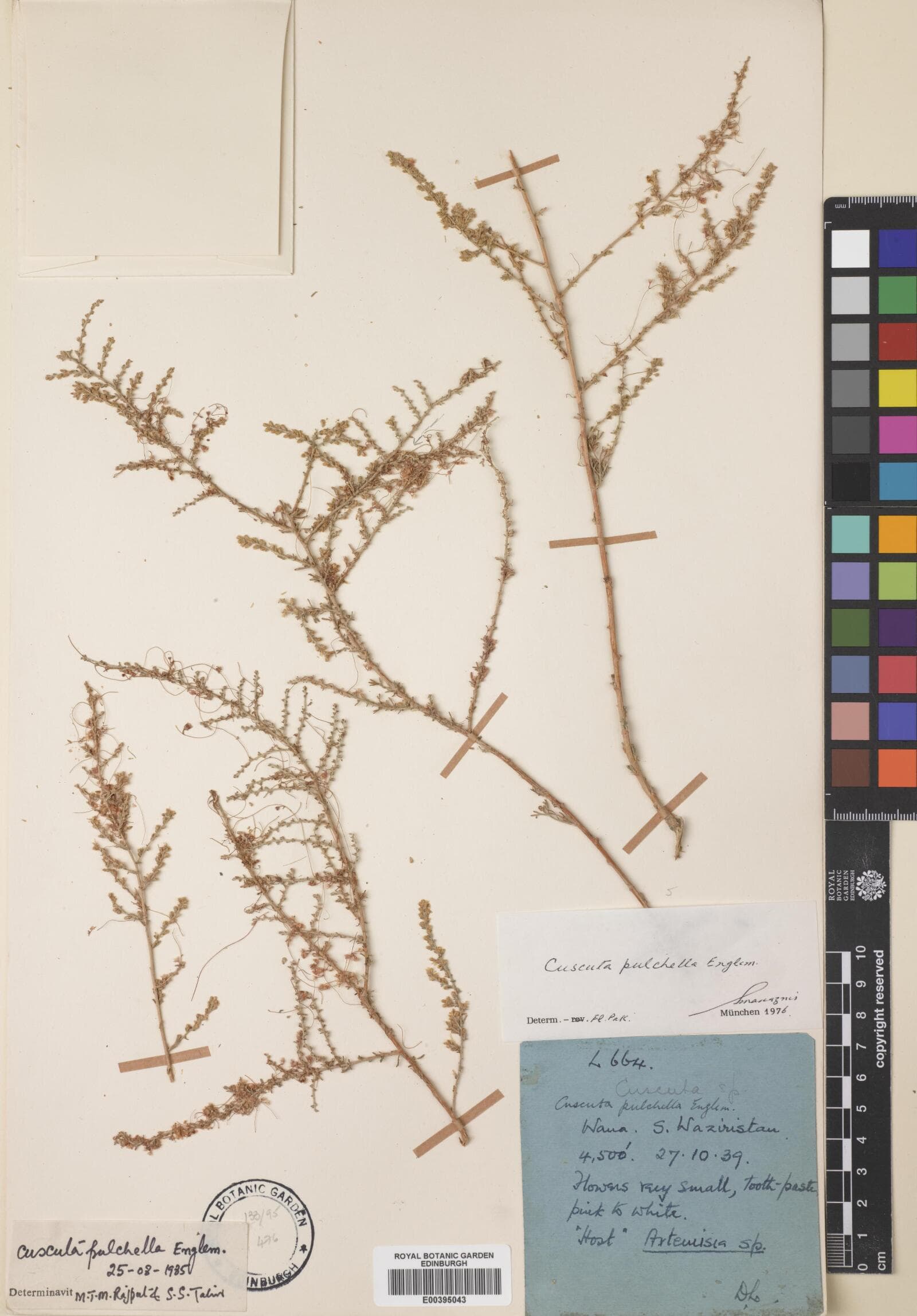
Image: Royal Botanic Garden Edinburgh (cc0)
NameCuscuta pulchella
Scientific NameCuscuta pulchella Engelm.
Common NamesDodder, Love Vine
Plant FamilyConvolvulaceae
Natural HabitatThis parasitic plant grows on various host species, often in arid or semi-arid regions. The specimen was collected in Wana, South Waziristan, at an altitude of 4,500 feet, specifically noted to be parasitic on Artemisia sp.
Parts Usedwhole_plant,seed
Medicinal Actionsantioxidant, anti-inflammatory, adaptogen, diuretic
Traditional UsesTraditionally, species of Cuscuta, including its seeds (Semen Cuscutae), are used in various herbal medicine systems for kidney and liver support. They are often employed to address issues like kidney deficiency, impotence, premature ejaculation, urinary problems, and to strengthen bones and tendons.
Active ConstituentsFlavonoids, Lignans, Polysaccharides, Coumarins, Phenolic acids
Preparation Methodsinfusion, decoction, tincture, powder
Contraindications & WarningsAvoid during pregnancy and lactation. Caution is advised for individuals with yin deficiency with heat signs or excess heat conditions. Potential interactions with hormone-related medications or drugs affecting liver and kidney function should be considered.
Cultivation NotesAs an obligate parasitic plant, Cuscuta pulchella cannot be cultivated independently. It requires a suitable host plant, such as Artemisia species, to establish and grow, making intentional cultivation challenging for medicinal purposes.
Rarityuncommon
Description
Cuscuta pulchella is an obligate parasitic plant characterized by its slender, leafless, thread-like stems that twine around host plants. The specimen shows dried, yellowish-brown stems with small, clustered structures, indicative of its minute flowers which are noted to be 'tooth-paste pink to white'.