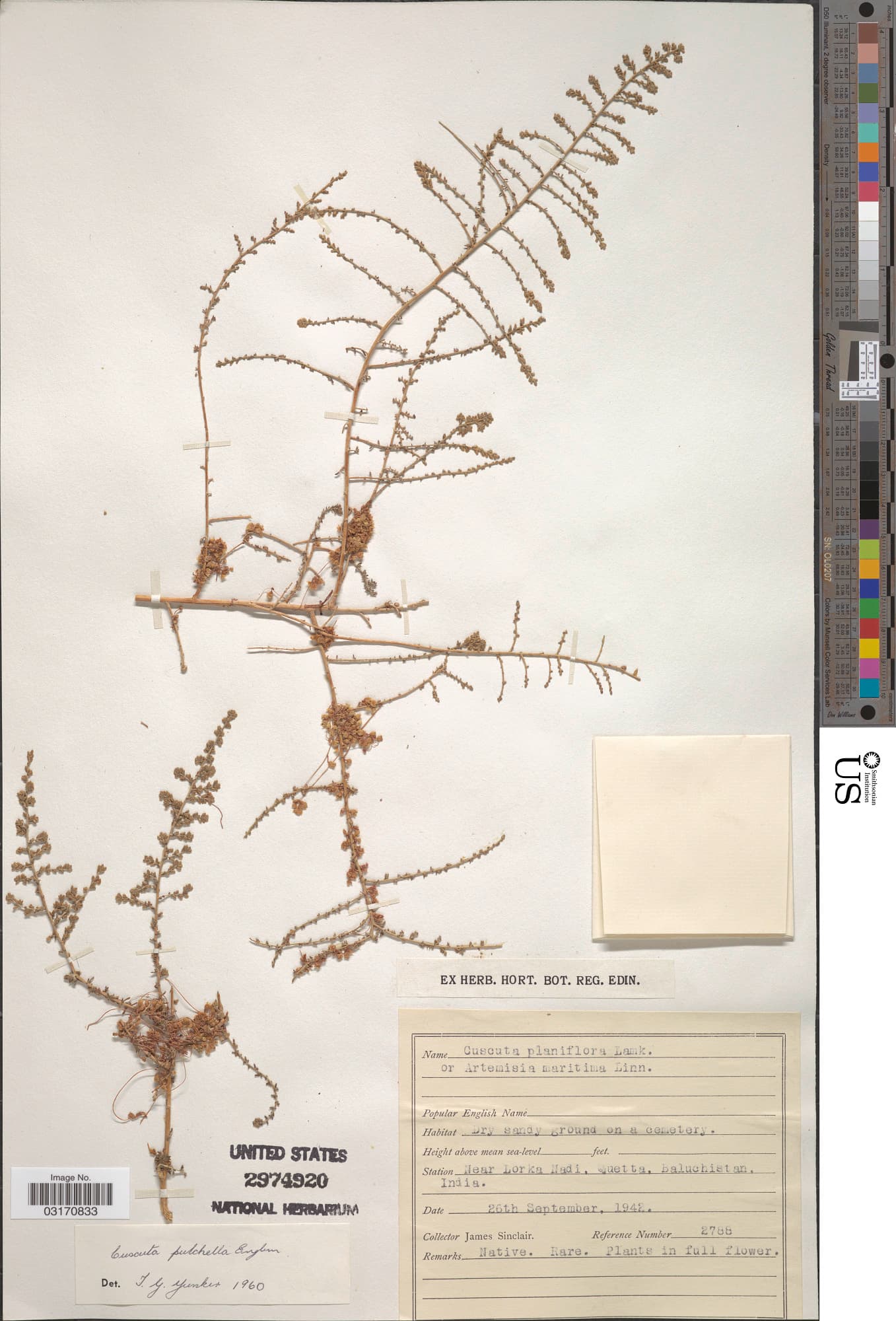
Cuscuta pulchella
Image: Conveyor Belt (cc0)
NameCuscuta pulchella
Scientific NameCuscuta pulchella Engelm.
Common NamesDodder
Plant FamilyConvolvulaceae
Natural HabitatFound on dry sandy ground, as noted on a cemetery in the region of Porka Nadi, Quetta, Baluchistan (now Pakistan). It is an obligate parasite, requiring a host plant to survive.
Parts Usedwhole_plant,seed
Medicinal Actionsantioxidant, anti-inflammatory, diuretic, adaptogen
Traditional UsesTraditionally, species of Cuscuta are used to support liver and kidney function, improve vision, strengthen bones, and address reproductive issues such as impotence. It is also employed as a general tonic and for various urinary problems.
Active ConstituentsFlavonoids, Lignans, Polysaccharides, Saponins
Preparation Methodsinfusion, decoction, powder, tincture
Contraindications & WarningsGenerally contraindicated during pregnancy and lactation. May interact with blood-thinning medications or affect blood sugar levels. Individuals with chronic diseases should consult a healthcare professional before use.
Cultivation NotesAs an obligate parasitic plant, Cuscuta pulchella cannot be cultivated independently. It requires a suitable host plant to grow and thrive, making conventional cultivation difficult.
Rarityrare
Description
Cuscuta pulchella is a parasitic annual plant characterized by its slender, twining, leafless stems that are typically yellowish-brown. It forms dense, tangled masses over host plants, producing small, clustered flowers or fruits along its stems.