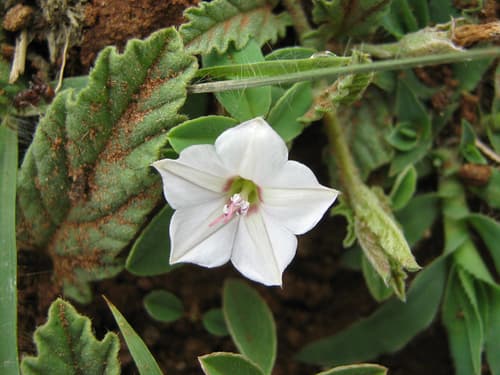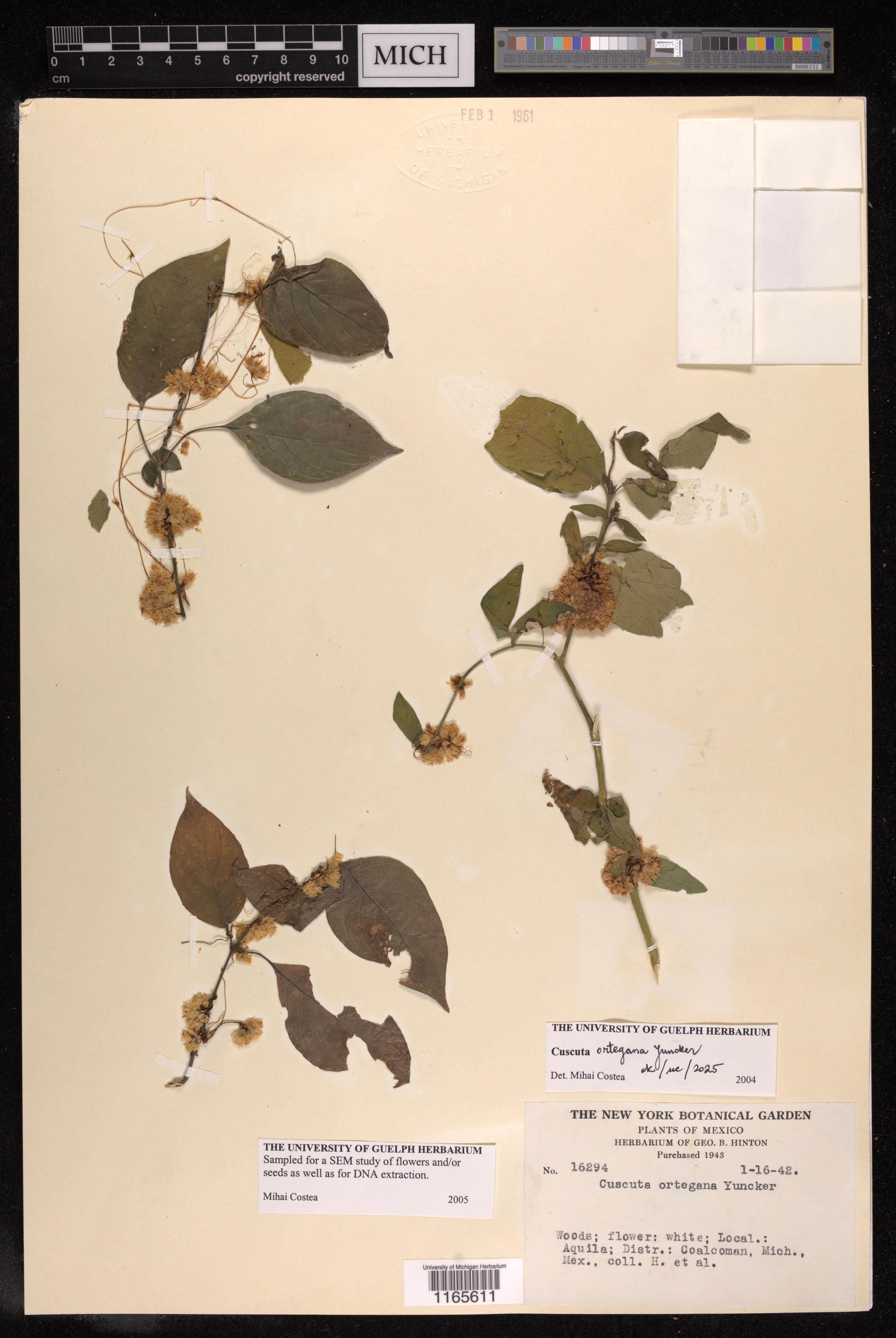
Cuscuta ortegana
Image: Geo. B. Hinton (cc-by-nc)
NameCuscuta ortegana
Scientific NameCuscuta ortegana Yunck.
Common NamesDodder, Ortega's Dodder
Plant FamilyConvolvulaceae
Natural HabitatThis parasitic plant is typically found in wooded areas, where it attaches to and draws nutrients from various host plants. The specimen was collected in Mexico, indicating its native range in such environments.
Parts Usedwhole_plant,seed
Medicinal Actionsantioxidant, anti-inflammatory, adaptogen, diuretic, astringent
Traditional UsesTraditionally, species of Cuscuta, particularly their seeds (known as Tu Si Zi in Traditional Chinese Medicine), are used to tonify the kidneys and liver, improve vision, strengthen bones, and address issues like impotence, premature ejaculation, and frequent urination. They are also employed as a general tonic and for certain skin conditions.
Active ConstituentsFlavonoids, Lignans, Polysaccharides, Coumarins, Saponins
Preparation Methodsinfusion, decoction, powder, tincture
Contraindications & WarningsCuscuta species are generally contraindicated during pregnancy and lactation. Individuals with yin deficiency with heat signs should exercise caution. Potential interactions with blood-thinning medications or other drugs may exist; consultation with a healthcare professional is advised.
Cultivation NotesAs an obligate parasitic plant, Cuscuta ortegana cannot be cultivated independently. It requires a suitable host plant to germinate, attach its haustoria, and draw all necessary nutrients for growth and survival.
Rarityuncommon
Description
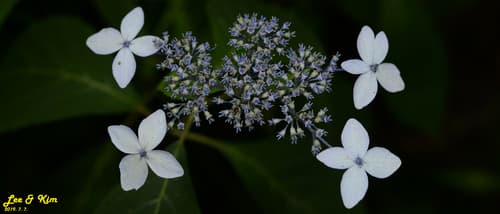
Cuscuta ortegana is a parasitic annual vine characterized by its slender, yellowish-orange, thread-like stems that twine around host plants. It lacks true leaves and produces small, clustered white flowers, as observed in the herbarium specimen.