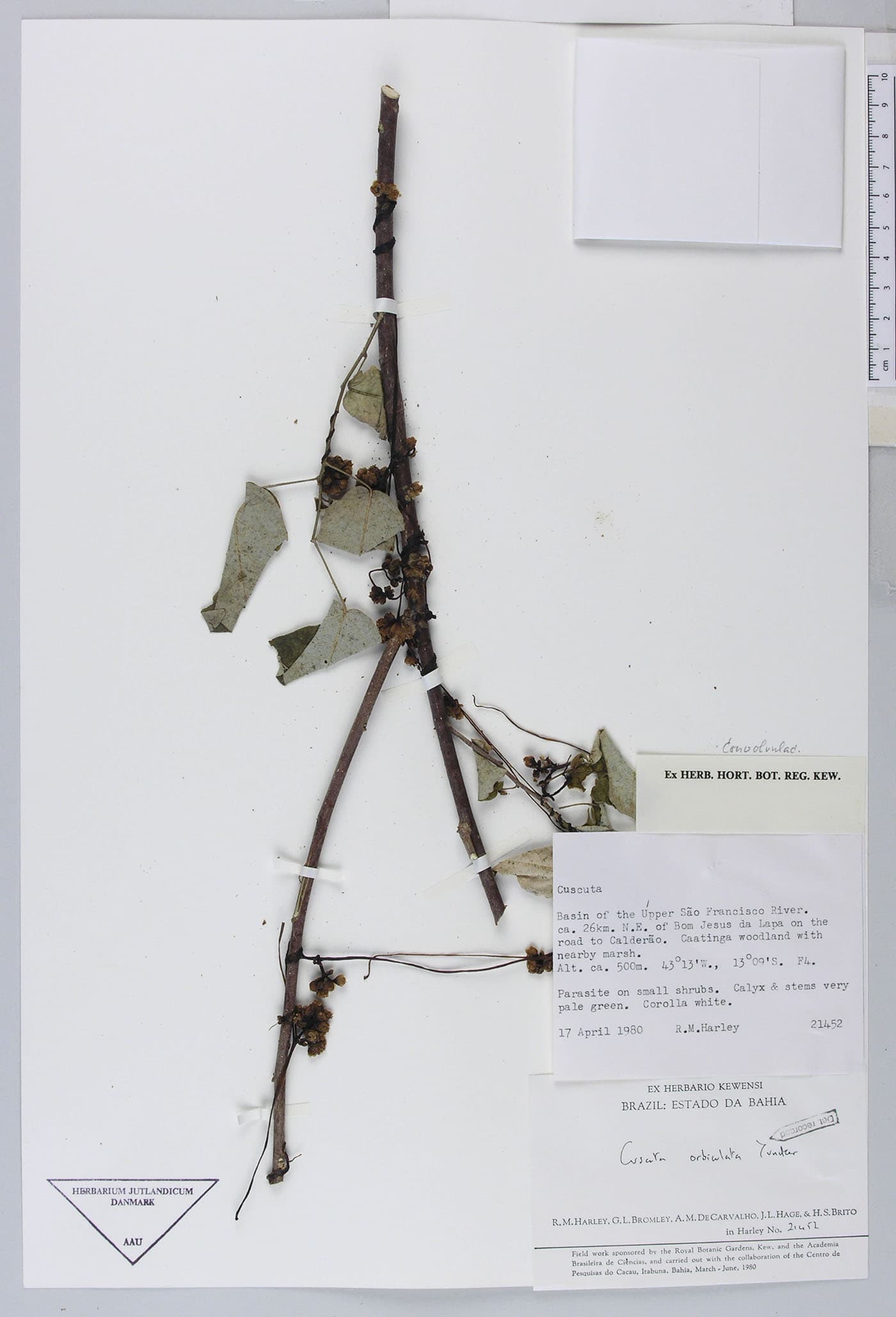
Cuscuta orbiculata
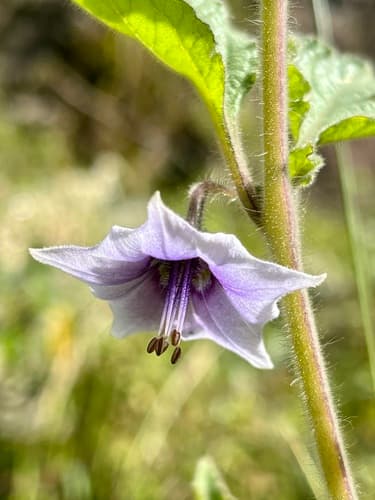
Image: R.M. Harley (cc-by)
NameCuscuta orbiculata
Scientific NameCuscuta orbiculata
Common NamesDodder, Love Vine
Plant FamilyConvolvulaceae
Natural HabitatFound in Caatinga woodland with nearby marsh, specifically in the Basin of the Upper São Francisco River in Bahia, Brazil, at an altitude of approximately 500m. It parasitizes small shrubs.
Parts Usedwhole_plant,seed
Medicinal Actionsantioxidant, anti-inflammatory, diuretic, astringent, adaptogen
Traditional UsesTraditionally, species of Cuscuta are used in various herbal traditions, particularly in Traditional Chinese Medicine (TCM) and Ayurveda. They are often employed as a kidney tonic, to support liver function, improve eye health, address male infertility, premature ejaculation, frequent urination, and chronic diarrhea.
Active ConstituentsFlavonoids, Lignans, Polysaccharides, Saponins
Preparation Methodsinfusion, decoction, powder, tincture
Contraindications & WarningsNot recommended during pregnancy. Caution is advised for individuals with yin deficiency with heat signs (in TCM) or those with blood stasis. Potential interactions with diuretic or hormone-modulating medications should be considered.
Cultivation NotesAs a parasitic plant, Cuscuta orbiculata is extremely difficult to cultivate intentionally. It requires a suitable host plant to survive and thrive, making it generally unsuitable for conventional cultivation methods. It is often considered a weed in agricultural settings.
Rarityuncommon
Description
Cuscuta orbiculata is a parasitic vine characterized by its thread-like, pale green stems that twine around host shrubs. It lacks true leaves and roots, obtaining nutrients directly from its host. Its small flowers are white.