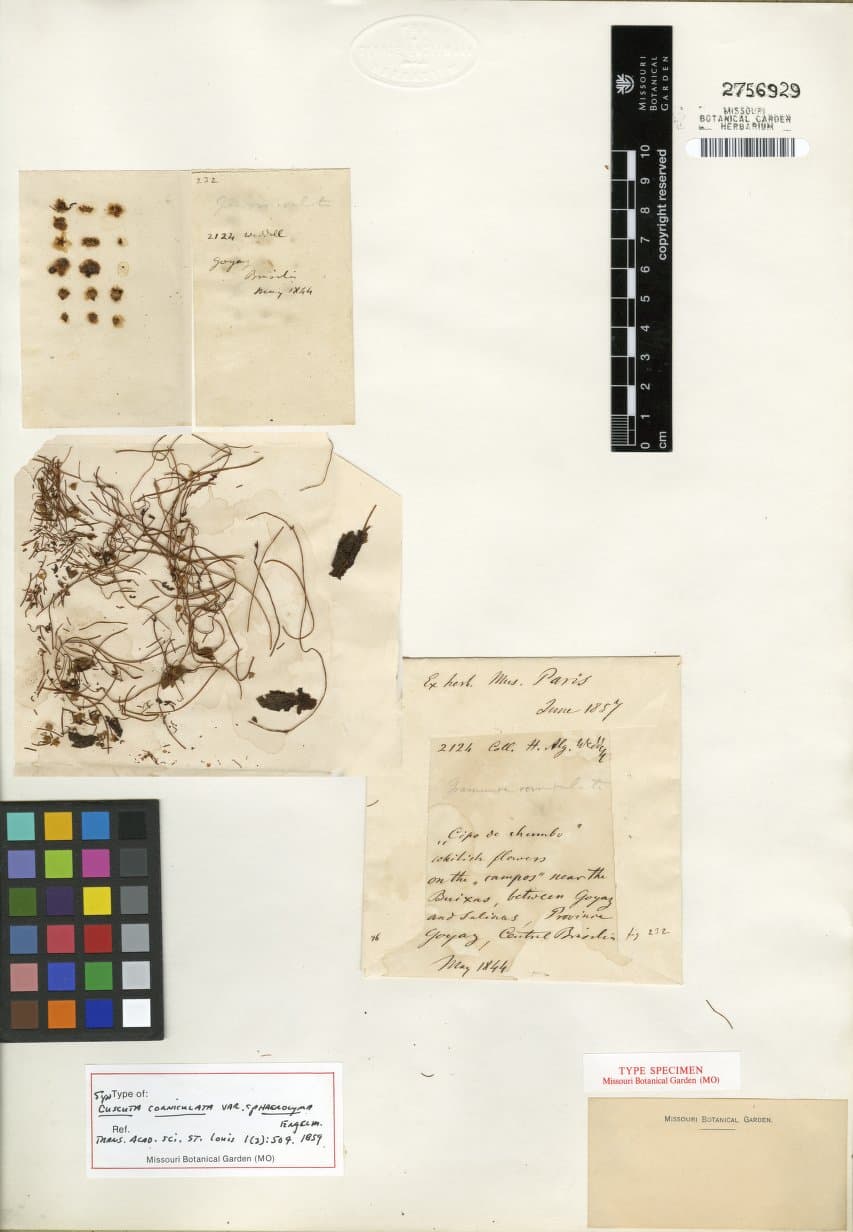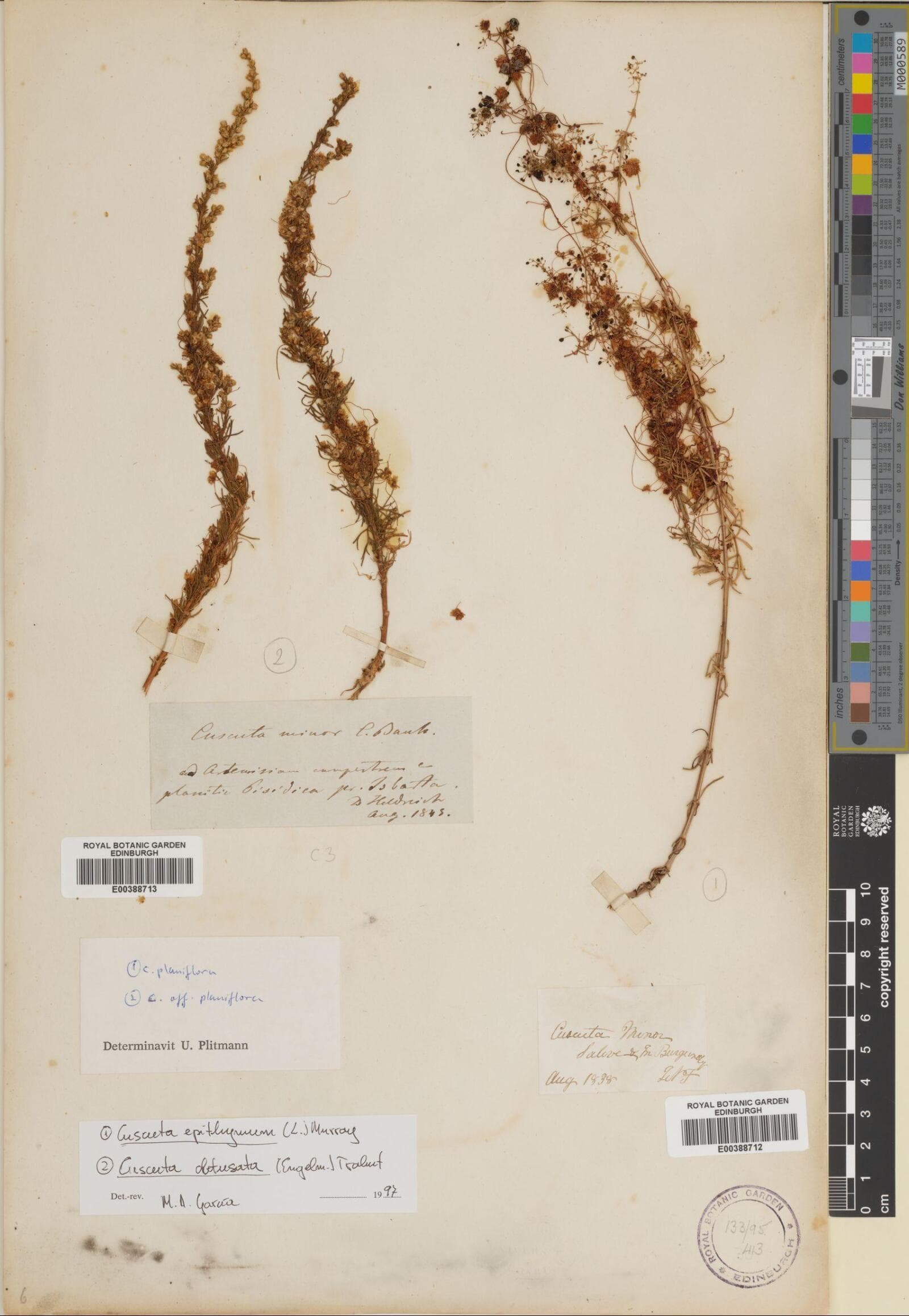
Cuscuta obtusata
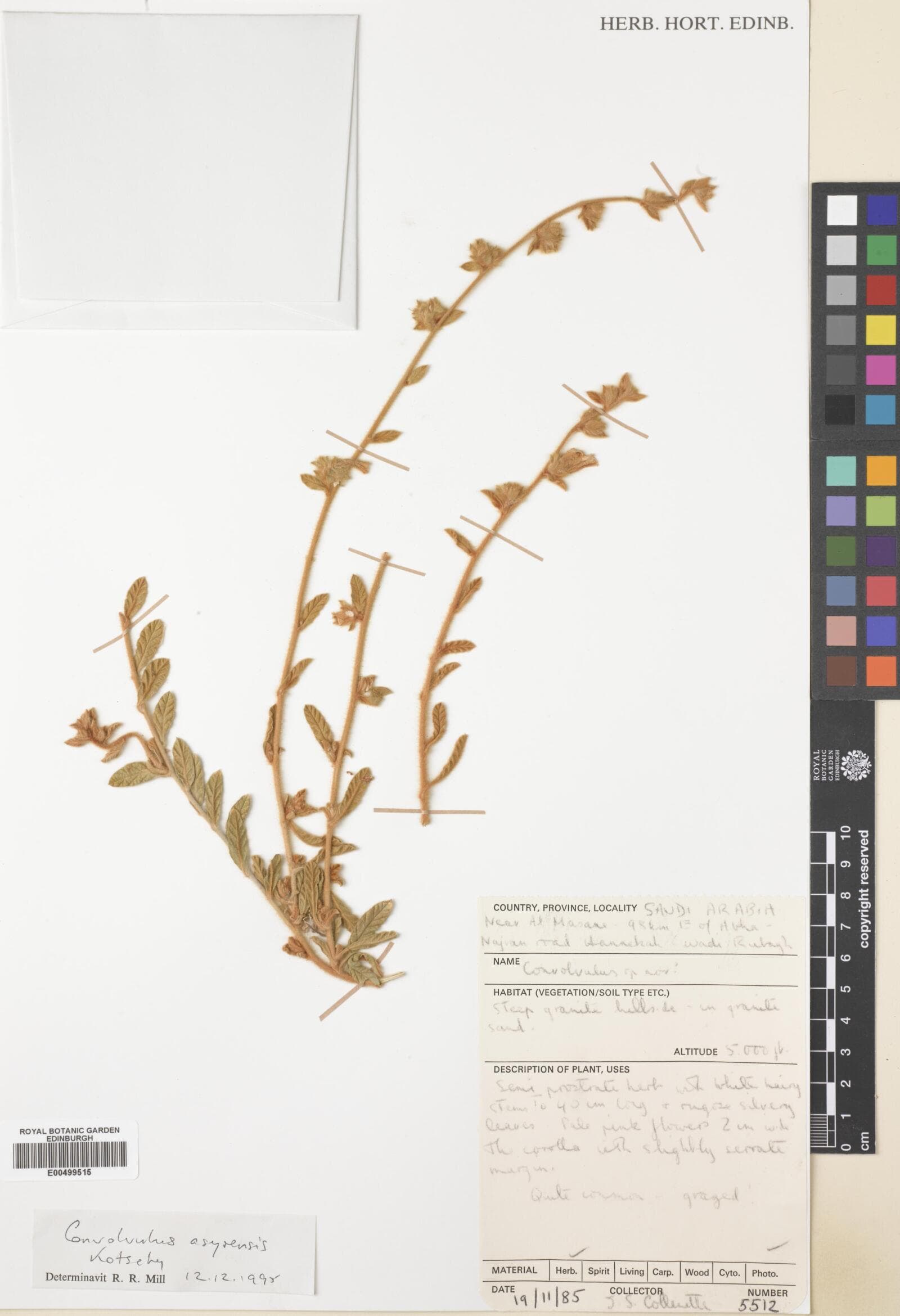
Image: Royal Botanic Garden Edinburgh (cc0)
NameCuscuta obtusata
Scientific NameCuscuta obtusata
Common NamesDodder, Blunt-lobed Dodder
Plant FamilyConvolvulaceae
Natural HabitatAs an obligate parasitic plant, Cuscuta obtusata grows on various herbaceous hosts, often found in disturbed areas, fields, roadsides, and open woodlands, particularly in warmer temperate regions.
Parts Usedwhole_plant,seed
Medicinal Actionsadaptogen, antioxidant, diuretic
Traditional UsesIn traditional medicine, related Cuscuta species (Tu Si Zi) are used to tonify kidney yang and yin, benefit the liver, improve vision, and treat conditions like impotence, frequent urination, and lower back pain. It is also traditionally used to prevent miscarriage.
Active ConstituentsFlavonoids, Lignans, Polysaccharides, Saponins
Preparation Methodsinfusion, decoction, powder, tincture
Contraindications & WarningsCaution for individuals with excess heat conditions or constipation. Specific drug interactions are not well-documented for this species, but general caution is advised with hormone-sensitive conditions due to potential phytoestrogenic effects of some Cuscuta species.
Cultivation NotesCuscuta obtusata is an obligate parasitic plant and cannot be cultivated independently. It requires a suitable host plant to grow and is generally considered an agricultural weed rather than a cultivated medicinal crop.
Raritycommon
Description
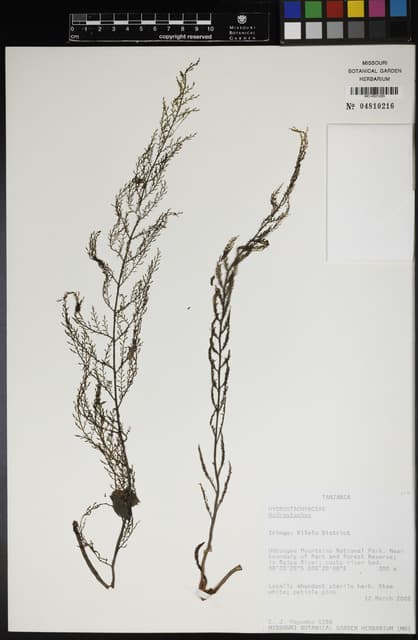
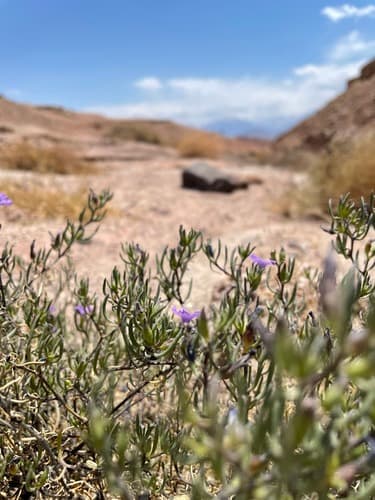
Cuscuta obtusata is an annual parasitic vine characterized by its slender, yellowish to orange, leafless stems that twine around host plants. It produces small, clustered flowers and fruits, forming a tangled mass over its host.