Cuscuta globulosa
Image: Conveyor Belt (cc0)
NameCuscuta globulosa
Scientific NameCuscuta globulosa
Common NamesDodder, Love Vine, Strangleweed
Plant FamilyConvolvulaceae
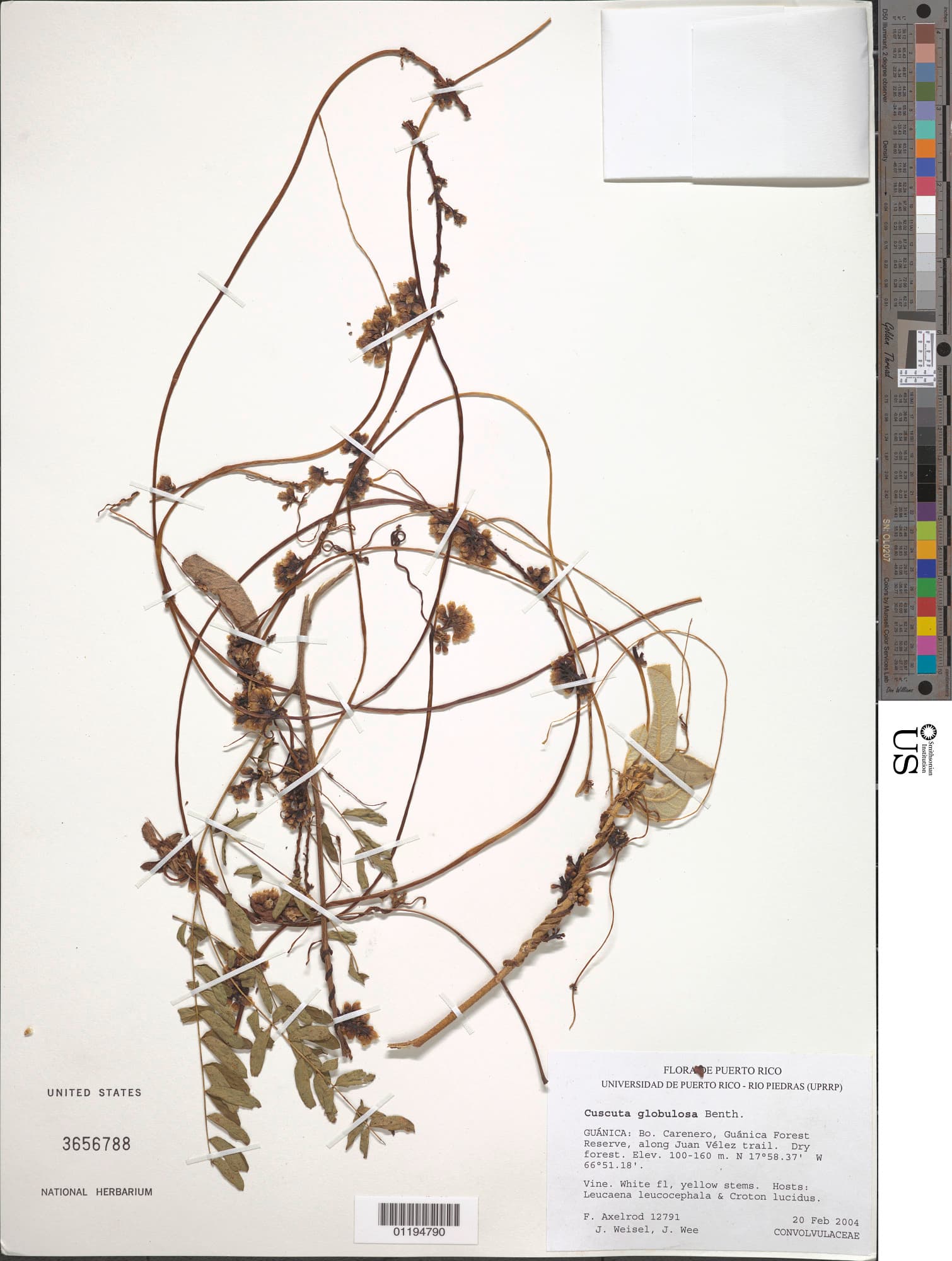
Natural HabitatThis species is found in dry forest environments, as evidenced by the specimen collected in the Guánica Forest Reserve in Puerto Rico, at elevations between 100-160 meters. It parasitizes various host plants, including Leucaena leucocephala and Croton lucidus.
Parts Usedwhole_plant,seed
Medicinal Actionsadaptogen, antioxidant, diuretic, anti-inflammatory
Traditional UsesTraditionally, species of Cuscuta, particularly their seeds, are used as a tonic for the liver and kidneys. They are employed to improve vision, treat conditions like impotence, premature ejaculation, frequent urination, and to support fertility. It is also used for general debility and to strengthen bones and tendons.
Active Constituentsflavonoids, lignans, polysaccharides, saponins
Preparation Methodsinfusion, decoction, tincture, powder
Contraindications & WarningsCaution is advised for pregnant women, as some Cuscuta species may have uterine stimulating effects. Individuals with yin deficiency with heat signs or severe constipation should also use with care. Large quantities can be toxic to livestock.
Cultivation NotesAs a parasitic plant, Cuscuta globulosa requires a suitable host plant for cultivation, typically herbaceous plants or shrubs. It is propagated by seeds, which germinate and then attach to a host, forming haustoria to draw nutrients. Intentional cultivation for medicinal purposes is challenging due to its parasitic nature.
Rarityuncommon
Description
Cuscuta globulosa is a parasitic annual vine characterized by its thread-like, leafless, yellowish-brown stems that twine around host plants. It produces small, clustered, globose inflorescences of tiny flowers, absorbing nutrients directly from its host.