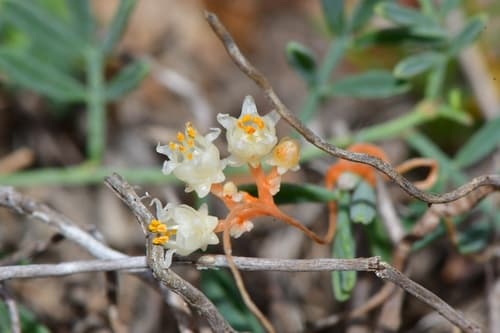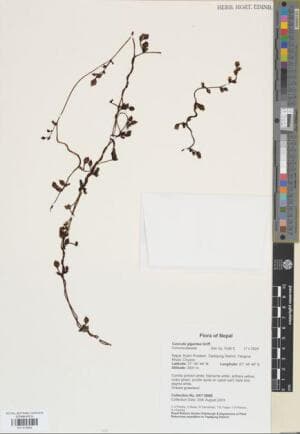
Cuscuta gigantea
Image: Edinburgh Kathmandu Tokyo Expedition, (cc0)
NameCuscuta gigantea
Scientific NameCuscuta gigantea Griff.
Common NamesGiant Dodder, Dodder
Plant FamilyConvolvulaceae
Natural HabitatFound parasitizing various shrubs and trees in temperate to subtropical regions, often in riverine grasslands or disturbed areas. The specimen was collected in Nepal at 200m altitude on Mallotus philippensis and other shrubs.
Parts Usedwhole_plant,seed
Medicinal Actionsadaptogen, anti-inflammatory, antioxidant, diuretic, astringent
Traditional UsesTraditionally, Cuscuta species, particularly their seeds (Tu Si Zi), are used to tonify the kidney and liver, improve vision, and treat conditions like impotence, premature ejaculation, frequent urination, and diarrhea. The whole plant may also be used for swelling and skin issues in some traditional systems.
Active ConstituentsFlavonoids, Lignans, Polysaccharides, Saponins
Preparation Methodsinfusion, decoction, powder, tincture
Contraindications & WarningsContraindicated during pregnancy, for individuals with yin deficiency with heat signs, or those experiencing constipation. As a parasitic plant, there is a potential for absorbing compounds from its host plants, which should be considered.
Cultivation NotesAs a parasitic plant, Cuscuta gigantea cannot be cultivated independently and requires a suitable host plant for survival. It spreads readily by seeds and can be a significant agricultural weed, making intentional cultivation for medicinal purposes challenging.
Raritycommon
Description
Cuscuta gigantea is a holoparasitic annual vine, characterized by its slender, leafless, yellowish-orange stems that twine around host plants. It produces small, white to yellowish flowers in dense clusters along its stems, obtaining all nutrients from its host.