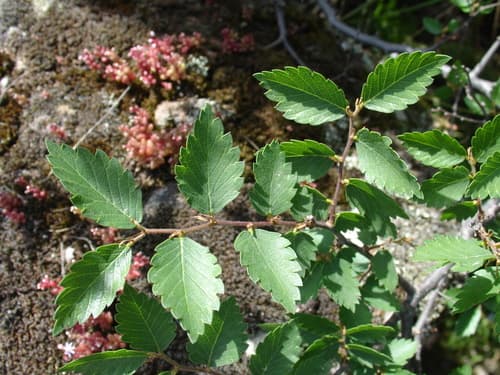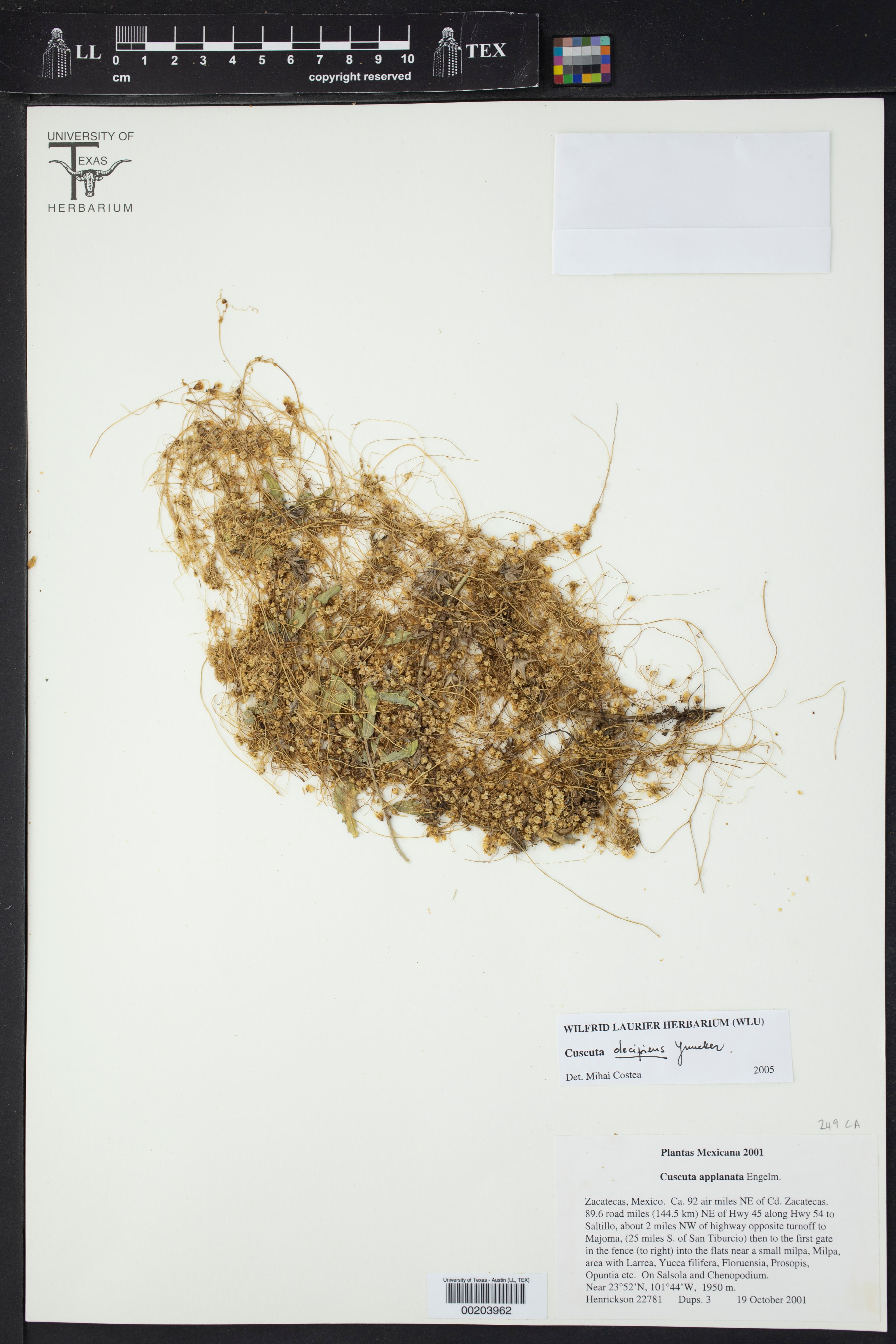
Cuscuta decipiens
Image: James S. Henrickson (cc0)
NameCuscuta decipiens
Scientific NameCuscuta decipiens Yunck.
Common NamesDodder, Love Vine, Strangleweed
Plant FamilyConvolvulaceae
Natural HabitatThis species is found in arid and semi-arid regions, particularly in Mexico (e.g., Zacatecas), at elevations around 1950 meters. It parasitizes a wide variety of host plants, including Salix, Chenopodium, Larrea, Yucca filifera, Floruensia, Prosopis, and Opuntia.
Parts Usedwhole_plant,seed
Medicinal Actionsadaptogen, anti-inflammatory, antioxidant, diuretic
Traditional UsesWhile specific traditional uses for *Cuscuta decipiens* are not widely documented, other *Cuscuta* species (like *C. chinensis*) are traditionally used as a kidney and liver tonic, to improve vision, strengthen bones, and treat conditions such as impotence, premature ejaculation, frequent urination, and infertility. The whole plant may also be used for similar tonic effects or for skin ailments.
Active ConstituentsFlavonoids, Lignans, Polysaccharides, Coumarins, Phenolic acids
Preparation Methodsinfusion, decoction, powder, tincture
Contraindications & WarningsGenerally contraindicated during pregnancy and lactation. Individuals with yin deficiency with heat signs (in TCM context) should use with caution. May interact with medications due to potential diuretic or hormonal effects.
Cultivation NotesAs an obligate parasitic plant, *Cuscuta decipiens* cannot be cultivated independently. It requires a suitable host plant for germination and growth, making intentional cultivation for harvest highly specialized and challenging outside of its natural parasitic relationship.
Raritycommon
Description
Cuscuta decipiens is an obligate parasitic plant characterized by its slender, thread-like, yellowish to orange stems that twine around host plants. It lacks true leaves, which are reduced to minute scales, and produces small, clustered flowers along its stems. The plant obtains all its nutrients from its host via specialized structures called haustoria.