Cuscuta decipiens
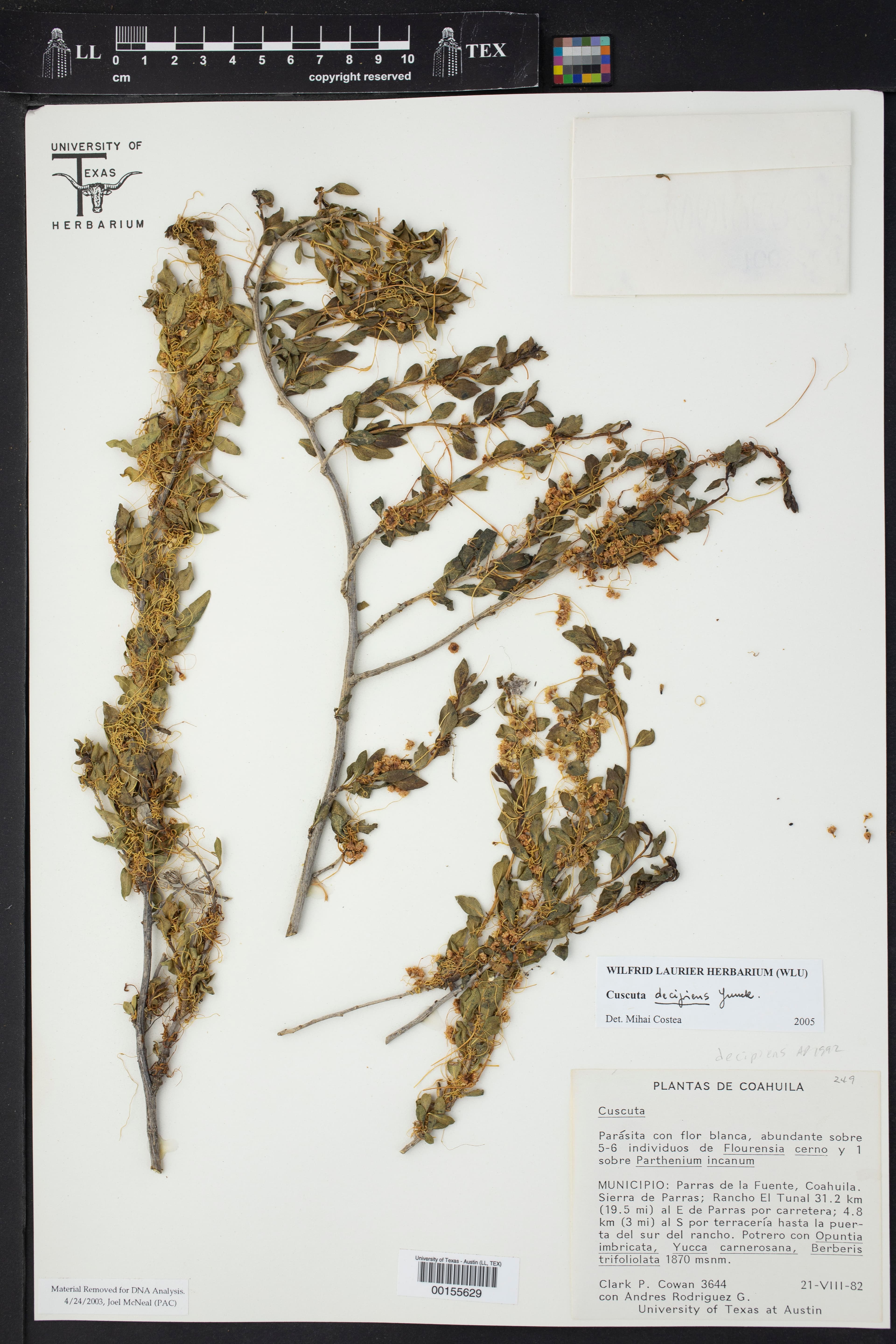
Image: Clark P. Cowan|Andrés Rodríguez G. (cc0)
NameCuscuta decipiens
Scientific NameCuscuta decipiens
Common NamesDodder, Love Vine, Strangleweed
Plant FamilyConvolvulaceae
Natural HabitatThis parasitic vine thrives in arid to semi-arid regions, often found in rangelands, disturbed areas, or scrublands. The specimen was collected in Coahuila, Mexico, parasitizing *Flourensia cernua* and *Parthenium incanum* in an environment featuring *Opuntia imbricata*, *Yucca carnerosana*, and *Berberis trifoliolata*.
Parts Usedwhole_plant,seed
Medicinal Actionsadaptogen, anti-inflammatory, antioxidant, diuretic, astringent
Traditional UsesWhile specific traditional uses for *Cuscuta decipiens* are not widely documented, other species within the *Cuscuta* genus (notably *C. chinensis*, known as Tu Si Zi in Traditional Chinese Medicine) are traditionally used as a kidney and liver tonic. They are employed to improve vision, strengthen bones, treat impotence, premature ejaculation, frequent urination, and address various skin conditions, acting as a general strengthening and tonifying herb.
Active ConstituentsFlavonoids, Lignans, Polysaccharides, Coumarins
Preparation Methodsinfusion, decoction, tincture, powder
Contraindications & WarningsDue to its parasitic nature, *Cuscuta* species can accumulate compounds from their host plants, which may vary. General contraindications for the genus include pregnancy, and in TCM, it is advised against for individuals with yin deficiency with heat signs. Potential drug interactions, especially with diuretics or hormone-modulating medications, should be considered.
Cultivation NotesAs an obligate parasitic plant, *Cuscuta decipiens* cannot be cultivated independently. Successful cultivation requires a suitable host plant for germination and the establishment of haustoria to absorb nutrients and water.
Raritycommon
Description
Cuscuta decipiens is an obligate parasitic annual plant characterized by its slender, yellowish-orange, thread-like stems that twine extensively around host vegetation. It lacks true leaves, possessing only minute scales, and produces small, clustered white or cream-colored flowers along its stems.