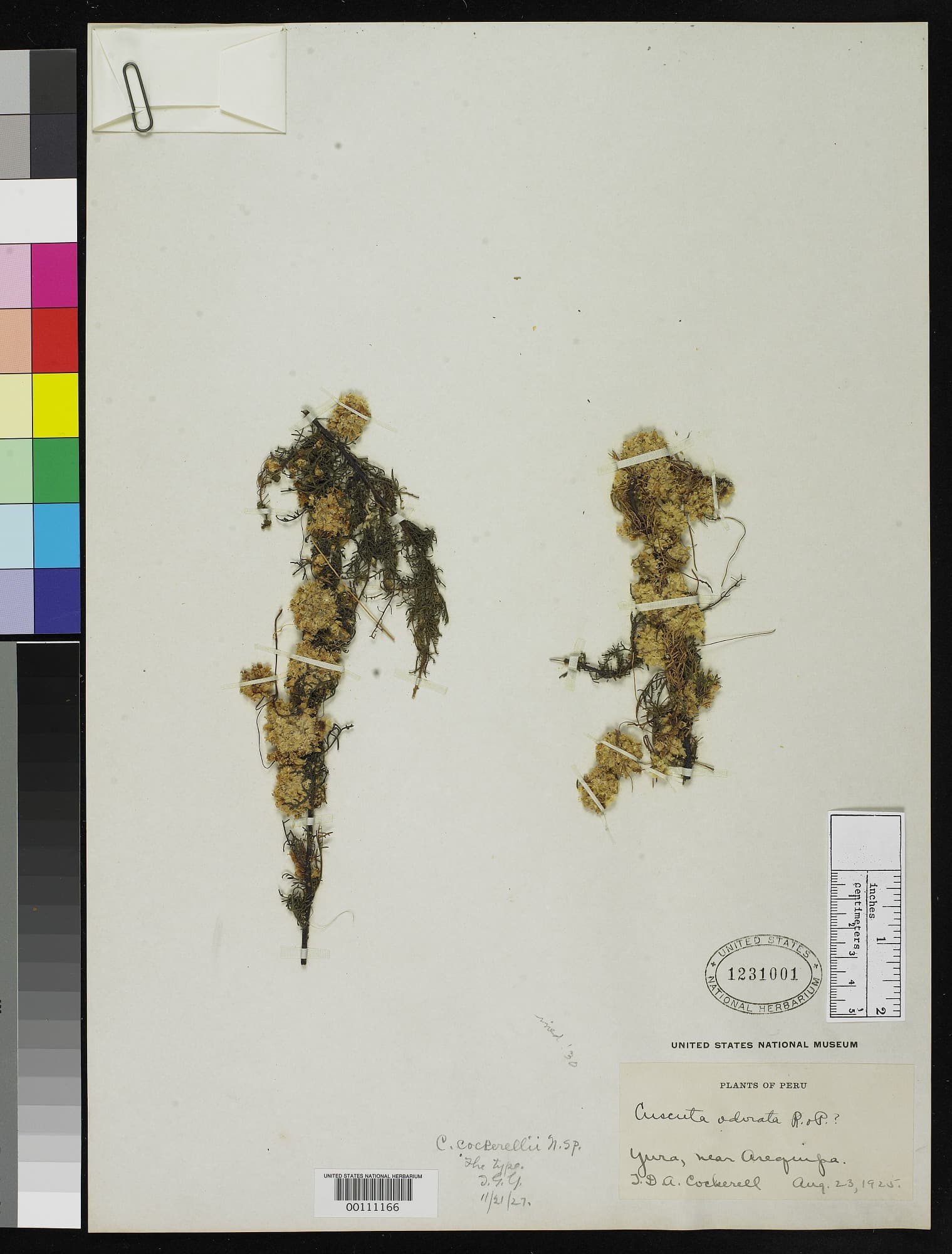
Cuscuta cockerellii
Image: Ingrid P. Lin (cc0)
NameCuscuta cockerellii
Scientific NameCuscuta cockerellii
Common NamesDodder, Love Vine, Strangleweed
Plant FamilyConvolvulaceae
Natural HabitatAs a parasitic plant, it grows on various host plants in sunny locations, often found in fields, disturbed areas, and natural ecosystems. This specimen was collected in Yura, near Arequipa, Peru, suggesting arid or semi-arid Andean regions.
Parts Usedwhole_plant,seed
Medicinal Actionsantioxidant, anti-inflammatory, diuretic, nervine, astringent, analgesic, antimicrobial
Traditional UsesTraditionally, various Cuscuta species, particularly their seeds (Tu Si Zi), are used in Traditional Chinese Medicine and Ayurveda as a kidney and liver tonic. They are employed for conditions such as impotence, premature ejaculation, frequent urination, blurred vision, and diarrhea. The whole plant has also been used for jaundice, skin conditions, and as a general tonic, as well as for nervous system disorders and pain relief.
Active ConstituentsFlavonoids, Lignans, Polysaccharides, Coumarins
Preparation Methodsinfusion, decoction, tincture, powder
Contraindications & WarningsNot recommended during pregnancy or lactation due to insufficient safety data. Caution is advised for individuals with yin deficiency with heat signs (in TCM) and potentially with blood-thinning medications due to coumarin content. Large quantities can be toxic to livestock.
Cultivation NotesCuscuta cockerellii is an obligate parasitic plant that cannot be cultivated independently. It requires a suitable host plant to grow and thrive, making traditional cultivation for medicinal purposes impractical; it is often considered an agricultural weed.
Rarityuncommon
Description
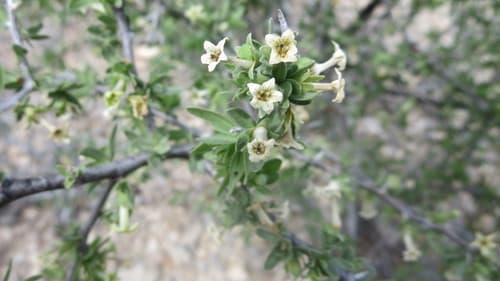
Cuscuta cockerellii is an obligate parasitic annual plant characterized by its slender, leafless, yellowish-orange stems that twine around host plants. It lacks true roots and leaves, instead forming haustoria to absorb nutrients. The specimen shows dense clusters of small flowers or fruits along the stems.