Cuscuta bracteata
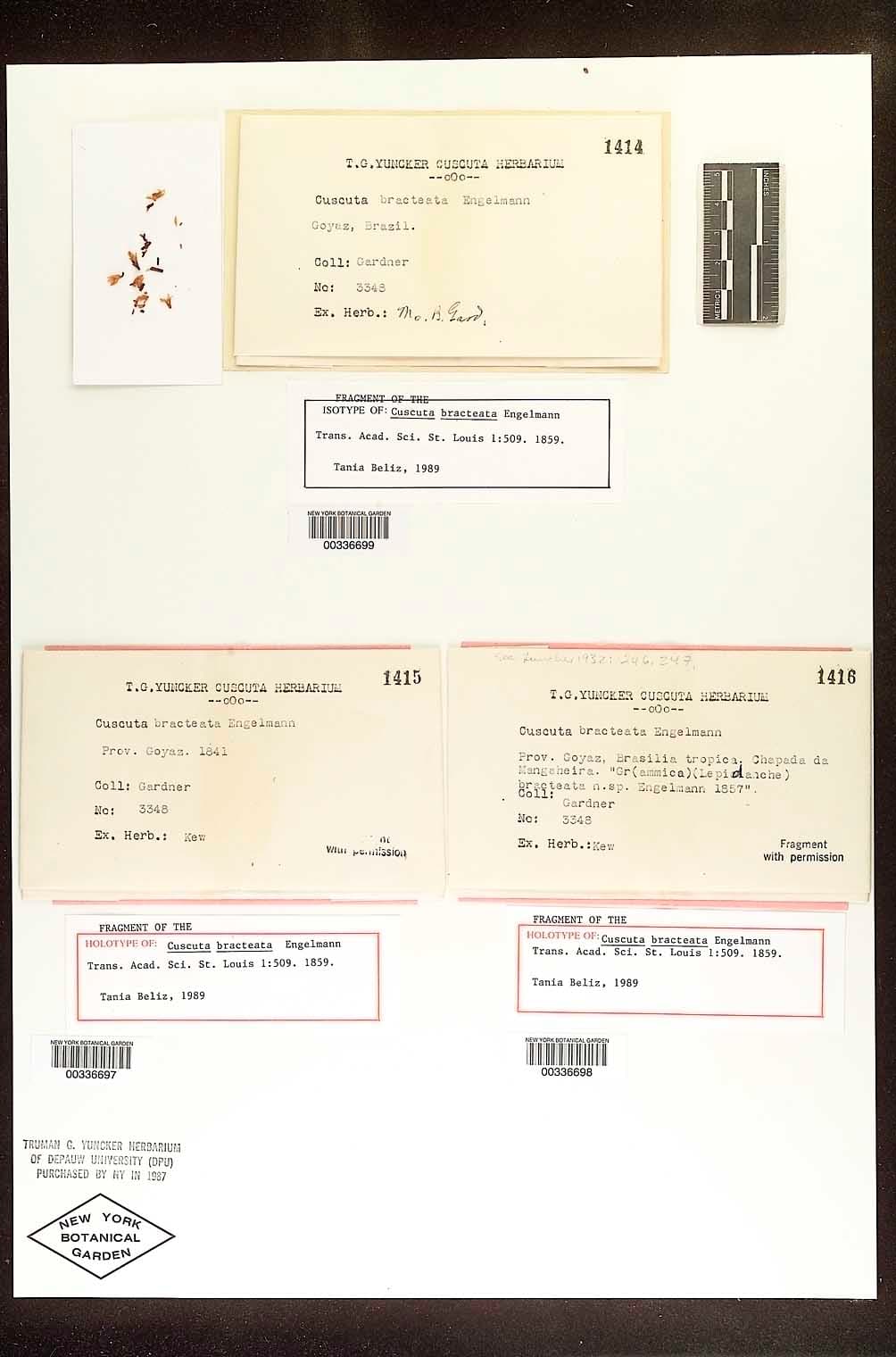
Image: The New York Botanical Garden (cc-by)
NameCuscuta bracteata
Scientific NameCuscuta bracteata
Common NamesDodder, Love Vine, Strangleweed
Plant FamilyConvolvulaceae
Natural HabitatNative to tropical and subtropical regions of South America, particularly Brazil, where it parasitizes various herbaceous and woody plants in open fields and disturbed areas.
Parts Usedwhole_plant,seed
Medicinal Actionsadaptogen, antioxidant, astringent, diuretic
Traditional UsesWhile specific traditional uses for *Cuscuta bracteata* are not widely documented, other *Cuscuta* species have been traditionally used as a general tonic, to support kidney and liver function, improve vision, and treat conditions like frequent urination and diarrhea.
Active Constituentsflavonoids, lignans, coumarins, polysaccharides
Preparation Methodsinfusion, decoction, powder, tincture
Contraindications & WarningsCaution is advised during pregnancy and lactation. Due to its parasitic nature, it can be an agricultural pest. Specific drug interactions for *C. bracteata* are not well-studied.
Cultivation NotesAs an obligate parasitic plant, *Cuscuta bracteata* requires a host plant for cultivation, attaching via haustoria to draw nutrients. It is not typically cultivated for direct harvest but rather managed as a parasitic species.
Rarityuncommon
Description
Cuscuta bracteata is an annual parasitic herb characterized by its slender, leafless, yellowish-orange stems that twine around host plants. It produces small, clustered white to yellowish flowers subtended by prominent bracts, from which it derives its species name.