Crete alkaliweed
NameCrete alkaliweed
Scientific NameSalsola cretica
Common NamesCrete alkaliweed, Cretan saltwort
Plant FamilyAmaranthaceae
Natural HabitatNative to the Mediterranean region, particularly Crete and other Greek islands, as well as parts of North Africa and the Middle East. It thrives in saline or alkaline soils, often found in coastal areas, salt marshes, disturbed ground, and arid steppes.
Parts Usedwhole_plant
Medicinal Actionsdiuretic, antioxidant, anti-inflammatory
Traditional UsesWhile specific traditional uses for Salsola cretica are not widely documented, related Salsola species have been traditionally used as diuretics, for kidney and bladder complaints, and as a source of mineral salts. It may have been used for similar purposes in its native regions, potentially for detoxification or to support urinary health.
Active ConstituentsFlavonoids, saponins, alkaloids, betalains, mineral salts
Preparation Methodsinfusion, decoction, powder
Contraindications & WarningsDue to its potential high mineral content and diuretic action, caution is advised for individuals with kidney disease, high blood pressure, or those on diuretic medications. High oxalate content in some Salsola species could be a concern for individuals prone to kidney stones.
Cultivation NotesPrefers full sun and well-drained, saline, or alkaline soils. It is highly drought-tolerant and can grow in poor, sandy, or rocky substrates.
Raritycommon
Description
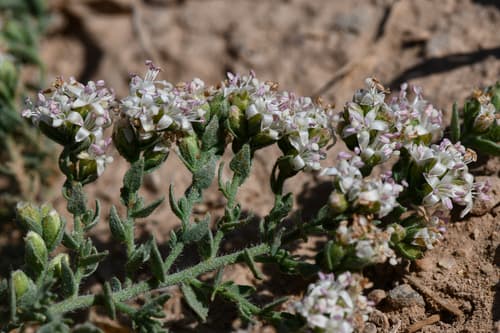
Salsola cretica is a low-growing, annual or perennial herbaceous plant, often sprawling or decumbent, characterized by small, fleshy, linear to spatulate leaves. It produces dense clusters of tiny, inconspicuous white to pale pink flowers, typically arranged in terminal or axillary cymes, giving it a somewhat spiky appearance.