Creeping False-Holly
NameCreeping False-Holly
Scientific NameSolanum carolinense
Common NamesCreeping False-Holly, Carolina Horsenettle, Ball-nettle, Radical Weed, Sand Brier, Wild Tomato
Plant FamilySolanaceae
Natural HabitatNative to North America, this plant thrives in disturbed areas such as fields, pastures, roadsides, and open woodlands. It prefers full sun and can tolerate a variety of soil types, often found in agricultural settings as a weed.
Parts Usedroot,leaf,fruit
Medicinal Actionsanalgesic, anti-inflammatory, sedative
Traditional UsesHistorically, some Native American tribes used the root and leaves externally as a poultice for toothaches, skin sores, or swellings, leveraging its potential analgesic and anti-inflammatory properties. The highly toxic berries were occasionally used internally in extremely small, diluted doses for conditions like epilepsy or as a sedative, but such practices are considered extremely dangerous and are not recommended.
Active ConstituentsSolanine, Solasonine, Solamargine, Steroidal glycoalkaloids
Preparation Methodspoultice, infusion, decoction
Contraindications & WarningsAll parts of Solanum carolinense are highly toxic, especially the unripe berries, due to the presence of solanine alkaloids. Ingestion can cause severe gastrointestinal upset, neurological symptoms, and can be fatal. Internal use is strongly contraindicated and extremely dangerous. Not safe for pregnant or nursing women, children, or individuals with liver or kidney conditions.
Cultivation NotesOften considered a noxious weed, Carolina Horsenettle spreads aggressively by rhizomes and seeds, making it difficult to eradicate. It is drought-tolerant and thrives in poor soils, often outcompeting cultivated plants. Cultivation is generally not recommended due to its invasive nature and toxicity.
Raritycommon
Description
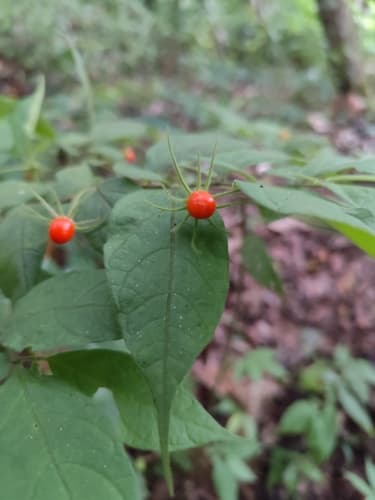
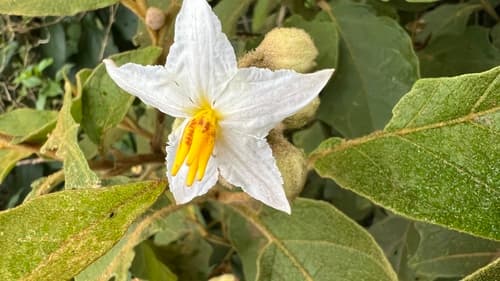
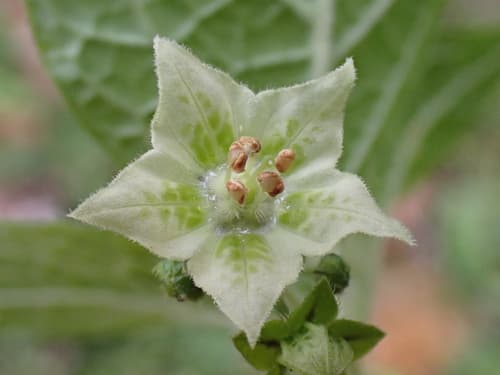
Solanum carolinense, commonly known as Carolina Horsenettle, is a perennial herbaceous plant characterized by its prickly stems and deeply lobed, hairy leaves. It produces star-shaped flowers, typically white to pale violet with prominent yellow-brown anthers, followed by small, yellow-orange berries.