Convolvulus cassius
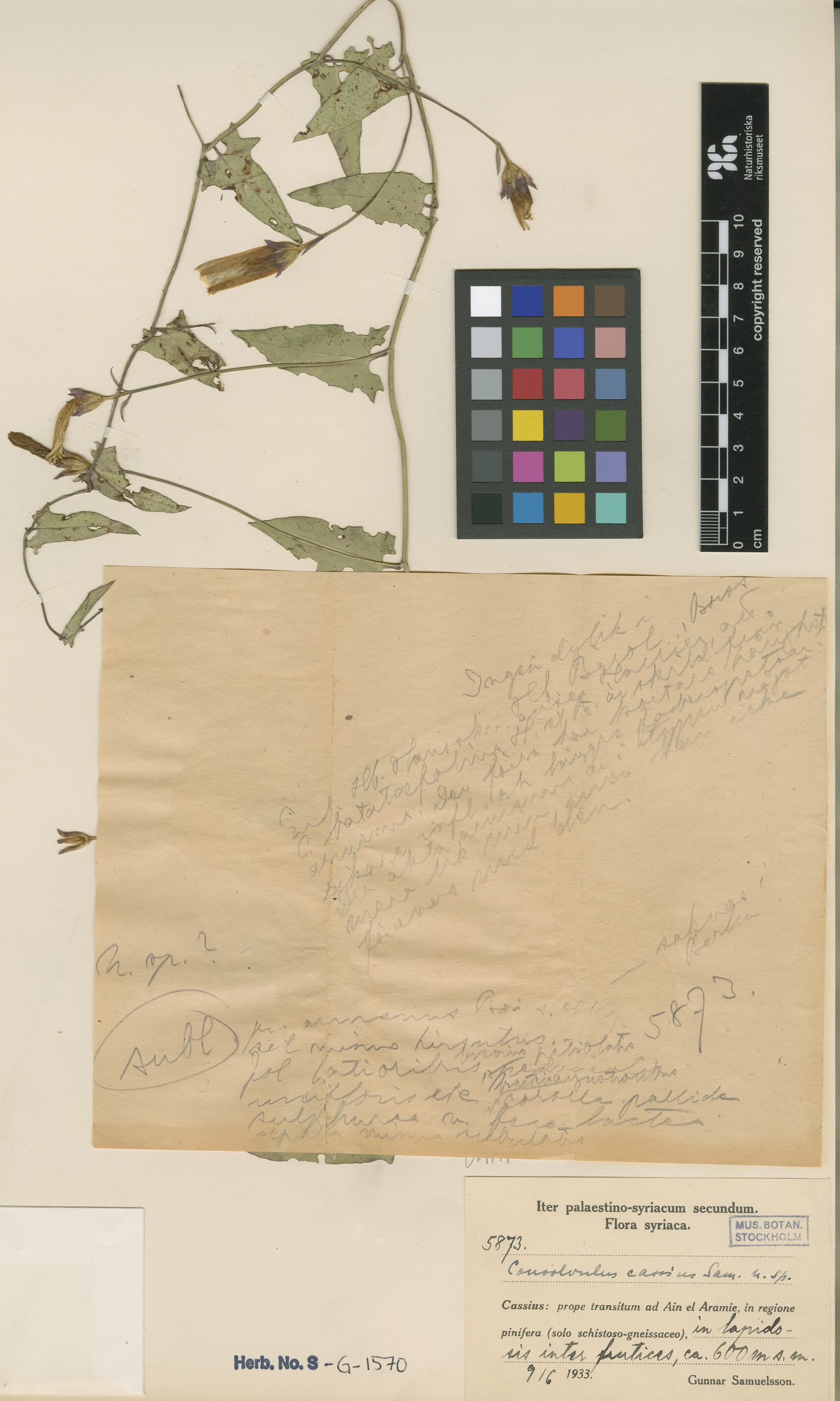
Image: Dick Andersson (S) (cc-by)
NameConvolvulus cassius
Scientific NameConvolvulus cassius Sam. & Rech.fil.
Common NamesCassius Bindweed
Plant FamilyConvolvulaceae
Natural HabitatThis species thrives in rocky, open areas, often found among shrubs in pine regions with schist-gneiss soil, typically at elevations around 600 meters above sea level. It is native to parts of the Middle East.
Parts Usedroot,whole_plant
Medicinal Actionsantimicrobial, antioxidant
Traditional UsesTraditionally, species within the Convolvulus genus, including those with similar chemical profiles, have been primarily used as strong purgatives or laxatives to treat severe constipation and to expel intestinal parasites. The resinous extract from the roots was historically valued for its potent cleansing properties.
Active Constituentsresin glycosides
Preparation Methodsdecoction, powder, tincture
Contraindications & WarningsDue to its strong purgative effects, Convolvulus cassius and related species are contraindicated in pregnancy, breastfeeding, intestinal obstruction, inflammatory bowel diseases, and severe abdominal pain. Misuse can lead to severe cramping, dehydration, and electrolyte imbalance.
Cultivation NotesConvolvulus species generally prefer full sun exposure and well-drained soil, tolerating dry conditions once established. They can be propagated from seeds or by root division. This species is adapted to rocky, semi-arid environments.
Rarityuncommon
Description
Convolvulus cassius is a perennial herbaceous plant, often with prostrate or ascending stems and variable leaves that can be hastate, sagittate, or ovate-lanceolate. It produces funnel-shaped flowers, typically pale purple or white, solitary or in small cymes. The specimen shows a dried plant with characteristic bindweed morphology.