Cinchona
NameCinchona
Scientific NameCinchona anderssonii
Common NamesQuinine Tree, Cinchona Bark Tree
Plant FamilyRubiaceae
Natural HabitatNative to the tropical montane cloud forests of the Andes mountains in South America, thriving at high altitudes with high humidity and rainfall.
Parts Usedbark
Medicinal Actionsanalgesic, anti-inflammatory, antimicrobial, astringent
Traditional UsesTraditionally used by indigenous Andean peoples to treat fevers, particularly malaria. Its bark was historically the primary source of quinine, used globally as an antimalarial and for leg cramps.
Active ConstituentsQuinine, Quinidine, Cinchonine, Cinchonidine
Preparation Methodsdecoction, powder, tincture
Contraindications & WarningsPregnancy, breastfeeding, tinnitus, optic neuritis, cardiac arrhythmias, hypersensitivity to quinine. May interact with anticoagulants, antacids, and other medications.
Cultivation NotesPrefers tropical to subtropical climates with high humidity, well-drained, acidic soil, and partial shade. Requires consistent moisture and protection from strong winds.
Rarityrare
Description
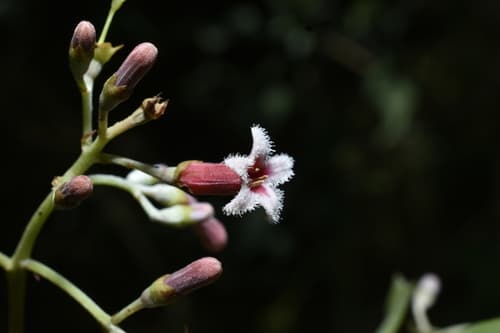
Cinchona is a genus of evergreen trees or shrubs native to the Andes. The image displays a cluster of small, tubular flowers, typically white to pinkish, with distinctive hairy or fringed margins, emerging from reddish buds.