Chicory
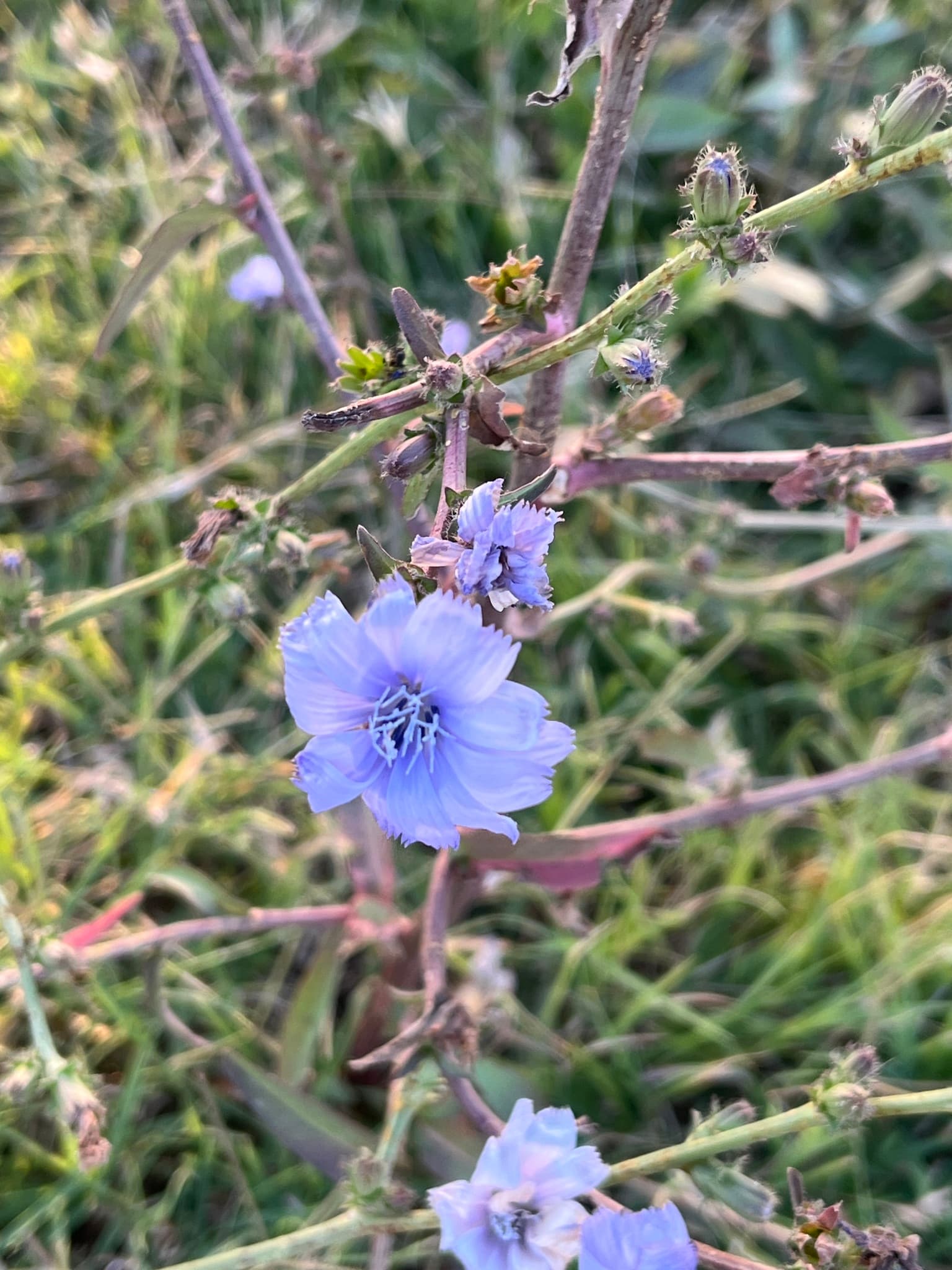
Image: wildlifeintheworld (cc-by-nc)
NameChicory
Scientific NameCichorium intybus
Common NamesChicory, Common Chicory, Blue Sailors, Coffee Weed
Plant FamilyAsteraceae
Natural HabitatNative to Europe, North Africa, and Western Asia, Chicory is now widely naturalized across the globe. It thrives in disturbed soils, roadsides, fields, meadows, and waste areas, preferring full sun.
Parts Usedroot,leaf,flower
Medicinal Actionsdiuretic, anti-inflammatory, antioxidant, carminative, demulcent
Traditional UsesTraditionally, chicory root has been used as a coffee substitute or additive, and for its digestive benefits, including stimulating appetite and aiding liver and gallbladder function. The leaves and flowers were used for their diuretic and mild laxative effects, and to support overall digestive health. It was also applied topically for skin inflammations.
Active ConstituentsInulin, Lactucin, Lactucopicrin, Cichoriin, Chlorogenic acid, Caffeic acid, Sesquiterpene lactones
Preparation Methodsinfusion, decoction, powder, tincture
Contraindications & WarningsMay cause allergic reactions in individuals sensitive to plants in the Asteraceae family. High doses may stimulate uterine contractions, so caution is advised during pregnancy. May interact with certain medications, particularly those affecting blood sugar or bile production.
Cultivation NotesChicory is relatively easy to grow, preferring full sun and well-drained soil. It can tolerate poor soil conditions and is drought-tolerant once established. Sow seeds in spring or late summer, and harvest roots in the fall of the first year or spring of the second.
Raritycommon
Description
Chicory is a perennial herbaceous plant characterized by its bright blue, daisy-like flowers that typically open in the morning and close by afternoon. It features a tough, grooved, and hairy stem, along with a deep, fleshy taproot. The basal leaves form a rosette, while stem leaves are smaller and clasping.