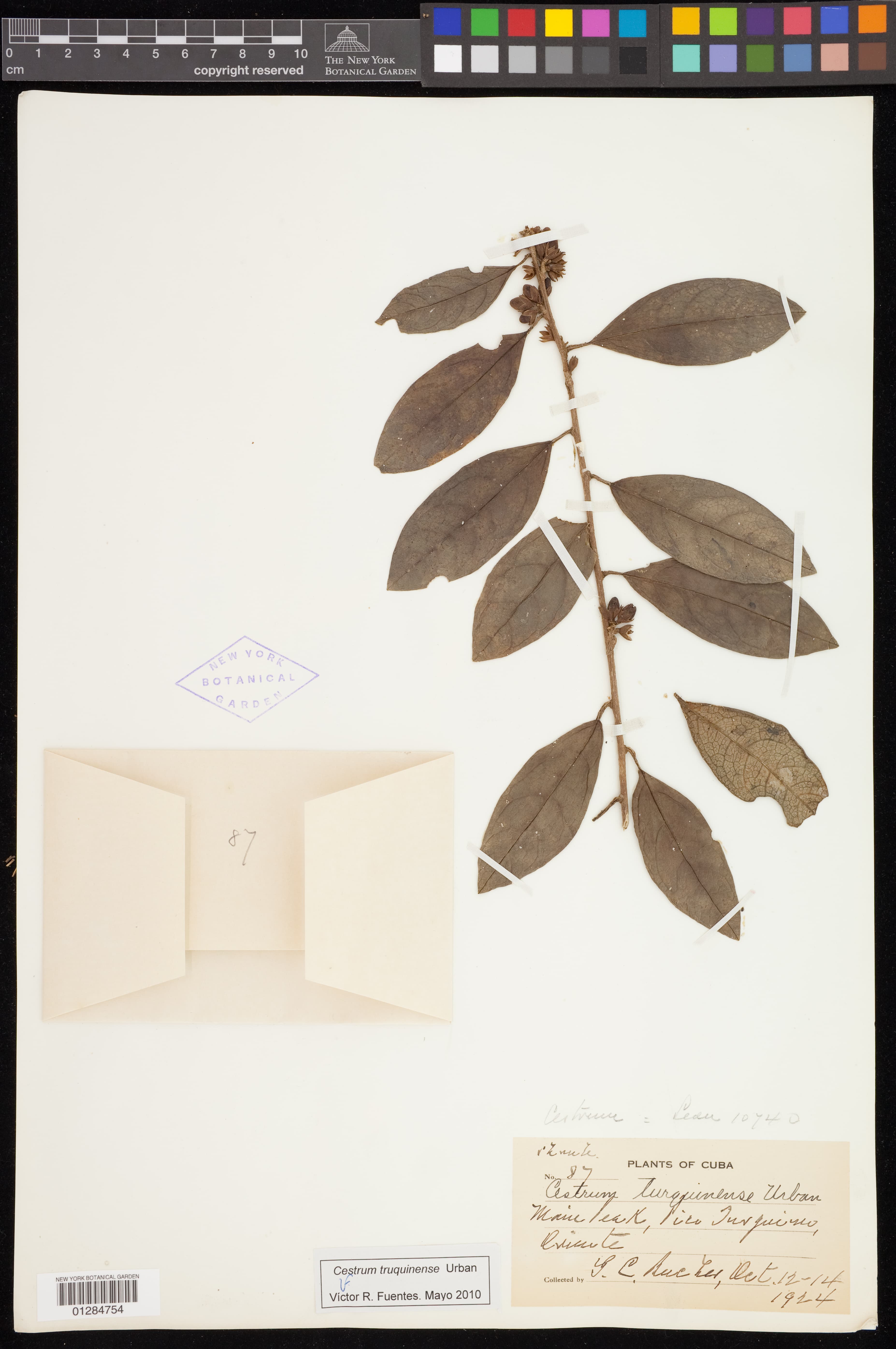
Cestrum turquinense
Image: The New York Botanical Garden (cc-by)
NameCestrum turquinense
Scientific NameCestrum turquinense Urb.
Plant FamilySolanaceae
Natural HabitatEndemic to Cuba, specifically found in the montane regions of the Sierra Maestra mountains, including Pico Turquino. It thrives in humid, high-altitude forest environments.
Parts Used
Traditional UsesThere are no documented traditional medicinal uses specifically for Cestrum turquinense. The genus Cestrum is generally known for containing toxic compounds, and many species are considered poisonous.
Active ConstituentsUnknown for this specific species. Other species within the genus Cestrum are known to contain steroidal glycoalkaloids and saponins, which are toxic.
Contraindications & WarningsIngestion of Cestrum species is generally discouraged due to known toxicity within the genus, which can cause gastrointestinal upset, neurological symptoms, and other adverse effects. Specific contraindications for Cestrum turquinense are not documented, but caution is advised.
Cultivation NotesLikely requires conditions similar to its native montane Cuban habitat, including high humidity, specific soil types, and potentially cooler temperatures found at higher elevations. Cultivation outside its natural range may be challenging.
Rarityrare
Description
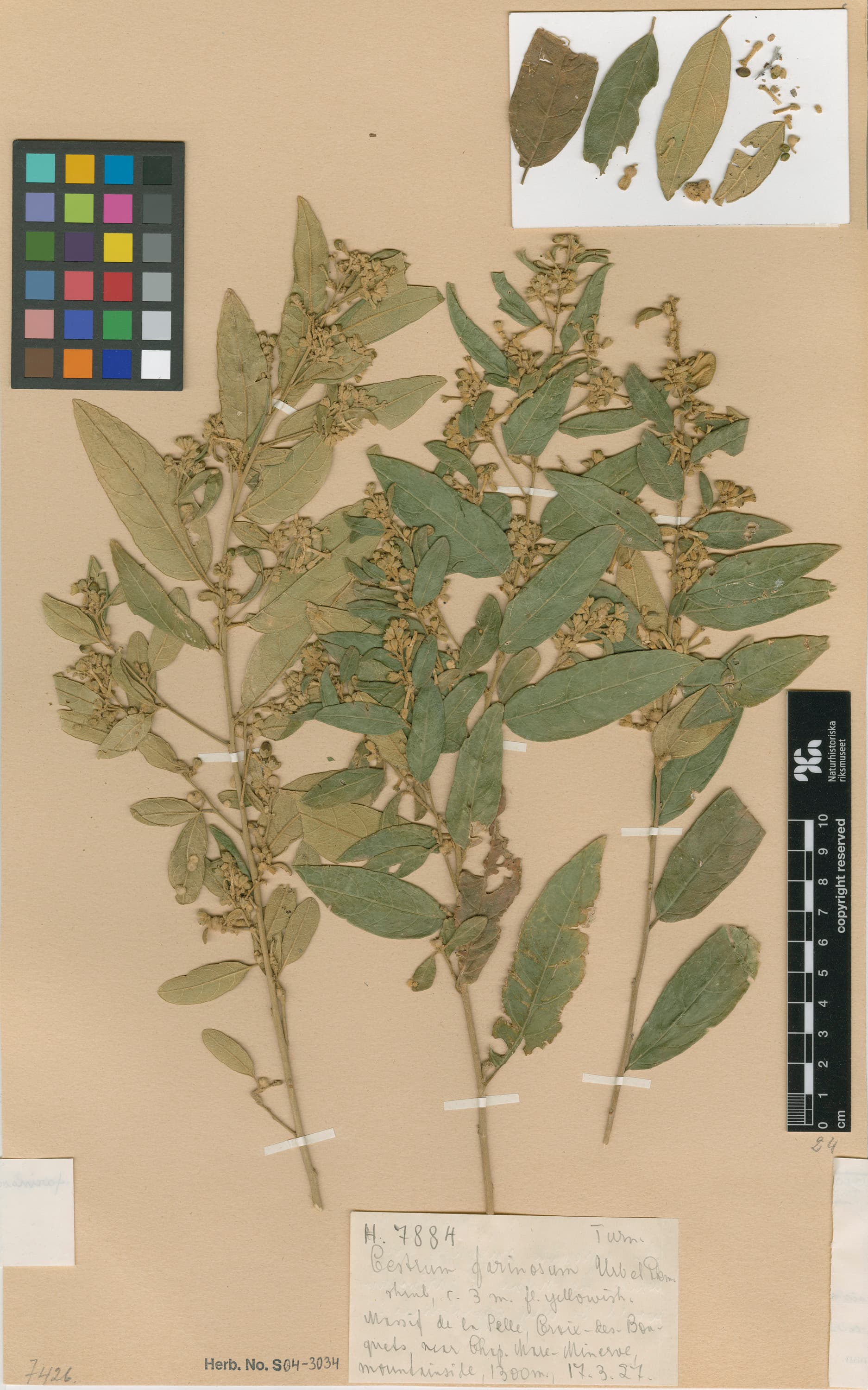
Cestrum turquinense is a woody shrub or small tree, characterized by simple, alternate, ovate to elliptic leaves with entire margins. The specimen shows clusters of dried flowers or fruits along the stems, typical of the genus Cestrum.