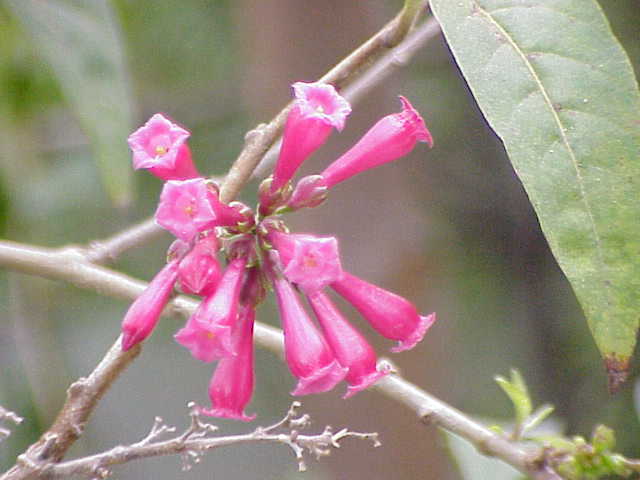
Cestrum porphyreum
Image: Meise Botanic Garden (cc-by)
NameCestrum porphyreum
Scientific NameCestrum porphyreum
Common NamesCrimson Cestrum, Pink Cestrum
Plant FamilySolanaceae
Natural HabitatNative to pine and oak forests in mountainous regions of Mexico, specifically documented in Michoacán at elevations around 2300 meters. It thrives in temperate to subtropical climates.
Parts Usedleaf,flower
Medicinal Actionsanalgesic, anti-inflammatory
Traditional UsesWhile specific traditional uses for Cestrum porphyreum are poorly documented, some species within the Cestrum genus have been traditionally used externally in folk medicine for pain relief and reducing inflammation. However, the genus is widely recognized for its toxicity, and internal use is highly discouraged.
Active Constituentssteroidal saponins, alkaloids, glycosides
Preparation Methodspoultice, decoction
Contraindications & WarningsAll parts of Cestrum species are generally considered toxic to humans and livestock due to the presence of various alkaloids and saponins. Internal consumption is highly dangerous and can cause severe gastrointestinal upset, neurological symptoms, and even death. Skin contact may cause irritation.
Cultivation NotesThis shrub thrives in well-drained soils and prefers full sun to partial shade. It is adapted to temperate to subtropical climates, consistent with its native habitat in Mexican pine and oak forests.
Rarityuncommon
Description
A woody shrub, typically growing to about 1 meter tall, characterized by simple, alternate leaves and clusters of tubular, reddish-pink flowers. The specimen shows dried leaves and flowers, consistent with its botanical description.