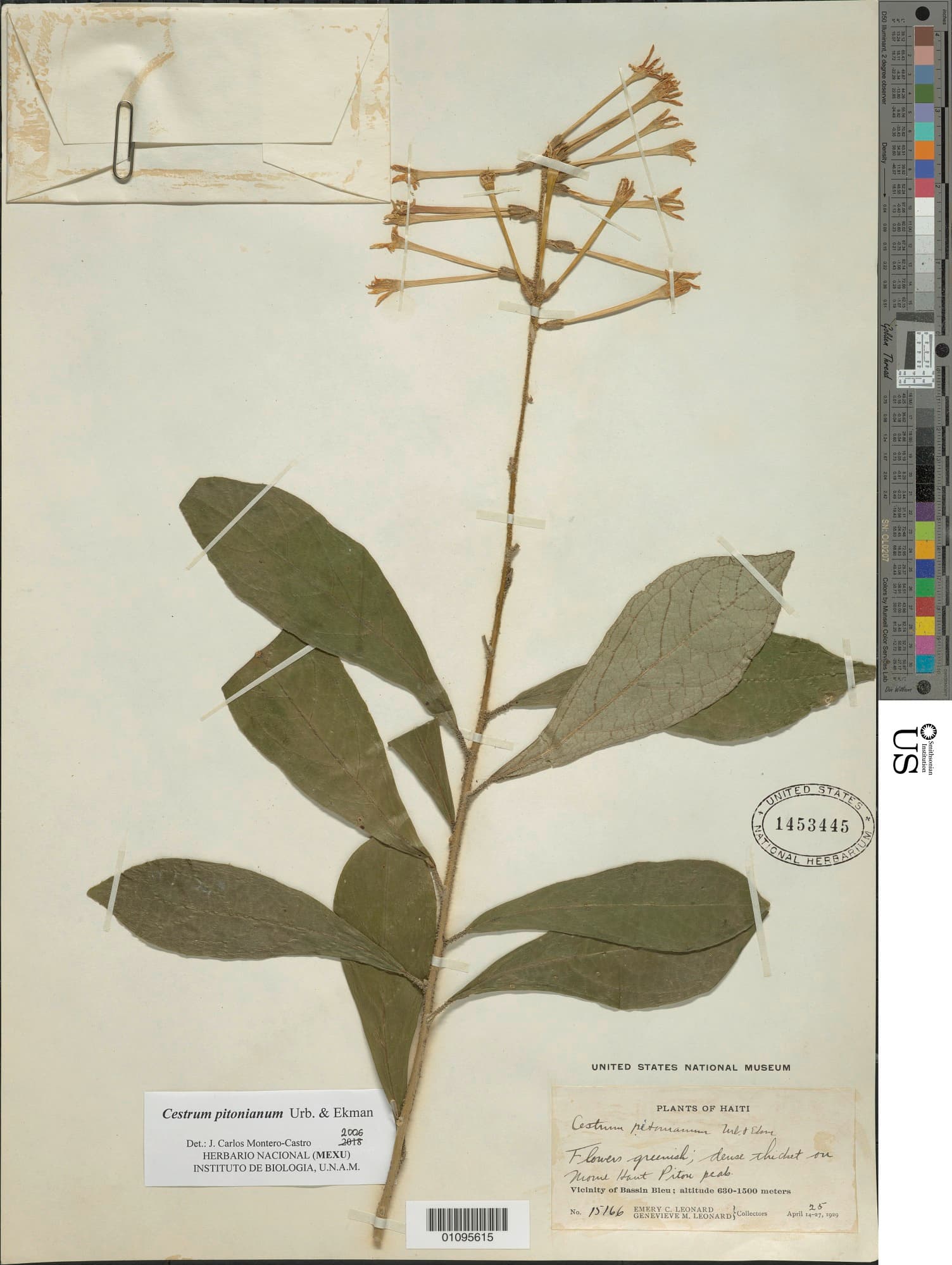
Cestrum pitonianum
Image: Conveyor Belt (cc0)
NameCestrum pitonianum
Scientific NameCestrum pitonianum Urb. & Ekman
Plant FamilySolanaceae
Natural HabitatNative to Haiti, this species is found in dense thickets on mountain peaks, such as Morne Haut Piton, at altitudes ranging from 600 to 1500 meters.
Parts Usedleaf,flower
Medicinal Actionsanalgesic, anti-inflammatory
Traditional UsesWhile some species within the Cestrum genus have been traditionally used for conditions like pain and inflammation, Cestrum pitonianum specifically lacks well-documented safe medicinal uses. The genus Cestrum is widely recognized for its toxicity due to the presence of steroidal glycoalkaloids, and internal use is generally not recommended.
Active Constituentssteroidal glycoalkaloids, saponins
Preparation Methodsinfusion, decoction, poultice
Contraindications & WarningsAll parts of Cestrum pitonianum, like other Cestrum species, are considered toxic and should not be ingested. Contraindicated for internal use, pregnancy, lactation, children, and individuals with liver or kidney conditions. External use should be approached with extreme caution due to potential skin irritation or absorption of toxic compounds.
Cultivation NotesThis species thrives in tropical to subtropical mountain environments, preferring well-drained soil and moderate to high altitudes. It is likely adapted to dense thicket conditions, suggesting it may tolerate some shade but also requires adequate light for flowering.
Rarityuncommon
Description
Cestrum pitonianum is a woody plant characterized by simple, alternate, entire leaves and terminal inflorescences bearing numerous tubular, greenish-yellowish flowers. The stems and inflorescence axes appear somewhat pubescent.