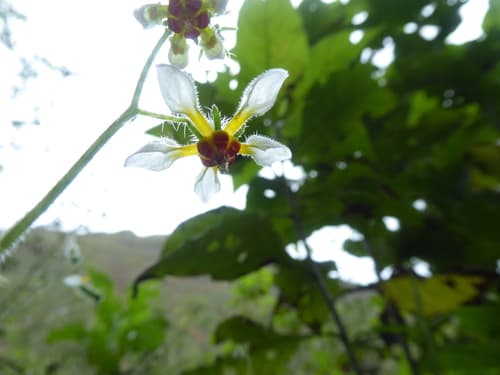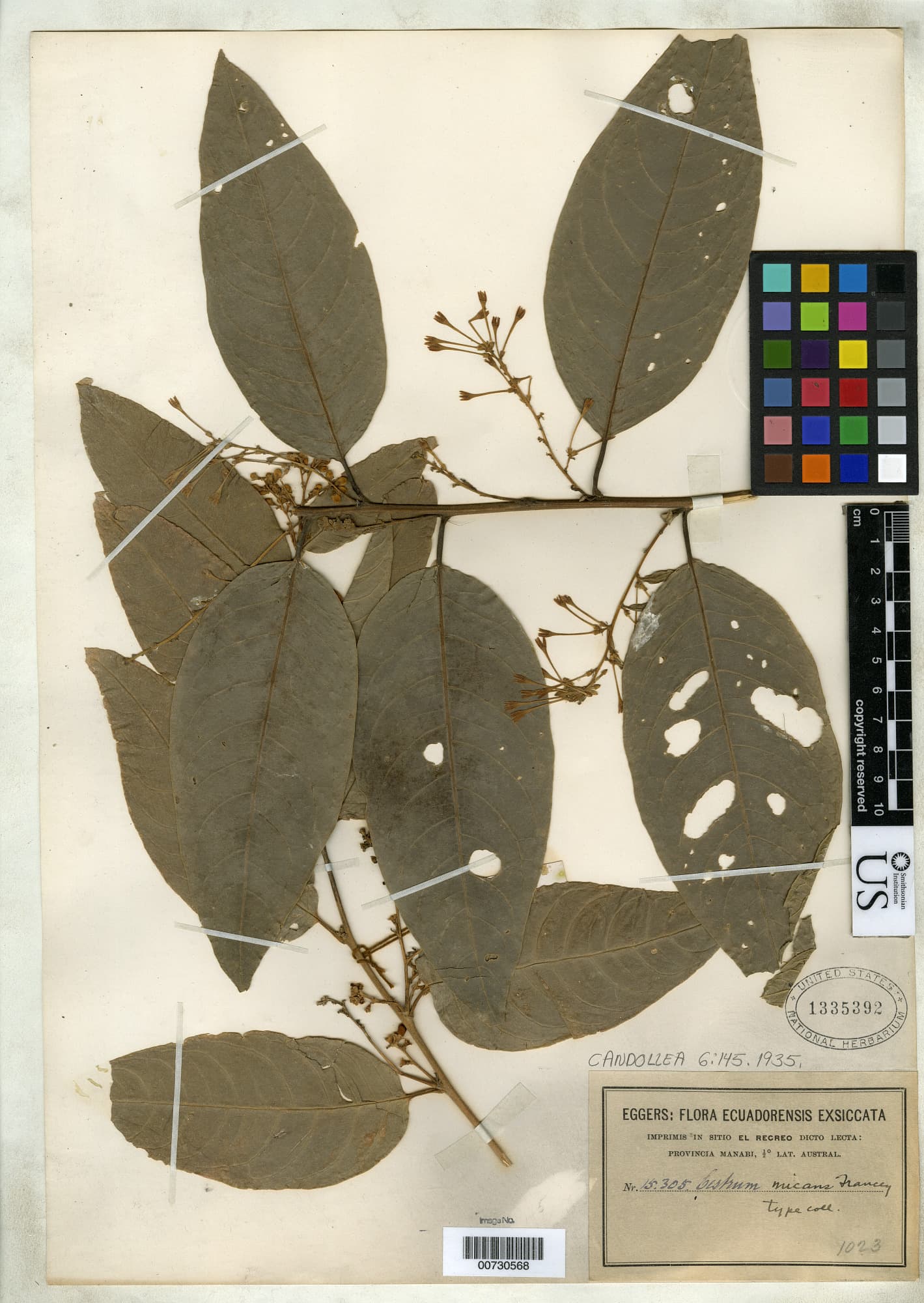
Cestrum micans
Image: Ingrid P. Lin (cc0)
NameCestrum micans
Scientific NameCestrum micans Francey
Common NamesNone widely recognized
Plant FamilySolanaceae
Natural HabitatNative to tropical and subtropical regions of the Americas, particularly found in Ecuador as indicated by the specimen. It thrives in disturbed areas, forest edges, and secondary growth.
Parts Usedleaf,flower
Medicinal Actionsanalgesic, anti-inflammatory, antimicrobial
Traditional UsesSpecific traditional medicinal uses for Cestrum micans are not well-documented. However, some species within the Cestrum genus have been traditionally used in folk medicine for conditions such as fevers, pain, and skin ailments, often applied externally. Due to the general toxicity of the genus, any internal use is extremely rare and carries significant risks.
Active Constituentssteroidal saponins, alkaloids, flavonoids
Preparation Methodsinfusion, poultice
Contraindications & WarningsAll parts of Cestrum species, including Cestrum micans, are generally considered toxic if ingested. Symptoms of poisoning can include gastrointestinal upset, neurological disturbances, and respiratory issues. It should not be used internally and caution is advised even with external applications. Avoid use during pregnancy and lactation.
Cultivation NotesCestrum micans, like other Cestrum species, can be cultivated as an ornamental shrub in tropical and subtropical climates. It prefers full sun to partial shade, well-drained soil, and moderate watering.
Rarityuncommon
Description
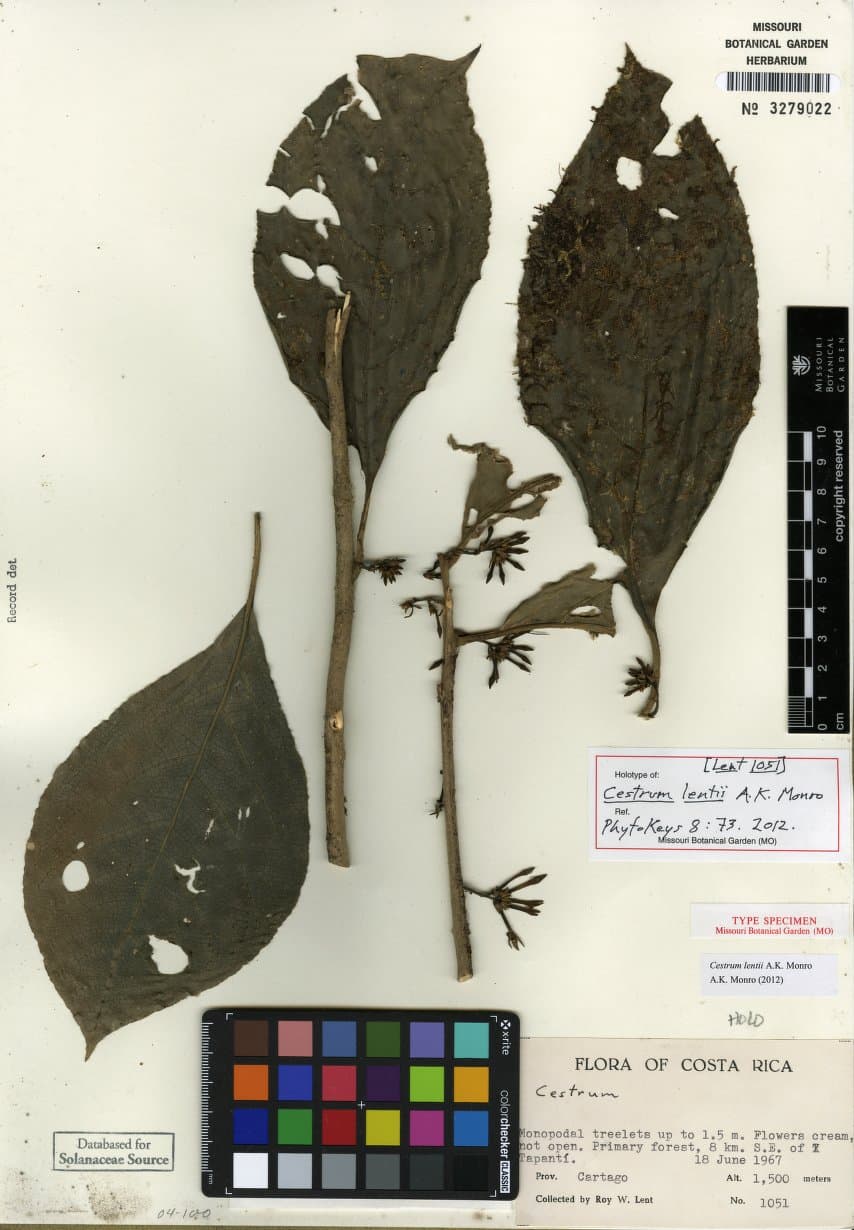
Cestrum micans is a shrub or small tree, typically characterized by simple, alternate, ovate to elliptic leaves. It produces clusters of tubular flowers, which are often followed by small berries.