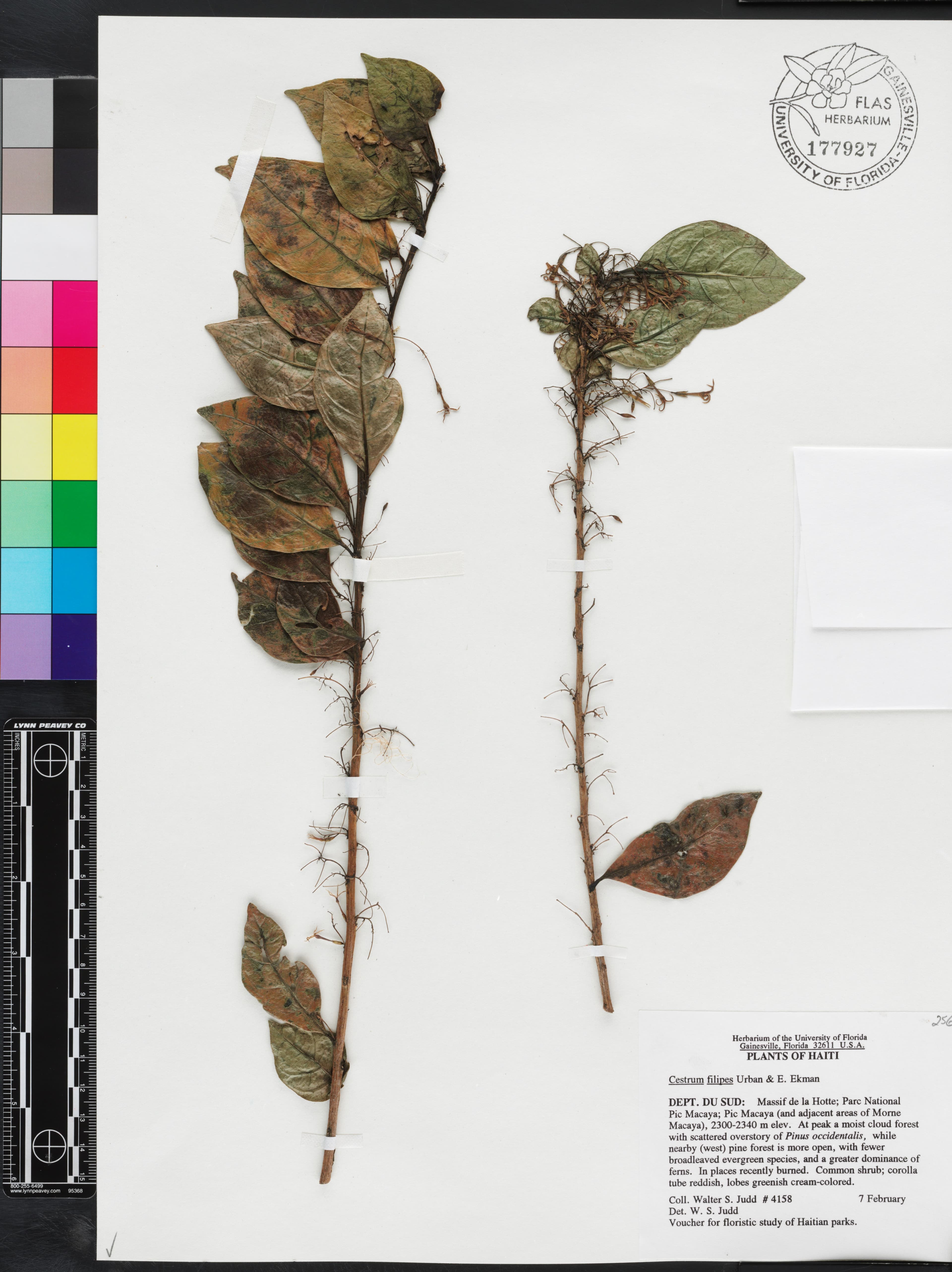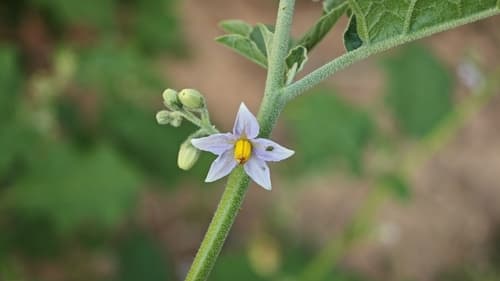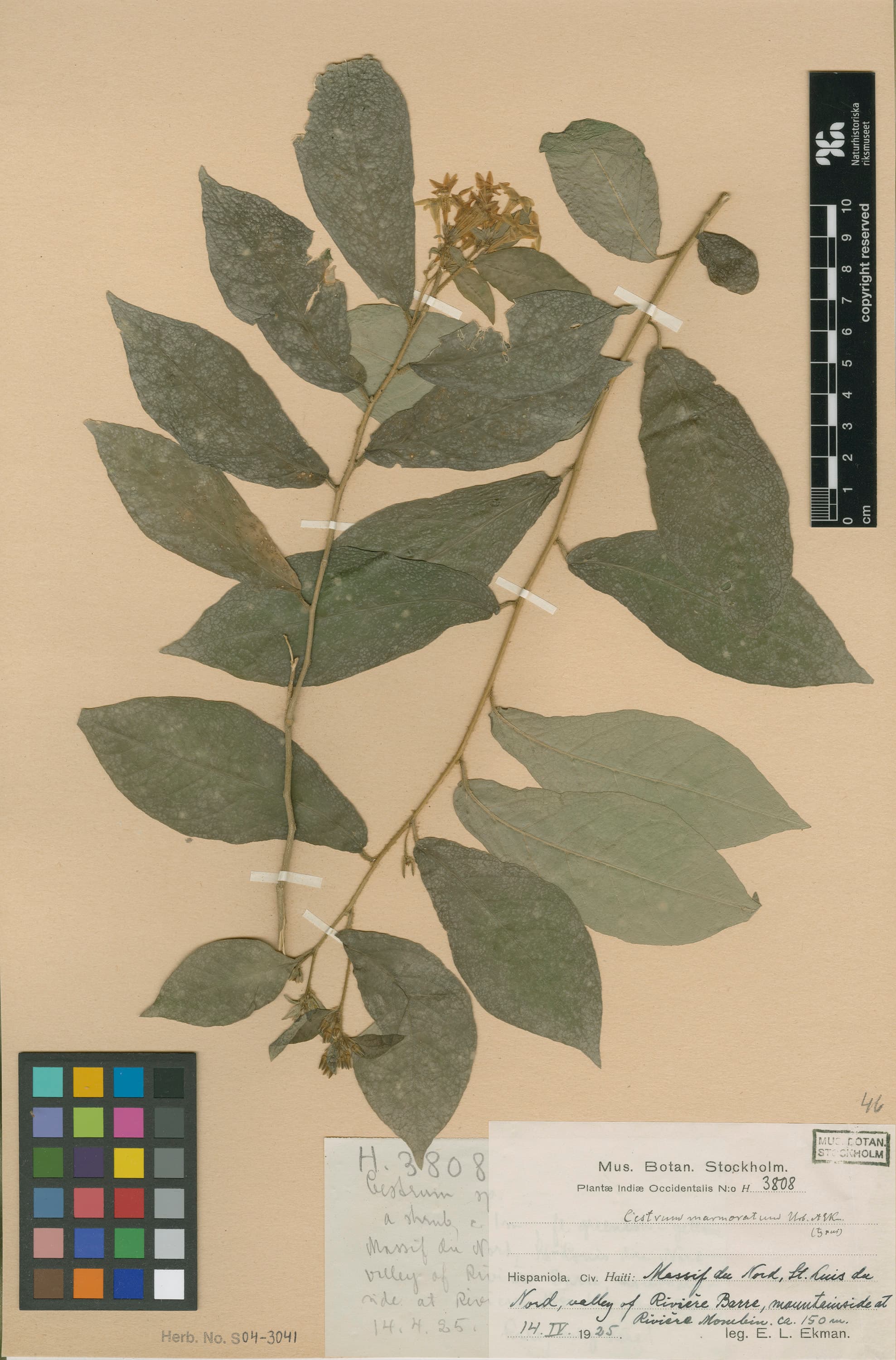
Cestrum marmoratum
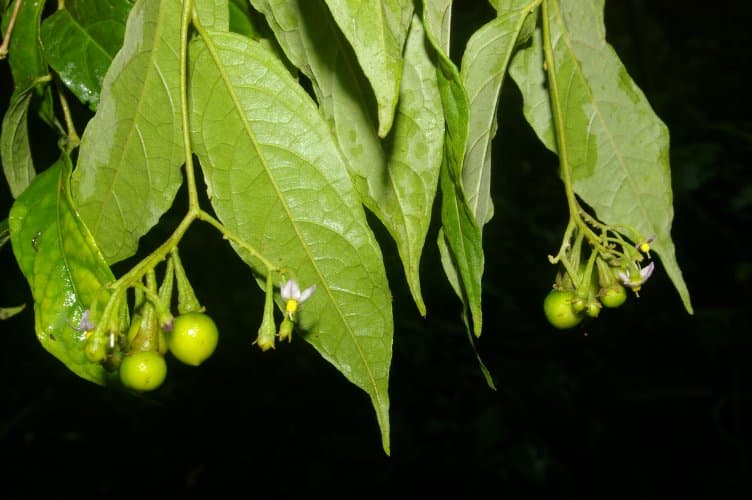
Image: Karin dos Santos (S) (cc-by)
NameCestrum marmoratum
Scientific NameCestrum marmoratum Urb. & Ekman
Plant FamilySolanaceae
Natural HabitatEndemic to Hispaniola, specifically found in the Massif du Nord region of Haiti, in the valley of Rivière Barre and on mountainsides at Rivière Monbin, at approximately 150 meters elevation.
Parts Usedleaf,flower
Medicinal Actionsanti-inflammatory, antimicrobial
Traditional UsesNo specific traditional medicinal uses are widely documented for Cestrum marmoratum. The genus Cestrum is generally known for containing toxic compounds, and while some species have been explored for potential anti-inflammatory or antimicrobial properties, their use in traditional medicine is often limited due to toxicity concerns.
Active Constituentssteroidal saponins, alkaloids
Contraindications & WarningsAll parts of Cestrum species are generally considered toxic, potentially causing gastrointestinal upset, neurological symptoms, and other adverse effects if ingested. Specific toxicity data for C. marmoratum is not available, but extreme caution is advised due to its genus.
Cultivation NotesAs a member of the Cestrum genus, it likely prefers well-drained soil and a warm, tropical to subtropical climate. Specific cultivation requirements for C. marmoratum are not widely documented.
Rarityuncommon
Description
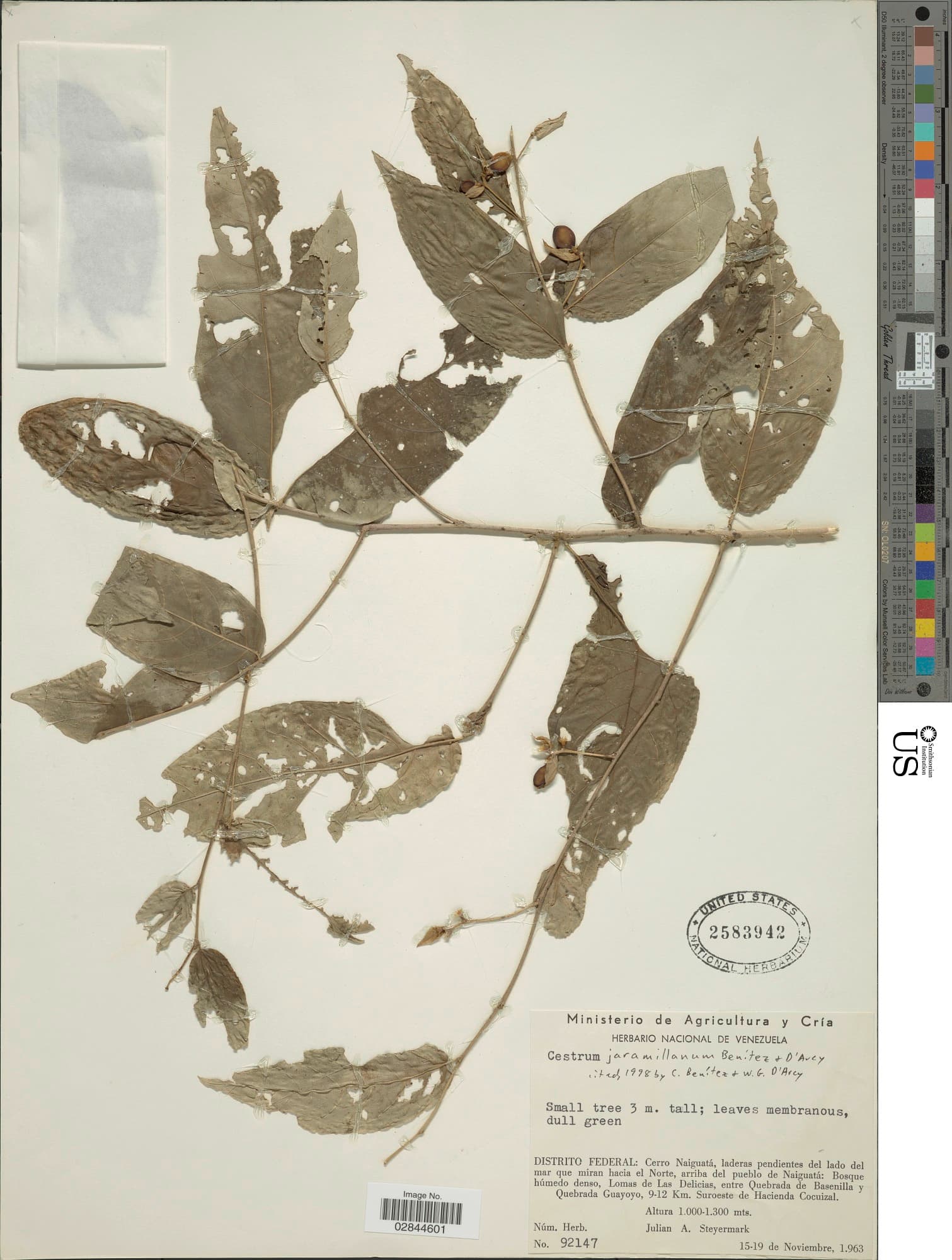
Cestrum marmoratum is a shrub characterized by alternate, ovate to elliptic leaves with entire margins and a somewhat textured surface. Its small, tubular flowers are borne in clusters, typically in the leaf axils or terminally.