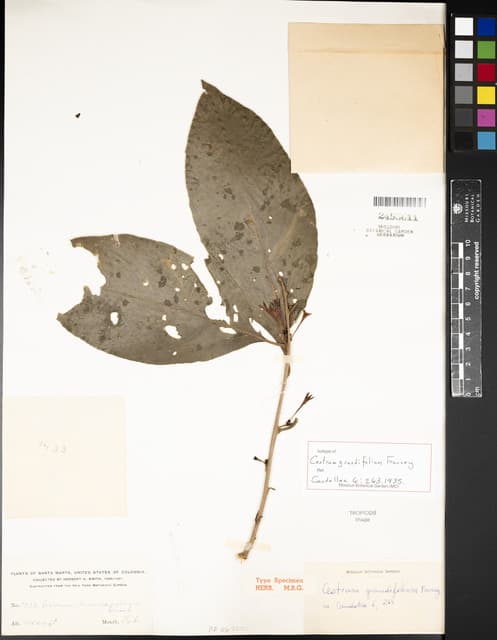
Cestrum grandifolium

Image: MBG (cc-by-nc)
NameCestrum grandifolium
Scientific NameCestrum grandifolium
Common NamesLarge-leaved Cestrum, Jessamine
Plant FamilySolanaceae
Natural HabitatNative to tropical and subtropical regions of South America, particularly in the Andes, often found in disturbed areas, forest edges, and secondary growth.
Parts Usedleaf,bark
Medicinal Actionsanti-inflammatory, analgesic
Traditional UsesSpecific traditional medicinal uses for Cestrum grandifolium are not widely documented. However, other Cestrum species have been traditionally used externally for pain relief, inflammation, and fevers, often as poultices or washes, due to their potent compounds. Internal use is extremely rare and dangerous due to high toxicity.
Active ConstituentsSteroidal saponins, Glycoalkaloids, Flavonoids
Preparation Methodspoultice, infusion
Contraindications & WarningsAll parts of Cestrum grandifolium are considered highly toxic, especially the fruits. Ingestion can cause severe gastrointestinal upset, neurological symptoms, and cardiac issues. It is dangerous for humans and livestock, and internal use is strongly contraindicated without expert supervision.
Cultivation NotesThis plant thrives in tropical and subtropical climates, preferring full sun to partial shade and well-drained soil. It can be grown as an ornamental shrub or small tree.
Rarityuncommon
Description
Cestrum grandifolium is a shrub or small tree characterized by its large, ovate to elliptic leaves with entire margins. The specimen shows a woody stem with alternate leaves, indicative of its growth habit. Flowers, though not visible here, are typically tubular and fragrant.