Cestrum granadense
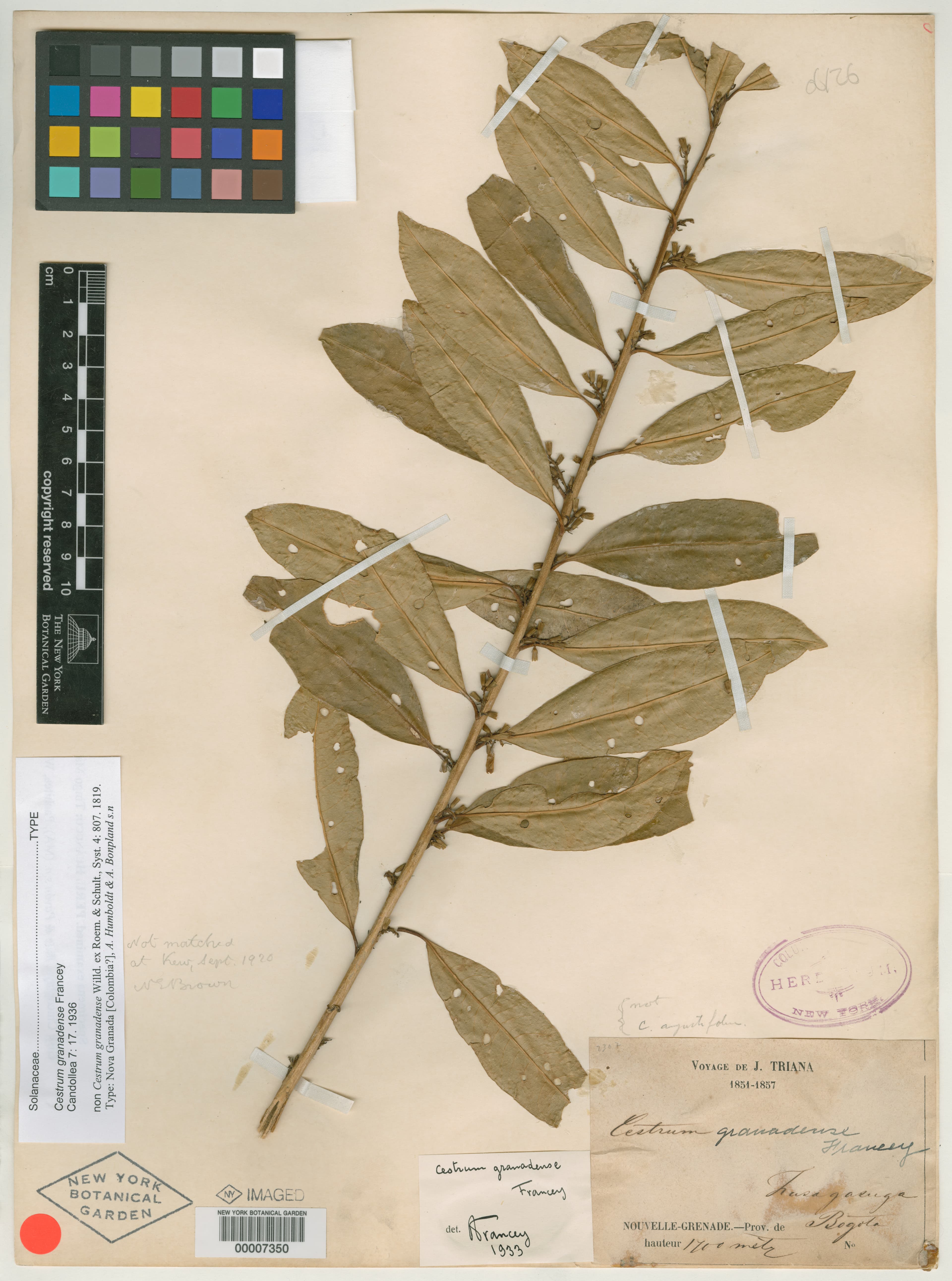
Image: The New York Botanical Garden (cc-by)
NameCestrum granadense
Scientific NameCestrum granadense Francey
Common NamesGranada Jessamine
Plant FamilySolanaceae
Natural HabitatNative to the Andean region of Colombia (historically New Granada), typically found in montane environments at altitudes around 1700 meters. It thrives in tropical to subtropical climates.
Parts Usedleaf,flower
Medicinal Actionsanalgesic, anti-inflammatory, sedative
Traditional UsesSpecific traditional medicinal uses for Cestrum granadense are not widely documented. However, other species within the Cestrum genus are sometimes used in traditional medicine for their analgesic, anti-inflammatory, or sedative properties, often applied externally for pain or inflammation, or internally as purgatives, though such uses come with significant toxicity warnings.
Active Constituentssteroidal saponins, steroidal alkaloids (e.g., solasodine, solasonine, solamargine)
Preparation Methodsinfusion, poultice
Contraindications & WarningsAll parts of Cestrum species, including Cestrum granadense, are generally considered toxic due to the presence of steroidal alkaloids and saponins. Ingestion can cause severe gastrointestinal upset, neurological symptoms, and cardiac issues. It is contraindicated for internal use, during pregnancy and lactation, for children, and for individuals with liver or kidney conditions or those on medications. Extreme caution is advised even for external applications.
Cultivation NotesCestrum species generally prefer well-drained soil, full sun to partial shade, and a warm, humid climate. They can be propagated from seeds or cuttings and require protection from frost.
Rarityuncommon
Description
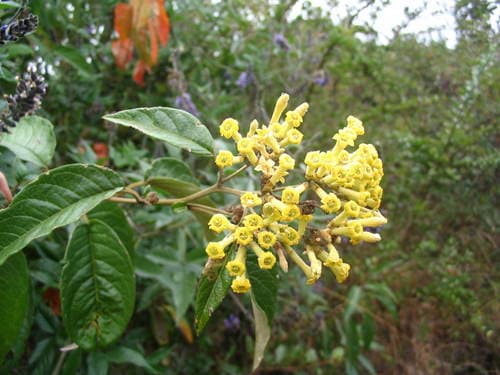
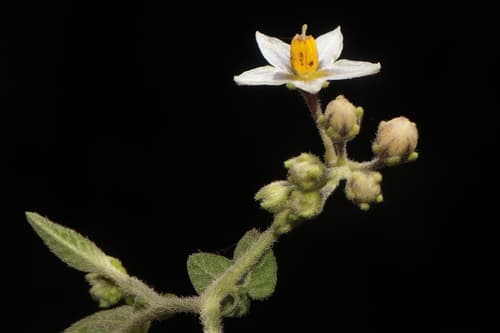
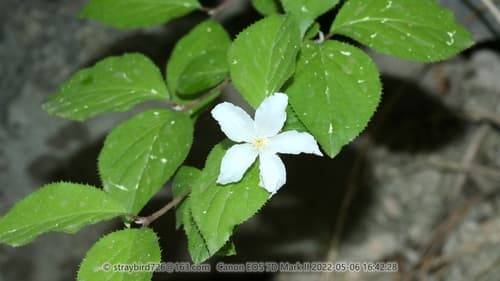
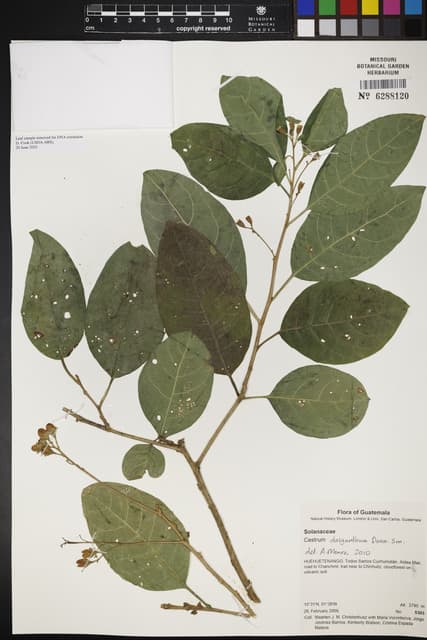
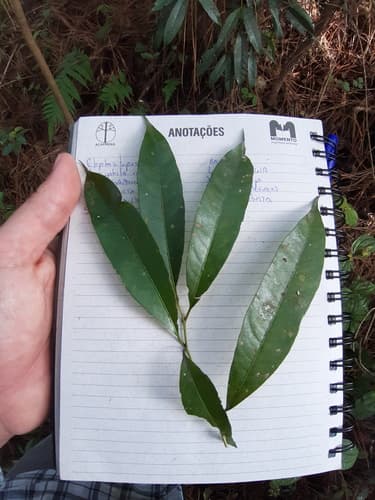
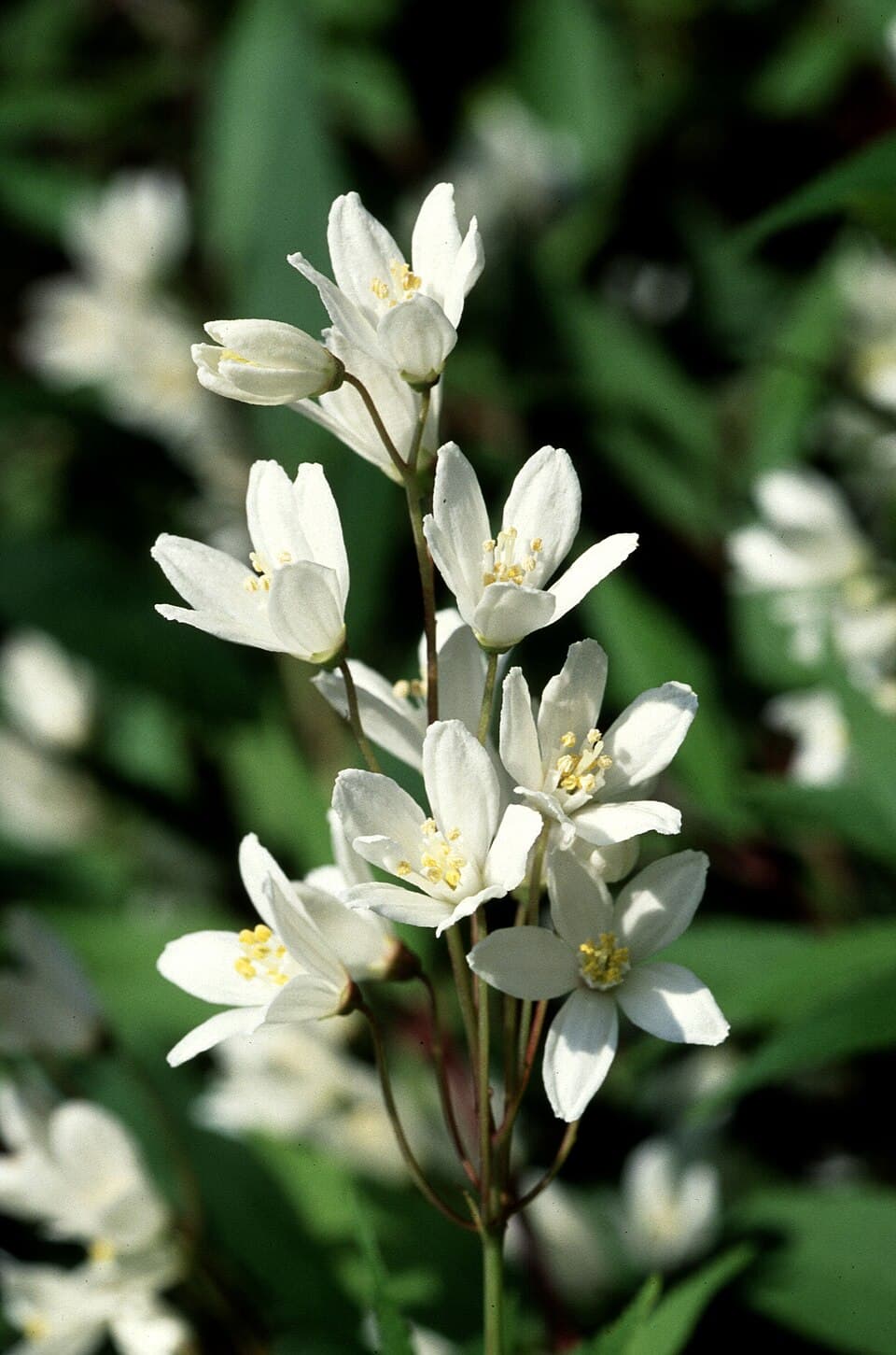
Cestrum granadense is a woody plant characterized by alternate, simple, entire, ovate-lanceolate leaves. The specimen shows small, axillary inflorescences, likely cymes, bearing numerous small flower buds or developing fruits along the stem.