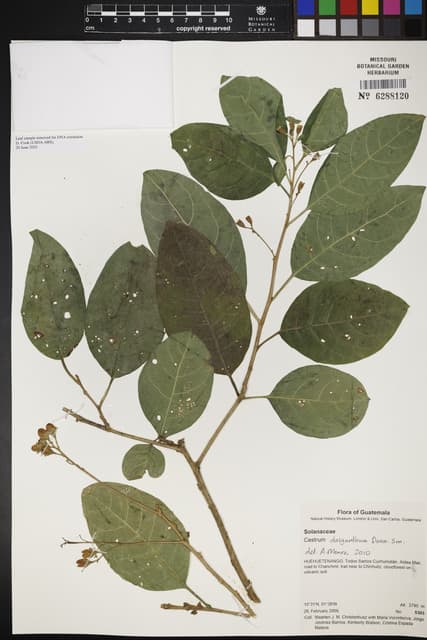
Cestrum dasyanthum
Image: MBG (cc-by-nc)
NameCestrum dasyanthum
Scientific NameCestrum dasyanthum Donn. Sm.
Plant FamilySolanaceae
Natural HabitatNative to cloudforests on volcanic soil in mountainous regions of Central America, specifically noted in Huehuetenango, Guatemala, at an altitude of 2790 meters.
Parts Usedleaf,bark
Medicinal Actionsanalgesic, anti-inflammatory
Traditional UsesDue to the general toxicity of the *Cestrum* genus, *Cestrum dasyanthum* lacks well-documented safe traditional medicinal applications. While some *Cestrum* species have been used in folk medicine for conditions like fever or pain, such uses are often associated with significant risk of poisoning and are not recommended for internal consumption.
Active Constituentssteroidal saponins, alkaloids, glycosides
Preparation Methodspoultice, salve
Contraindications & WarningsALL parts of *Cestrum* species are generally considered toxic, containing steroidal saponins and alkaloids that can cause severe gastrointestinal distress, neurological symptoms, and even death if ingested. This plant should not be used internally. External use should also be approached with extreme caution due to potential skin irritation or absorption, and is generally not recommended.
Cultivation NotesAs a cloudforest plant, it likely prefers high humidity, moderate temperatures, well-drained but consistently moist, rich volcanic soil, and partial shade.
Rarityuncommon
Description
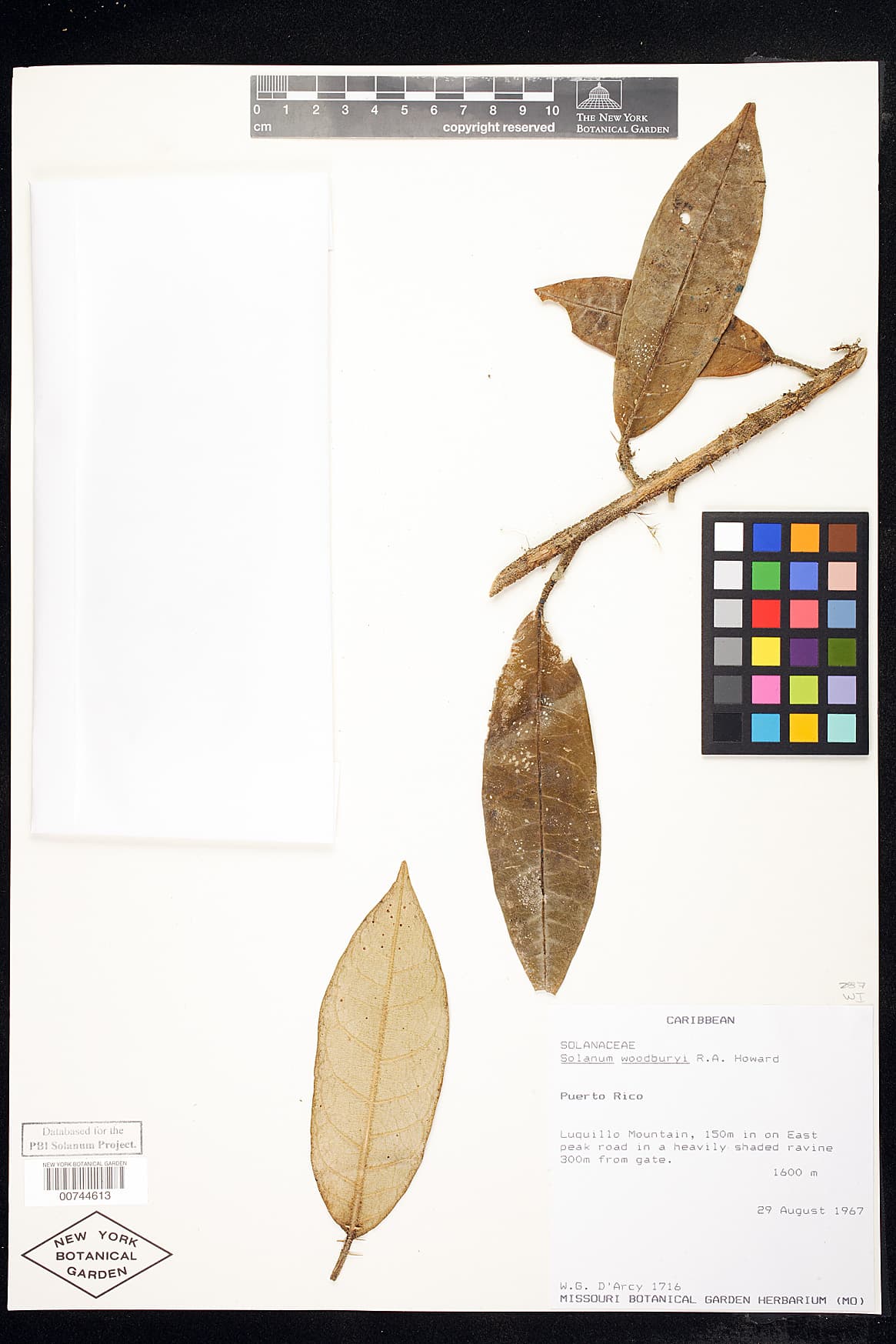
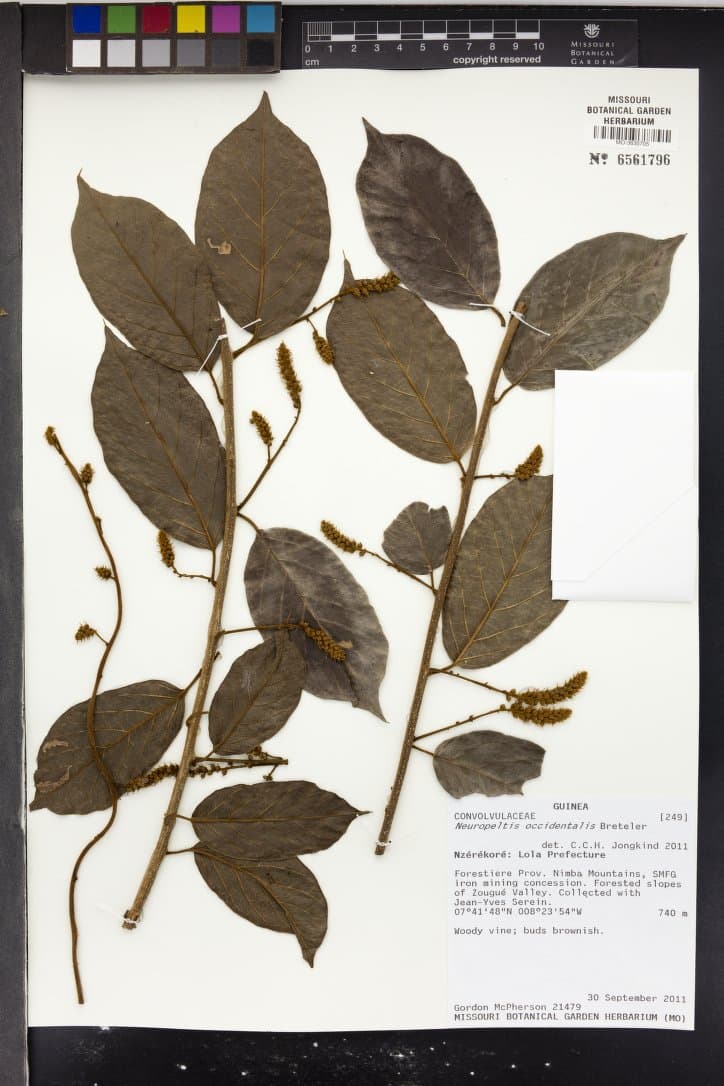
Cestrum dasyanthum is a woody shrub or small tree characterized by alternate, simple, ovate to elliptic leaves with entire margins. The specimen displays axillary inflorescences bearing developing flower buds or immature fruits.