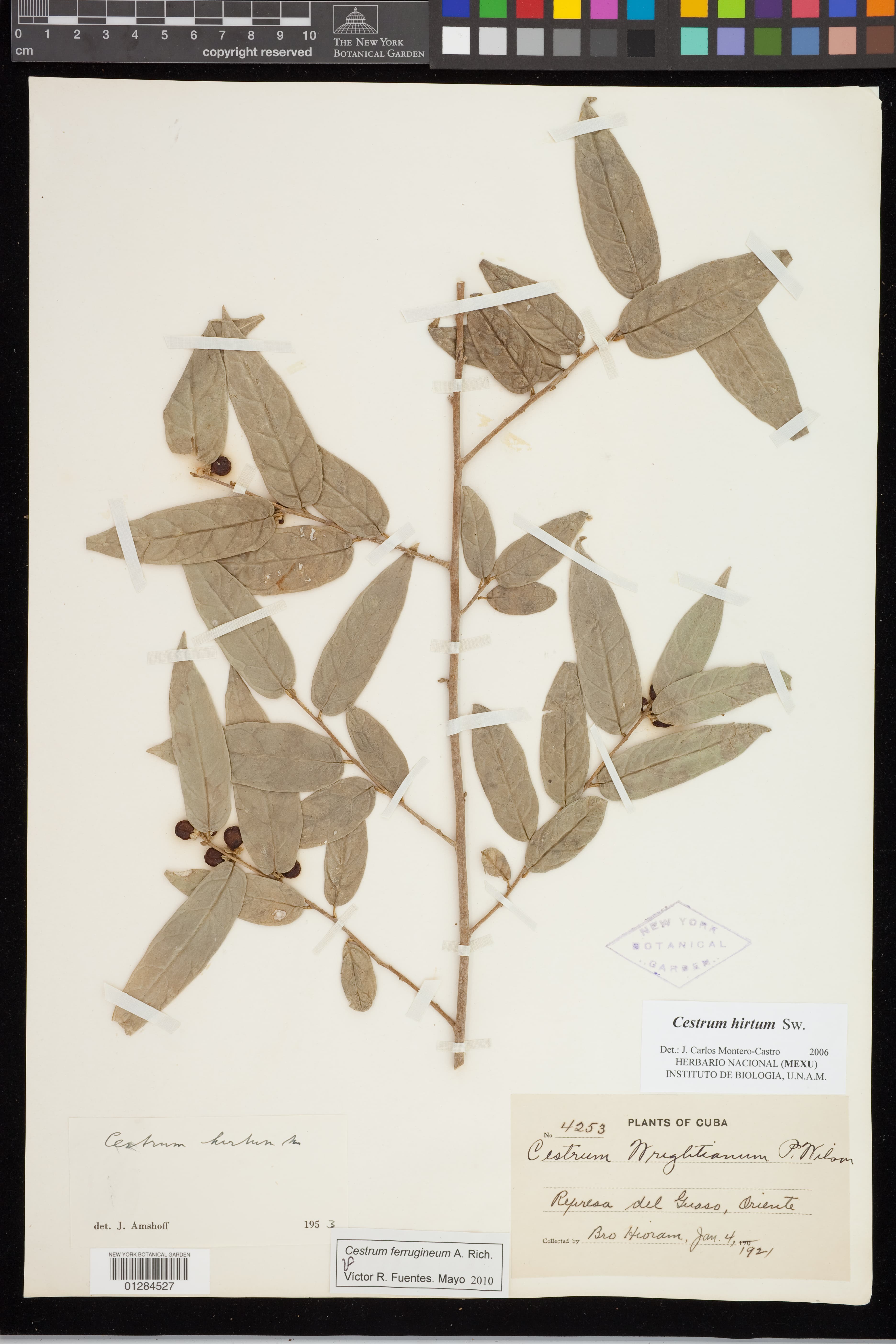
Cestrum ferrugineum
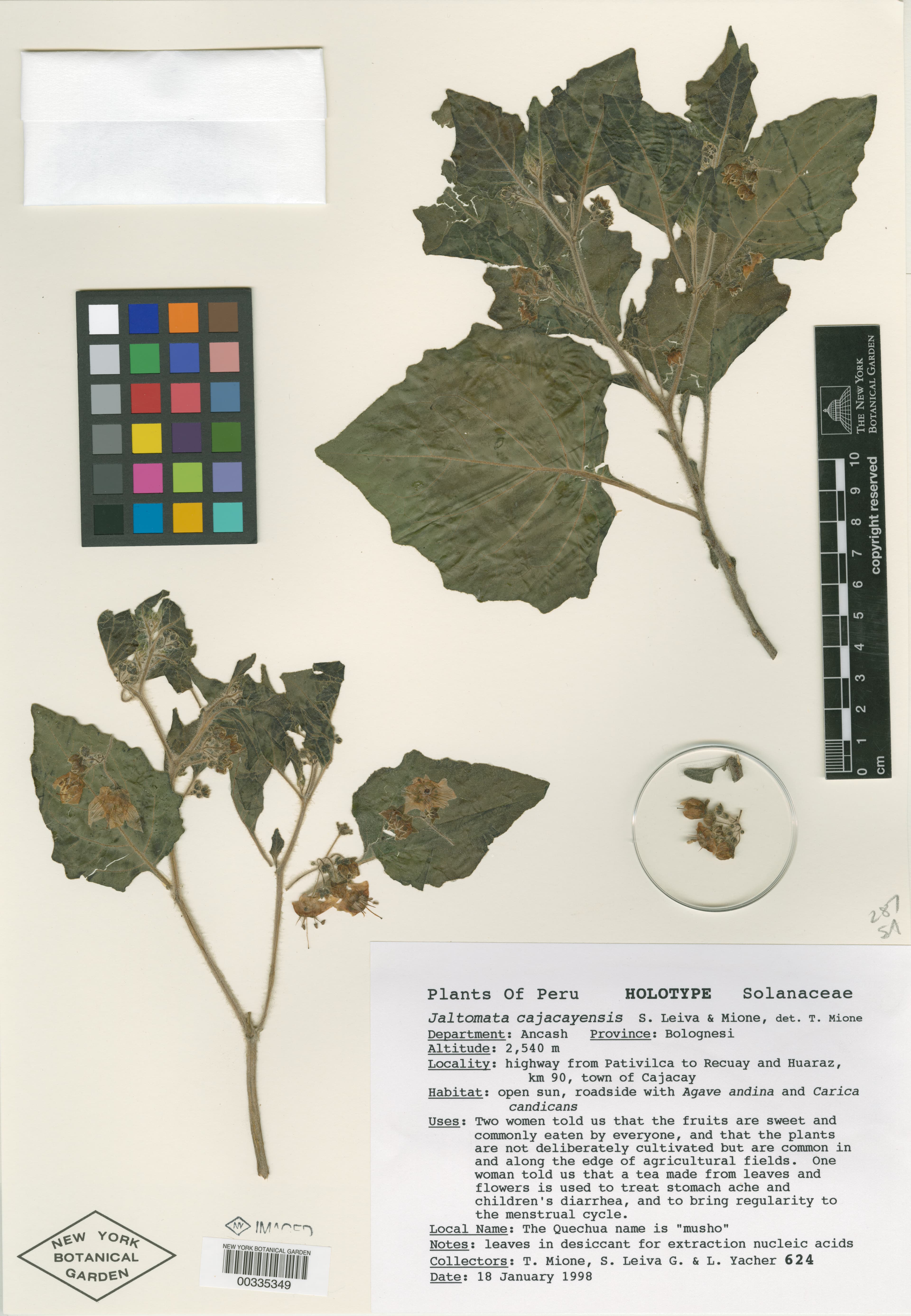
Image: The New York Botanical Garden (cc-by)
NameCestrum ferrugineum
Scientific NameCestrum ferrugineum A. Rich.
Plant FamilySolanaceae
Natural HabitatNative to the Caribbean, specifically found in Cuba and Hispaniola, typically growing in tropical or subtropical environments.
Parts Usedleaf,fruit
Medicinal Actionsanalgesic, anti-inflammatory
Traditional UsesWhile specific traditional uses for Cestrum ferrugineum are not widely documented, other species within the Cestrum genus have been traditionally used in some cultures for their analgesic and anti-inflammatory properties, often applied externally for pain or skin conditions. However, the genus is generally known for its toxicity, and internal use is rare and highly cautioned.
Active Constituentssteroidal glycoalkaloids, saponins
Preparation Methodspoultice
Contraindications & WarningsAll parts of Cestrum species, especially the fruits, are generally considered toxic due to the presence of steroidal glycoalkaloids. Ingestion can cause gastrointestinal upset, neurological symptoms, and can be fatal. Contact with sap may cause skin irritation. Use with extreme caution, if at all, and only under expert guidance for external applications.
Cultivation NotesThis species thrives in tropical to subtropical climates, preferring well-drained soils and full sun to partial shade. It is typically propagated by seeds or cuttings. Due to its potential toxicity, it should be planted away from areas accessible to children and pets.
Rarityuncommon
Description
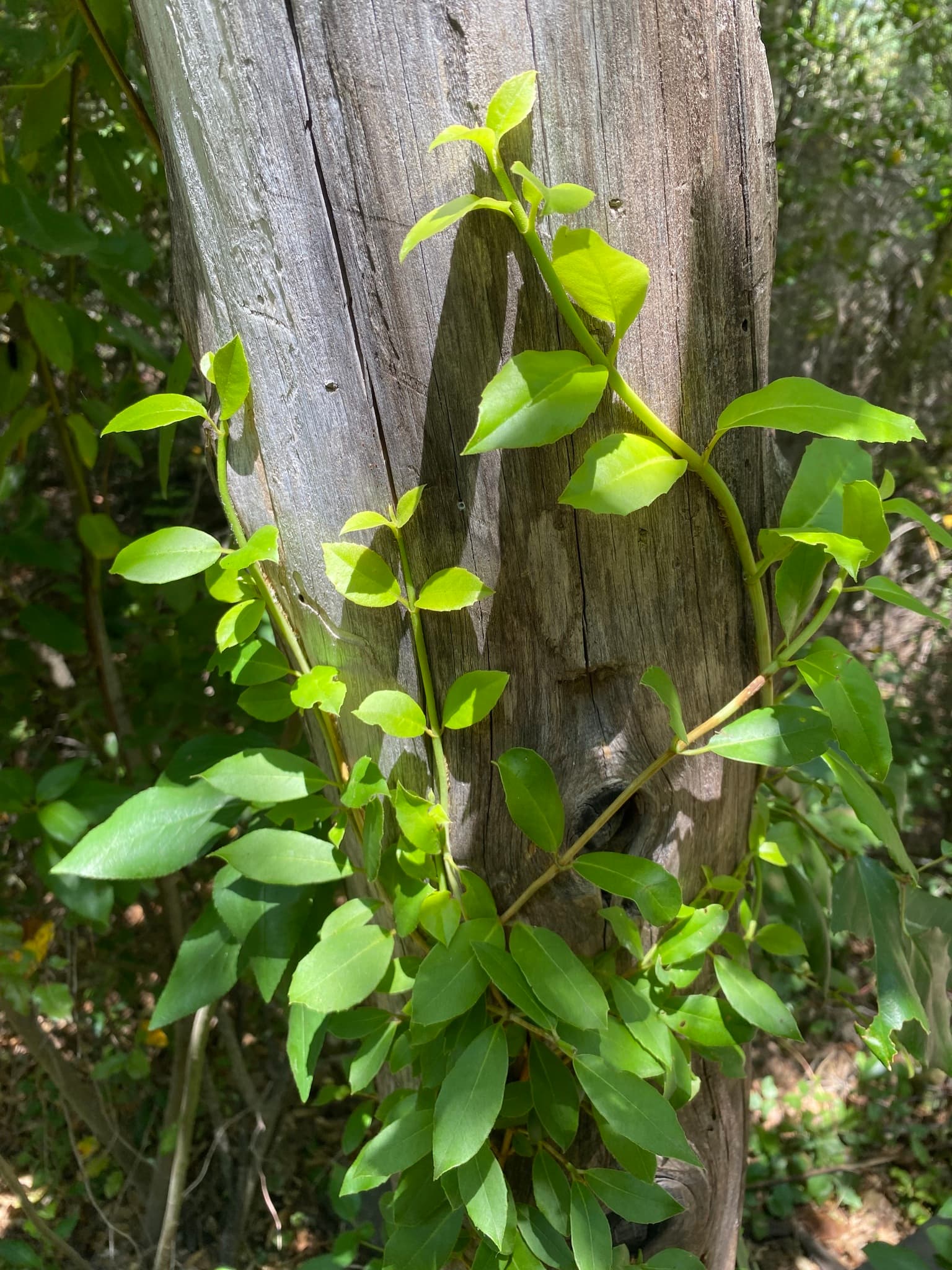
Cestrum ferrugineum is a woody shrub or small tree characterized by alternate, simple, entire leaves that are elliptic to ovate, often with a slightly rusty or pubescent underside. The specimen displays small, dark, globose fruits borne in the leaf axils. This species belongs to a genus known for its often fragrant flowers (though not visible here) and toxic berries.