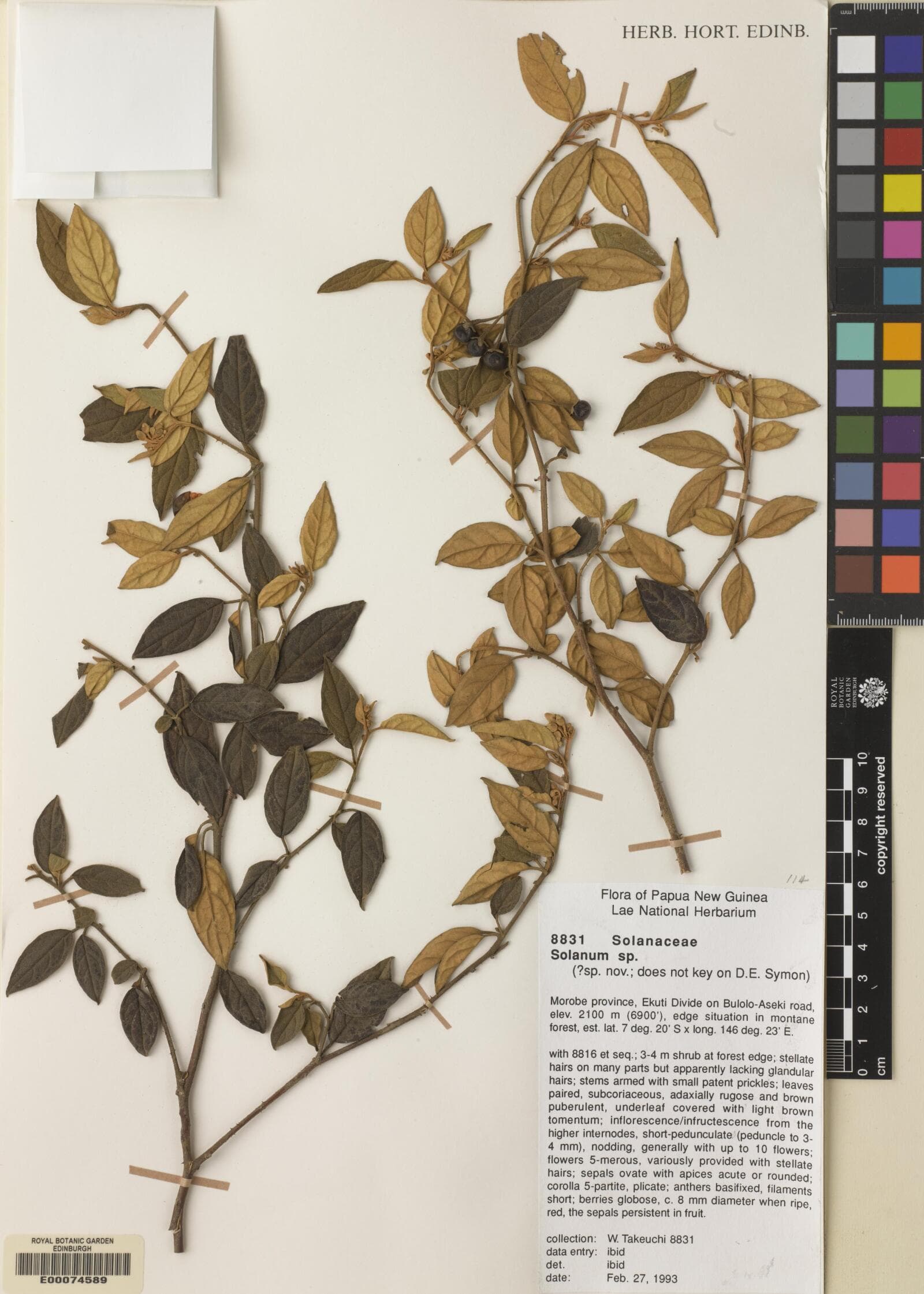
Cestrum domingense
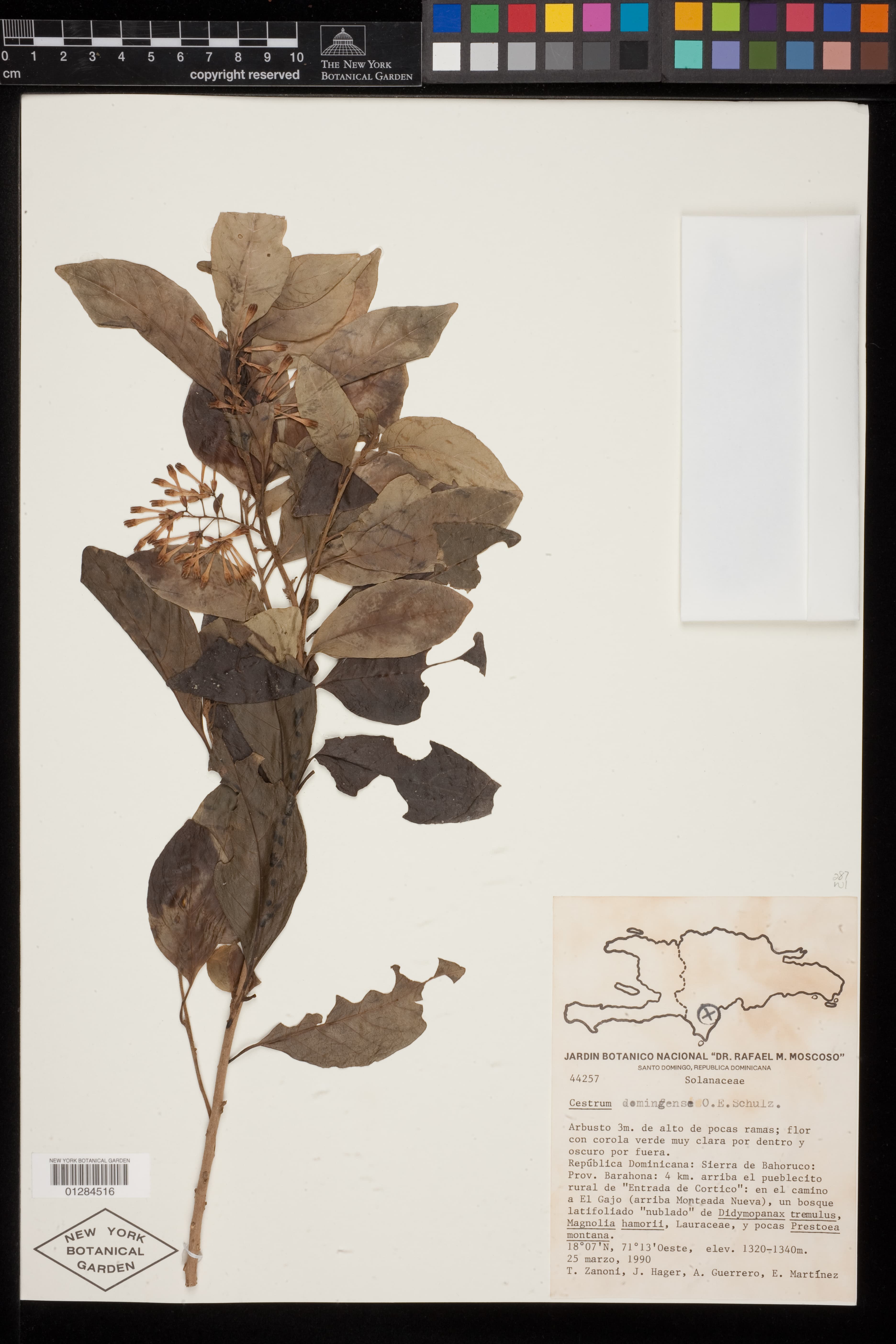
Image: The New York Botanical Garden (cc-by)
NameCestrum domingense
Scientific NameCestrum domingense O.E.Schulz
Plant FamilySolanaceae
Natural HabitatNative to the cloud forests of the Sierra de Bahoruco in the Dominican Republic, found at elevations between 1320-1340m. It grows alongside species like Didymopanax tremulus, Magnolia hamorii, and Prestoea montana.
Parts Usedleaf,flower,whole_plant
Traditional UsesInformation on traditional medicinal uses for Cestrum domingense is scarce. The genus Cestrum is generally known for containing toxic compounds, and many species are considered poisonous.
Contraindications & WarningsThe genus Cestrum is widely recognized for containing toxic compounds, including steroidal saponins and potentially tropane alkaloids, which can be poisonous if ingested. Cestrum domingense should be considered potentially toxic, and internal use is strongly contraindicated.
Cultivation NotesRequires a cloud forest environment with high humidity and specific elevation (1320-1340m). Prefers conditions similar to its native habitat in the Sierra de Bahoruco, Dominican Republic.
Rarityuncommon
Description
A shrub growing up to 3 meters tall with few branches. Its flowers feature a corolla that is very light green on the inside and darker on the outside.